
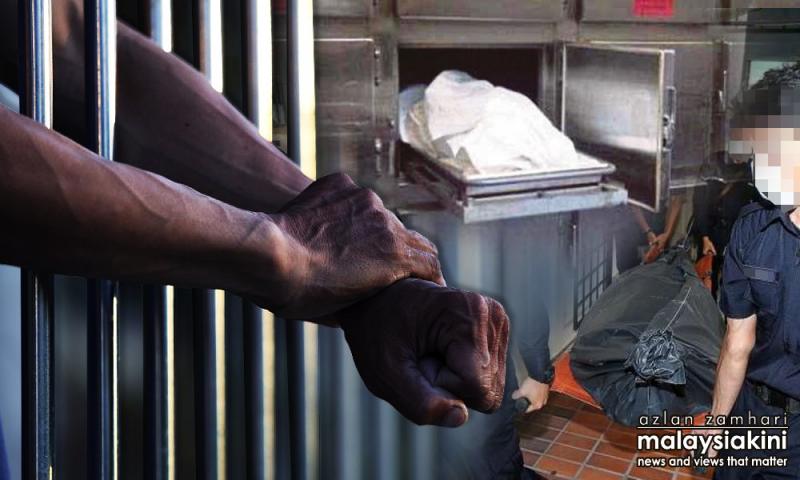
The Malaysian Human Rights Commission (Suhakam) has reiterated its stand to find solutions to custody-related deaths in detention centres in Malaysia.

This was after a number of deaths, including that of T Benedict last week, were purportedly related to inadequate healthcare issues.

"Suhakam looks at this case very seriously, and we have also been working on (some) measures (to bring about a solution to this)," said Suhakam commissioner Dr Aisha Bidin.

She was responding to a memorandum that was submitted to her by representatives of Suara Rakyat Malaysia (Suaram), Persatuan Masyarakat Selangor dan Wilayah Persekutuan (Permas), and family members of the late Benedict, including his widow, N Janaghi.

The memorandum included demands such as pressuring the government to take active steps to ensure detainees' rights to healthcare, as well as investigating the implementation of the standard operating procedures.

"Police negligence led to my husband's death," Janaghi claimed, as she believes his life could have been saved if he had been brought to the hospital much earlier.

"Who is responsible for me and my family now?" she asked, in tears.

Benedict was detained under the Dangerous Drugs (Special Preventive Measures) Act on June 29, and was reportedly sentenced to 60 days in prison.

However, 12 days later, he fell and knocked his head on the ground in the wee hours of the morning, after frequent trips to the toilet.

"One of his cellmates carried his body to one corner, waiting for an ambulance to take him," Janaghi (photo) said.

She added that he was only brought to the ambulance at about 7am or 8am, but was pronounced dead at the hospital.

Permas president, M Arumugam, claimed that there was no traffic in Jalan Kuching on the morning of Benedict's death, adding that police could have reached Hospital Kuala Lumpur "in 20 minutes if they had done their job".

Suhakam also reassured those present that it would work on pressuring the government to consider immediate suspension of the investigation officer (IO) in charge of Benedict's case, after it was reported that the IO could possibly interfere in the matter.

"This will take time and cooperation from the relevant authorities, but we will work on this as well," Aisha said.

Janaghi (photo) also reiterated previous claims that his medications may not have been administered properly.

Benedict, who had heart issues and other health complications, had to consume eight types of medicines and was supposed to be administered with four insulin shots per day.

A parliamentary reply revealed that there were 15 deaths in police custody in 2016.

The Home Ministry also stated that between 2000 and 2016, there were 284 deaths in police custody. This does not include deaths which occurred when prisoners were in transit.

Apart from his wife, Benedict leaves behind five children, two of whom have taken up jobs at a factory, and the youngest of whom is a one-year-old daughter.