




Commit to Indian Blueprint by helping Kg Gatco, MP tells Najib
Prime Minister Najib Abdul Razak has been challenged to walk the talk and prove that the Malaysian Indian Blueprint (MIB) isn't just vetti pecchu (empty talk), by intervening on behalf of Kampung Gatco villagers.
Klang MP Charles Santiago said the MIB had assured Indians in poverty that the government would improve their lives.
"Thus I call upon the prime minister to directly intervene in this dispute in order to protect the poor from further abuse and marginalisation...
Prime Minister Najib Abdul Razak has been challenged to walk the talk and prove that the Malaysian Indian Blueprint (MIB) isn't just vetti pecchu (empty talk), by intervening on behalf of Kampung Gatco villagers.
Klang MP Charles Santiago said the MIB had assured Indians in poverty that the government would improve their lives.
 "Thus I call upon the prime minister to directly intervene in this dispute in order to protect the poor from further abuse and marginalisation.
"If such an effort is not forthcoming, the community can perceive that the MIB is simply vetti pecchu," Charles said at a press conference in the Parliament media room today.
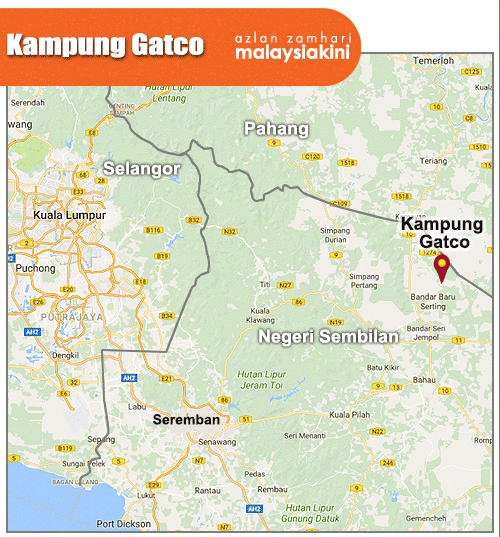
On Monday, 30 villagers from Kampung Gatco, Negeri Sembilan, were arrested for blocking a lorry from removing rubber logs from what they claim is their estate.
Last Tuesday, 28 people from the same village were arrested on a similar charge.
Both incidents are the latest episodes in a protracted struggle between the villagers and Thamarai Holdings Sdn Bhd over the land Kampung Gatco sits on.
Meanwhile at the launch of the MIB in April, Najib said the plan was not merely vetti pecchu (empty talks), but a nijjam (reality).
A sum of RM1billion had been allocated to implement the blueprint which, among other goals, pledges to socially uplift the Indian community.
Charles said the federal government could not keep turning a blind eye to land issues such as Kampung Gatco, and should at the very least negotiate a feasible settlement "that does not further rip off the villagers".
The long-drawn tussle over Kampung Gatco began in 2006 after its land was sold to Thamarai Holdings.
The land was originally owned by the Negri Sembilan State Economic Development Corporation (SEDC) which leased the land to Gatco in 1977.
Gatco was incorporated by the National Union of Plantation Workers for the purpose of a land development scheme for its members, who paid RM7,600 each as a deposit to settle on allocated plots of land.
However, the scheme eventually failed. Gatco eventually wound up but its liquidators sold the land to Thamarai Holdings, triggering the tussle.


Report this comment
Are you sure you want to delete this comment?
This action cannot be undone.