


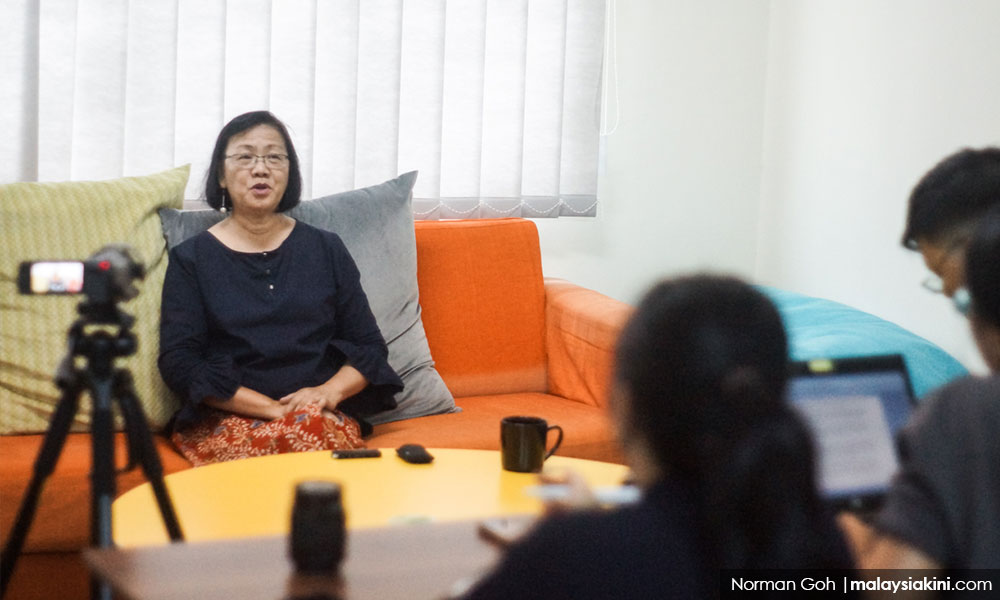

Maria reveals her wish list if elected MP
INTERVIEW | Royal commissions of inquiry on two issues will be top of the agenda for former Bersih chairperson Maria Chin Abdullah if she is voted into Parliament.
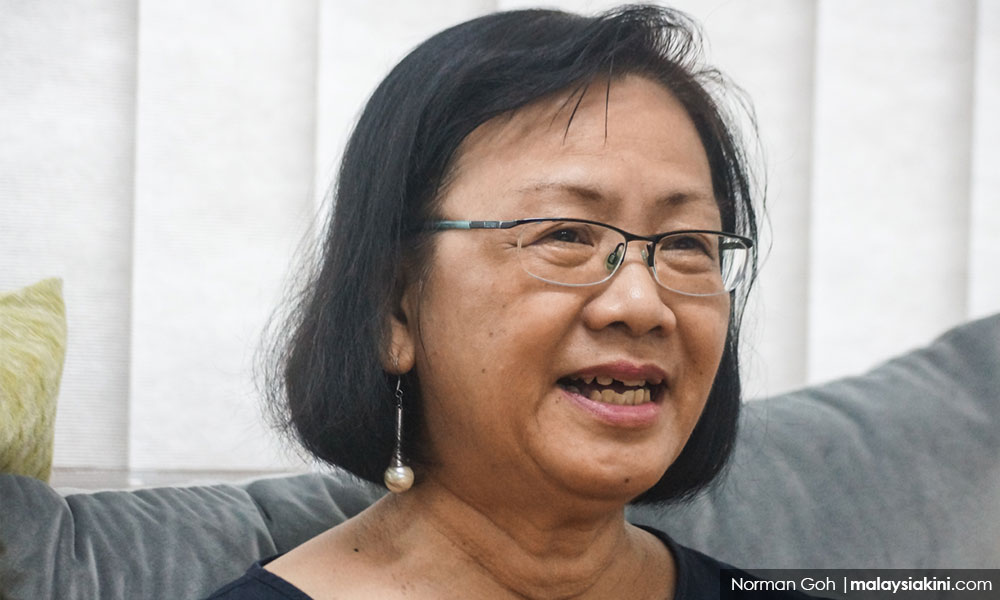
Speaking to Malaysiakini in an interview yesterday, Maria said the two RCIs would each look into the issue of electoral reform and local council elections.
Although a parliamentary select committee on electoral reform was formed in 2012, she believes that it did not offer concrete ideas on alternatives for Malaysia to adopt.
As an example, Maria pointed to Malaysia’s first-past-the-post electoral system, which she said does not ensure representation and fairness, a situation aggravated by practices such as malapportionment and gerrymandering.
“So, if you are looking at mixed-member proportional representation (MMP) and all that, then it allows even small parties to survive to some extent,” she said.
Generally, in an MMP system, each voter is entitled to choose a local representative and a party.
Half the legislature is filled by local representatives who win in the polls, and the other by political party appointees.
This ensures that the composition of the legislature reflects each party’s popular vote. Countries that practice MMP include Germany and New Zealand.
As for the RCI on local council elections, Maria said it would function to investigate its necessity, and what laws need to be changed to revive the practice.
She said she hopes to lobby for support for these issues, and that Pakatan Harapan MPs would help...
INTERVIEW | Royal commissions of inquiry on two issues will be top of the agenda for former Bersih chairperson Maria Chin Abdullah if she is voted into Parliament.
Speaking to Malaysiakini in an interview yesterday, Maria said the two RCIs would each look into the issue of electoral reform and local council elections.
Although a parliamentary select committee on electoral reform was formed in 2012, she believes that it did not offer concrete ideas on alternatives for Malaysia to adopt.
As an example, Maria pointed to Malaysia’s first-past-the-post electoral system, which she said does not ensure representation and fairness, a situation aggravated by practices such as malapportionment and gerrymandering.
“So, if you are looking at mixed-member proportional representation (MMP) and all that, then it allows even small parties to survive to some extent,” she said.
Read more: Maria’s Sosma-inspired decision to step into the political fray
Generally, in an MMP system, each voter is entitled to choose a local representative and a party.
Half the legislature is filled by local representatives who win in the polls, and the other by political party appointees.
This ensures that the composition of the legislature reflects each party’s popular vote. Countries that practice MMP include Germany and New Zealand.
As for the RCI on local council elections, Maria said it would function to investigate its necessity, and what laws need to be changed to revive the practice.
She said she hopes to lobby for support for these issues, and that Pakatan Harapan MPs would help.
Gender activism
As an activist on women’s rights issues since 1985, the issue of gender equality is also close to Maria’s heart.
She also hopes to revive the Women’s Parliamentary Caucus and discussions for a Gender Equality Bill, claiming that five years had passed since the Women’s Ministry discussed the bill with civil society groups.
“The ministry has not actually done very much. So, I'm hoping that in Parliament, the gender caucus… can be revived, and that this Gender Equality Bill can be looked at.
“It (the bill) examines various issues of women being discriminated against; the focus, particularly, would be on violence against women and sexual harassment,” she said.
However, these issues would have to take a relative backseat, as electoral reform remains a priority for Maria.
Other issues she hopes to push for include having more parliamentary select committees, more Prime Minister’s Question Time sessions, as well as more time for opposition MPs to speak.
She also hopes to emulate a leadership programme she had seen conducted in Timor-Leste, shortly after it gained independence from Indonesia in 2002.
“They have an internship for young leaders – men and women. Each person follows and shadows an MP, and they are given a budget to run some projects with the MP that they shadow.
“It gives them an idea of how to manage, how to organise, how to present policies in Parliament. I thought that it would be quite interesting to try it out in Malaysia,” she said.
Asked about her prospective “host” Harapan party and constituency, Maria said her preference would be to contest under a PKR ticket in an urban seat.
This is because of her involvement in the Reformasi movement the late 1990s, she explained, and urban seats would suit her character better.
Members only
In addition, she pointed out that other parties have rules stipulating that only members can contest under the party’s ticket.
She does not want to break such rules, she said, and noted that PKR does not impose this requirement.
Ultimately, Maria said, it was up to Harapan to decide whether to allow her to contest in a given seat, and under which party’s ticket.
She also noted that despite the speculation about her contesting in Petaling Jaya Selatan, seat negotiations for her have yet to begin.
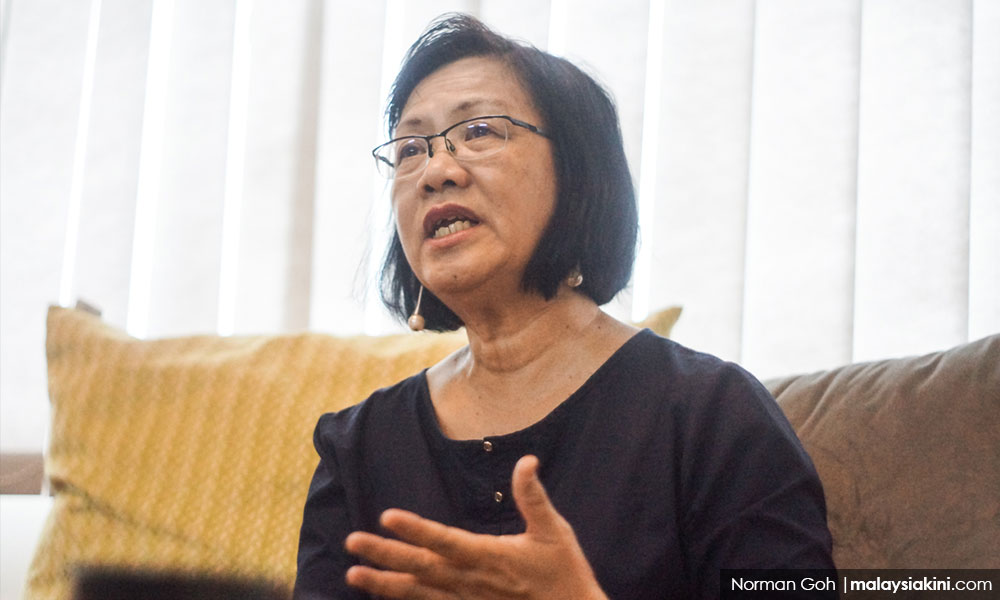
“I feel that I really want to leave it to Harapan to decide (on which party’s ticket to use)… We didn't discuss on the seat because I feel that I want the party (to decide).
“Already, we are asking for so many things; I just want the party to actually have the time to discuss the matter with their grassroots and their leadership.
“What I told them is what I have announced in the press conference: that I will be independent, I won't engage in three-cornered fights with them, it will be under the Harapan logo and I will abide by their manifesto,” she said.
Maria added that Harapan had consulted Bersih for feedback on electoral reform issues to be included in its manifesto – slated for release tomorrow – many of which have been adopted. Hence, she would feel comfortable abiding by it.
Reform agenda
Maria explained that she wants to run under a Harapan ticket to show confidence in collaborating with the coalition to push a reform agenda. This is despite the option of simply contesting as an independent candidate without Harapan’s official sanction, and use a logo supplied by the Election Commission instead.
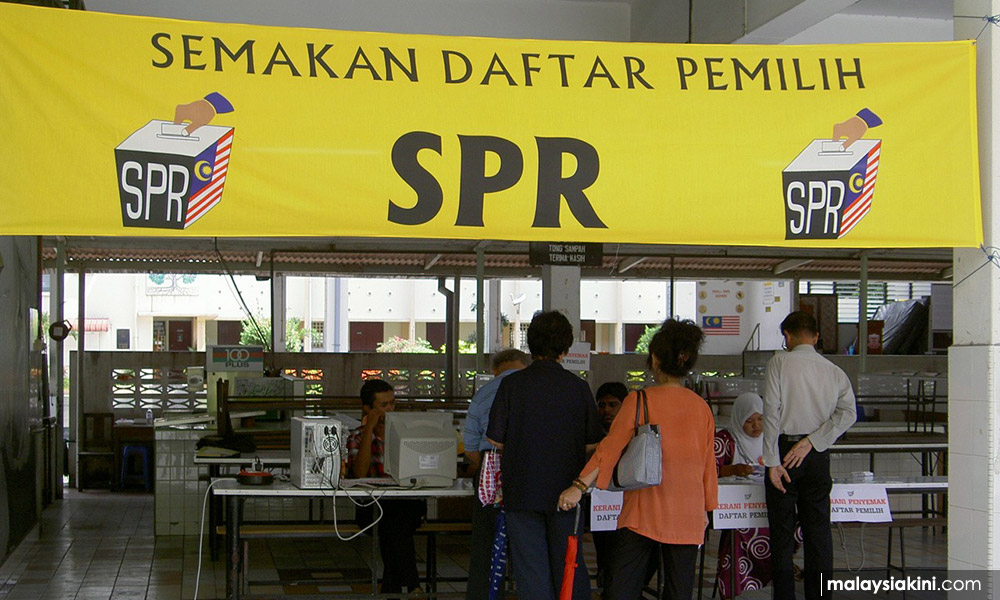
“I wasn't very keen about using it (the logo provided by the EC). It means you'd have to use either an umbrella or a banana. I don't think that would be useful,” she said.
The EC has a total of 30 logos approved for use by independent candidates. While there are no umbrellas or bananas, the list includes a rabbit, a bag, a kettle, an aeroplane, a hoe, a necktie, and others.
In response to criticism on her choice of siding with Harapan, Maria said she understands the voters’ frustrations, and acknowledged that Harapan has weaknesses.
“That's for sure because there were moments that left quite a lot of us frustrated with the way they are responding to issues. At the end of the day, if you look at how politics has been in Malaysia, it's either BN, or Pakatan Harapan or Pakatan Rakyat.
“Until we change the two-party system, but at the present moment these are the options. So, you’d just have to accept that not everybody can agree with Harapan. What is most important is to show your work, and people will judge you on the work that you do,” she said.
Asked what would happen if Harapan decides not to take her under its wing, Maria said she would pull out of the election altogether.
“No, I won't (run). Because then I would be contesting as an independent and I will be in direct competition with Harapan. That is not my intention.”
This interview was jointly conducted by Annabelle Lee, Koh Jun Lin and Yap Jia Hee.
Yesterday: Maria’s Sosma-inspired decision to step into the political fray


Are you sure you want to delete this comment?
This action cannot be undone.