




Hadi can kiss Chinese votes goodbye
COMMENT | PAS president Abdul Hadi Awang may not agree with Invoke’s findings as presented by its founder, Rafizi Ramli, but based on my conversations with a number of Chinese grassroots leaders and former supporters, PAS is now a goner where they are concerned.
In the past, PAS was mainly represented by politicians of sound mind, such as Mohamad Sabu, Khalid Samad, Mujahid Yusof Rawa and even the late Tok Guru Nik Abdul Aziz Nik Mat.
However, most of these leaders have already joined Amanah, leaving behind an Islamist party that is largely led by people the likes of Hadi and the Tok Guru’s son, Nik Mohamed Abduh Nik Aziz.
One of the biggest sore points is Hadi’s private member’s bill to amend the Syariah Courts (Criminal Jurisdiction) Act 1965 (or Act 355).
The bill is linked to the introduction of hudud, which is seen as extreme by more secular sections of society. According to one observer, Hadi has been played out by PAS’ biggest rival, Umno.
Hadi had depended on Umno to support his private bill, but since it was tabled in the Parliament last year, the debate over the bill has been postponed a few times.
As one observer I spoke to pointed out, he had expected this to be the game that would be played by Umno. It was like bait, but it was unlikely that Umno would even budge.
I also spoke to some young people who would be voting for their first time in the coming general election. For these first timers, PAS is lowest in their preference, after BN.
Given the choice between just PAS and Umno, one of them said that he would prefer not to vote.
In the course of writing my Voiz food reviews, I also took the opportunity to talk about the coming general election with the restaurant owners. These voters are in their 40s and 50s. To them, PAS is indistinguishable from...
COMMENT | PAS president Abdul Hadi Awang may not agree with Invoke’s findings as presented by its founder, Rafizi Ramli, but based on my conversations with a number of Chinese grassroots leaders and former supporters, PAS is now a goner where they are concerned.
In the past, PAS was mainly represented by politicians of sound mind, such as Mohamad Sabu, Khalid Samad, Mujahid Yusof Rawa and even the late Tok Guru Nik Abdul Aziz Nik Mat.
However, most of these leaders have already joined Amanah, leaving behind an Islamist party that is largely led by people the likes of Hadi and the Tok Guru’s son, Nik Mohamed Abduh Nik Aziz.
One of the biggest sore points is Hadi’s private member’s bill to amend the Syariah Courts (Criminal Jurisdiction) Act 1965 (or Act 355).
The bill is linked to the introduction of hudud, which is seen as extreme by more secular sections of society. According to one observer, Hadi has been played out by PAS’ biggest rival, Umno.
Hadi had depended on Umno to support his private bill, but since it was tabled in the Parliament last year, the debate over the bill has been postponed a few times.
As one observer I spoke to pointed out, he had expected this to be the game that would be played by Umno. It was like bait, but it was unlikely that Umno would even budge.
I also spoke to some young people who would be voting for their first time in the coming general election. For these first timers, PAS is lowest in their preference, after BN.

Given the choice between just PAS and Umno, one of them said that he would prefer not to vote.
In the course of writing my Voiz food reviews, I also took the opportunity to talk about the coming general election with the restaurant owners. These voters are in their 40s and 50s. To them, PAS is indistinguishable from hudud.
‘PAS not trusted’
One of the people I spoke to also said that he has never trusted PAS, despite voting for a candidate from the party in the past.
As he rightly pointed out, not a single PAS lawmaker has spoken up regarding the 1MDB scandal. He said that most of the people who spoke up are former PAS members who are now with Amanah.
I couldn’t agree more. Where the current PAS is concerned, its leaders are only capable of playing local politics instead of looking at bigger national issues.
An old gentleman in his 60s said that his vote for PAS in the last general election was a vote for Pakatan Rakyat which has now become defunct. He blamed it on Hadi for destroying the former coalition.
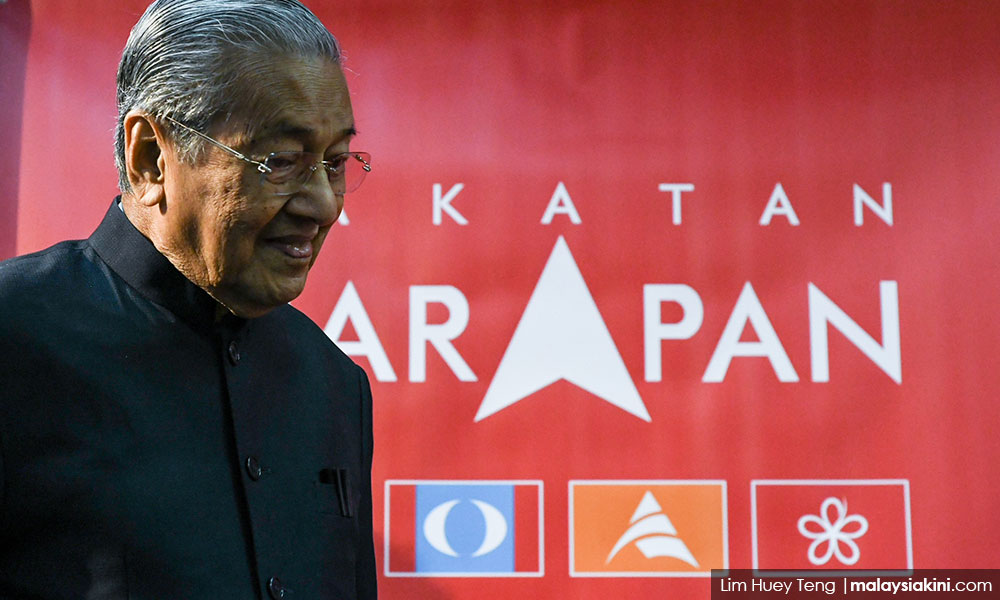
With the new coalition, Pakatan Harapan, he added that he even has more confidence in former prime minister Dr Mahathir Mohamad than he does Hadi. Prodded further, the old uncle said that he has had enough of Malaysian politics.
No one is to be trusted, he concluded, but at the end of the day it is which coalition these parties are aligned to. In the case of Bersatu, he said he would also ditch the newly formed party if it is again aligned to Umno.
For that reason, his equation explains why he no longer votes for the MCA candidate in his constituency.
Based on the feedback that I received especially from urban Chinese Malaysian voters, it is obvious that without these voters, it is tough for PAS to maintain its number of seats as in the last two general elections, especially when Malay votes are now divided.
So, although I was initially a little sceptical when I saw PAS bagging so many “telur” (zeros) in Rafizi’s big data analytics, I fully believe now that the party has lost its direction.
STEPHEN NG is an ordinary citizen with an avid interest in following political developments in the country since 2008.
The views expressed here are those of the author/contributor and do not necessarily represent the views of Malaysiakini.


Are you sure you want to delete this comment?
This action cannot be undone.