



Can Bersatu’s intellectuals replicate DAP’s political tsunami?
Bersatu may be viewed as an incarnation of Umno because of its predominantly Malay base, but since its split from the country’s largest party, it has begun to chart its own course.
In an attempt to build its momentum into the battle for the 14th general election, Bersatu has recruited a host of intellectuals, such as Wan Saiful Wan Jan and Maszlee Malik.
This recruitment drive is not unlike the strategy DAP employed shortly before the 2008 general election, with the likes of Oxford PPE graduate Tony Pua and UK-trained lawyer Teo Nie Ching joining the party.
The strategy of branding DAP beyond a pot of disgruntlement – as BN characterised it – helped project the party as a more viable alternative and propelled it to unprecedented gains in both the 2008 and 2013 elections.
However, whether Bersatu can replicate DAP’s successes remains to be seen as both parties have very distinct targets...
Bersatu may be viewed as an incarnation of Umno because of its predominantly Malay base, but since its split from the country’s largest party, it has begun to chart its own course.
In an attempt to build its momentum into the battle for the 14th general election, Bersatu has recruited a host of intellectuals, such as Wan Saiful Wan Jan and Maszlee Malik.
This recruitment drive is not unlike the strategy DAP employed shortly before the 2008 general election, with the likes of Oxford PPE graduate Tony Pua and UK-trained lawyer Teo Nie Ching joining the party.
The strategy of branding DAP beyond a pot of disgruntlement – as BN characterised it – helped project the party as a more viable alternative and propelled it to unprecedented gains in both the 2008 and 2013 elections.
However, whether Bersatu can replicate DAP’s successes remains to be seen as both parties have very distinct targets.

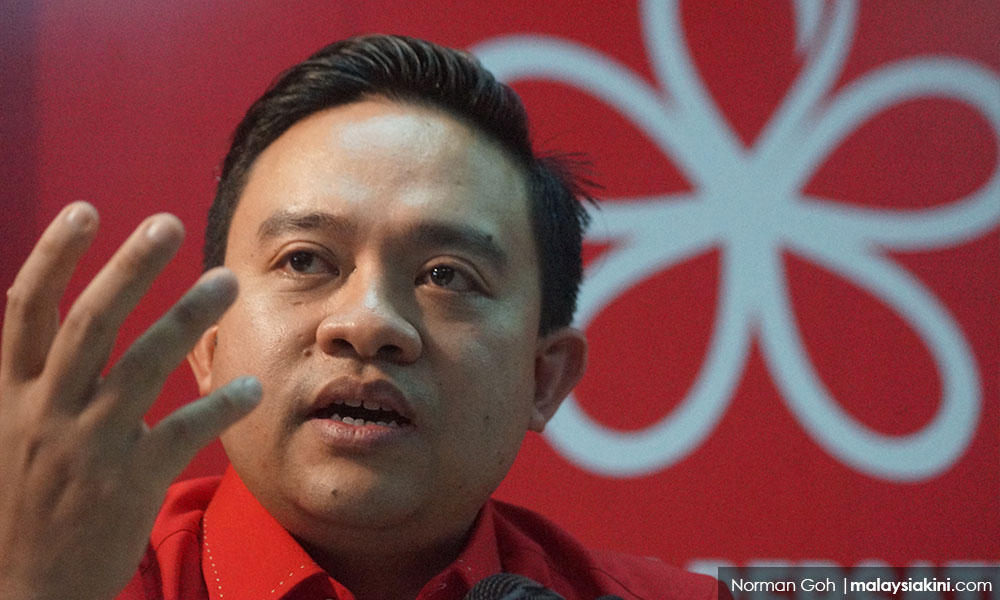
For Universiti Kebangsaan Malaysia professor Shamsul Amri Baharuddin (photo), Bersatu's recruitment of intellectual heavyweights will have limited effectiveness among rural voters, a core demography for Bersatu.
“The rural voters don’t know them. For example, Wan Saiful appears mainly in the English media, which is not really read by the kampung folk.
“If the rural folk don’t know them, it means they have no appeal or hardly any influence," Shamsul said.
'Young Turks'
However, Bersatu strategist Rais Hussin pointed out that there are differences between the party’s approach and DAP’s.
Despite its new heavyweights being perceived as intellectuals who are more familiar with urban constituents, Rais said they also have Islamic credentials, which can appeal to the Malay rural heartland.
Despite being more well-known as a political commentator in urban circles, Maszlee, for instance, was trained in Islamic jurisprudence in Jordan.
And even though Wan Saiful is often associated with the think tank Institute for Democracy and Economic Affairs, he was a long-time PAS member and understands the role of Islam in Malay politics.
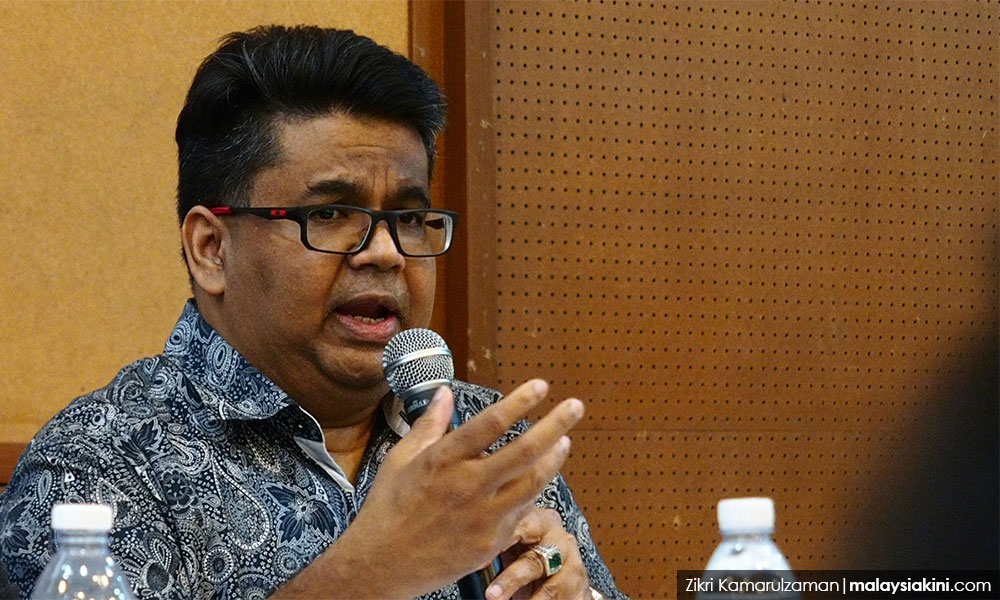
Rais (photo) has promised many more such recruits, and likened this strategy to that used by Recep Tayyip Erdoğan in Turkey.
“I think this is a direct result of Erdoğan’s strategy of bringing in progressive intellectuals who are willing to let go of their safe haven of high pay and high positions, to join the party and to bring about credible change in Turkey.
“It worked very well, so Bersatu would like to emulate that. That is the idea behind this strategy of taking people who are very highly-qualified to be with us,” he told Malaysiakini.
Rais said this was part of Bersatu's "diversified strategy" that is aimed at appealing across urban, semi-urban and rural constituencies.
“To me, it will strengthen Bersatu to provide a balanced team that will take care of all the needs of the people from various strata of society,” he said.
Echoing this was University of Tasmania Asia Institute director James Chin.
“It will be effective for the middle-class and the educated Malay class who think Prime Minister Najib Abdul Razak has shamed the Malays with blatant corruption.
“It will also work among rural Malays, who see these world-class Malays abandoning Umno,” Chin told Malaysiakini yesterday.

He added that despite there being young Malay talent in Umno, they are often not given the opportunity to stand in elections.
Bersatu's current strategy, Chin (photo) said, would also be able to draw this group away from Umno.
Cross-appeal
Universiti Malaysia Sarawak political analyst Jenri Amir agreed that Bersatu's strategy is an effective branding exercise, but stressed that this appeal must be backed by a desire for change.
“It doesn’t guarantee that they can win in the coming election, because... the Chinese want change, but the rural Malays, basically they still want... things to remain as they are now.
“So, in a sense, you cannot compare the mentality of rural voters with those of urban voters,” Jenri said.
Penang Institute fellow Wong Chin Huat disagrees that Bersatu’s function is only to win votes in rural areas, as Malays who fear change can be found in both rural and urban seats.
“Bersatu’s role is to bring in a different Malay right-wing constituency, economic nationalists, to replace the other Malay right-wing constituency of religious nationalists, who have gone PAS-Umno’s way.
“It is like a transplant of the Malay right-wing component in the opposition coalition,” Wong said.


Are you sure you want to delete this comment?
This action cannot be undone.