


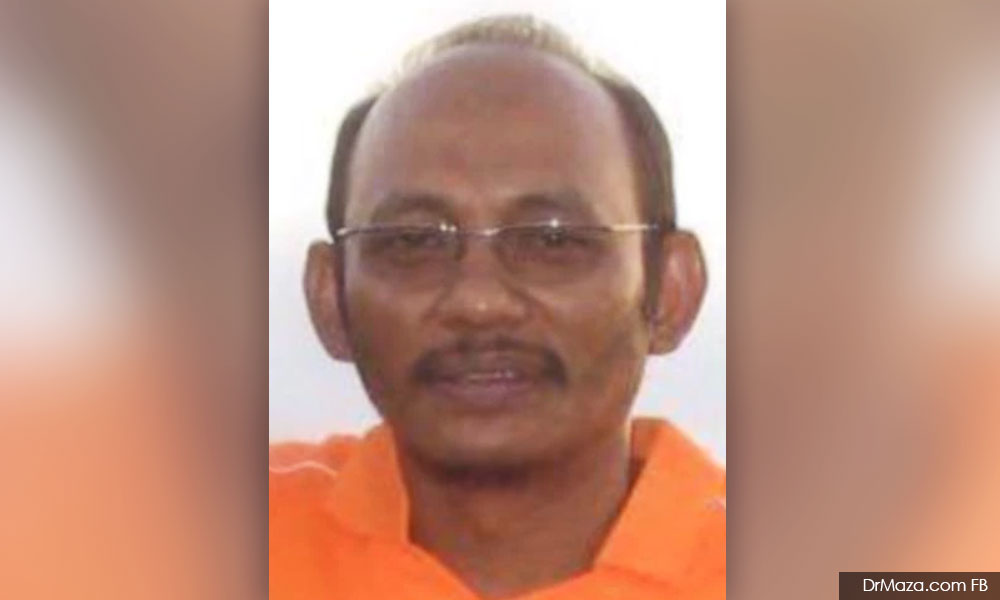

Cop says did not pursue anti-Syiah angle in Amri's disappearance
SUHAKAM INQUIRY | Police investigations into the disappearance of Perlis Hope activist Amri Che Mat did not focus on groups or individuals who might have abducted him due to their anti-Syiah stance.
This was revealed by inspector Khor Yi Shuen from the Kangar district police station, who was the primary investigating officer in the case...
SUHAKAM INQUIRY | Police investigations into the disappearance of Perlis Hope activist Amri Che Mat did not focus on groups or individuals who might have abducted him due to their anti-Syiah stance.
This was revealed by inspector Khor Yi Shuen from the Kangar district police station, who was the primary investigating officer in the case.
"I did not have the information so I did not pursue it (from the angle)," Khor told the Suhakam public inquiry panel led by commissioner Mah Weng Kwai.
He said this in response to questions from Razlan Hadri, counsel for Amri's family members.
"I took a statement from the Perlis Islamic Religious Department to better understand the Syiah teaching," said Khor, when asked whether he had interviewed anybody who might have a motive to harm Amri.
Razlan had quizzed Khor on whether he was aware that there were anti-Syiah individuals or groups with possible motives to harm Amri, and if any statements were then recorded from said parties.
Khor earlier agreed to a series of suggestions by Razlan that Amri's purported Syiah leanings could not be ruled out as a motive behind his disappearance.
Khor also agreed he had considered possibilities that there were anti-Syiah groups who might be behind Amri's disappearance.
He said the issue of Amri's purported Syiah leanings were first raised during a special meeting held at the Kangar district police station two days after his alleged abduction at midnight of Nov 25, 2016.
Khor said he had also considered the possibilities that Amri had staged his own disappearance, as there were groups or individuals who targeted him because of his Syiah leanings.
"There could be a tendency, because of his Syiah leanings, maybe he himself wanted to disappear," said Khor.
He added that other angles pursued throughout the course of his investigations so far included Amri's background as a forex dealer, as well as activities of his NGO Perlis Hope.
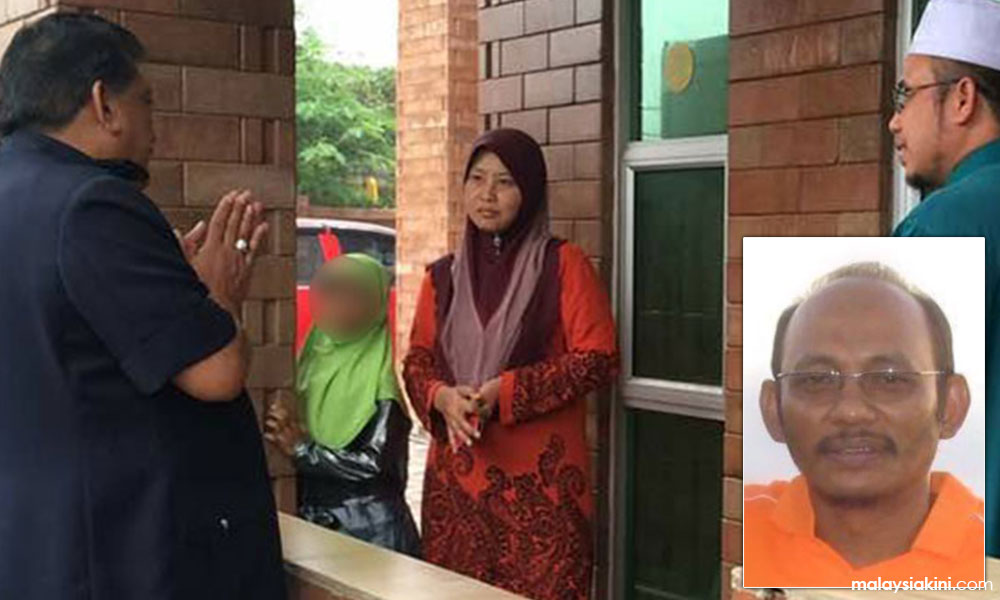
In his testimony to the panel, Khor said he was assigned to investigate Amri's disappearance at around 3pm on Nov 25, 2016, after a missing persons' report was lodged by the activist's wife, Norhayati Ariffin (centre in photo).
He also said the case had been monitored by Bukit Aman since February last year as it is considered a "hot case" due to Amri's background as a purported Syiah activist.
Perlis mufti Mohd Asri Zainul Abidin has previously described Amri as a "Syiah activist" after the former was named in the inquiry by Norhayati, its first witness.
Syiah Islam is considered deviant by Malaysia, where almost all Muslims adhere to Sunni Islam.
Suhakam is currently investigating whether the disappearances of Amri and two others were “enforced or involuntary,” as defined by the International Convention for the Protection of All Persons from Enforced Disappearance (ICPPED).
This is defined as the arrest, detention, abduction or any other form of deprivation of liberty by agents of the state or by persons, or groups of persons acting with the authorisation, support or acquiescence of the state.
The instrument was adopted by the United Nations General Assembly in 2006. Malaysia is not a signatory to the ICPPED.
The two other disappearances being investigated are that of pastor Joshua Hilmy and his wife Ruth Sitepu.
The commission had previously investigated pastor Raymond Koh’s disappearance, but was forced to suspend proceedings when former Uber driver Lam Chang Nam was charged in court for abducting Koh.


Are you sure you want to delete this comment?
This action cannot be undone.