


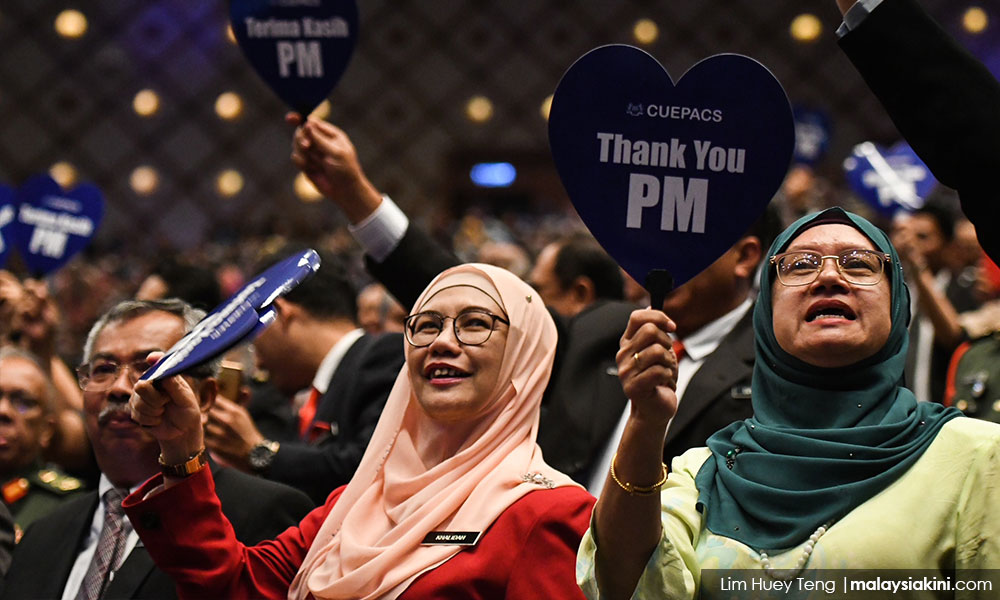

Has the election already been stolen?
COMMENT | Elections in countries all over the world that adhere to democratic norms are generally decided by the three 'Ms' of money, media and party machinery.
There is also a fourth 'M' factor at work – electoral gerrymandering and voter malapportionment.
However, genuine and aspiring democratic countries do attempt to minimise partisan geographical bias and intentional gerrymandering, such as that based on race, so as to ensure that elections are not only free and fair but also result in a legitimate mandate to govern for the winning party or parties.
For the coming 14th general election in Malaysia, we have seen concerned citizens and the opposition respond with outrage to the massive gerrymandering and malapportionment as well as the huge cash and other financial and material benefits promised by the BN government in its effort to buy the support of key voting groups.
We have also seen a string of respected international media columnists write disapprovingly of the unprecedented efforts made by caretaker prime minister Najib Abdul Razak to win the election by what they mainly regard as foul means.
On March 8 and 10, well before the new avalanche of cash benefits especially targeting rural Malays was unveiled in the BN election manifesto, The Economist – perhaps the most respected financial weekly in the English language and enjoying an international readership among discerning readers for its in-depth analysis of the world economy and current developments – published two articles focusing on the Malaysian election....
COMMENT | Elections in countries all over the world that adhere to democratic norms are generally decided by the three 'Ms' of money, media and party machinery.
There is also a fourth 'M' factor at work – electoral gerrymandering and voter malapportionment.
However, genuine and aspiring democratic countries do attempt to minimise partisan geographical bias and intentional gerrymandering, such as that based on race, so as to ensure that elections are not only free and fair but also result in a legitimate mandate to govern for the winning party or parties.
For the coming 14th general election in Malaysia, we have seen concerned citizens and the opposition respond with outrage to the massive gerrymandering and malapportionment as well as the huge cash and other financial and material benefits promised by the BN government in its effort to buy the support of key voting groups.
We have also seen a string of respected international media columnists write disapprovingly of the unprecedented efforts made by caretaker prime minister Najib Abdul Razak to win the election by what they mainly regard as foul means.
On March 8 and 10, well before the new avalanche of cash benefits especially targeting rural Malays was unveiled in the BN election manifesto, The Economist – perhaps the most respected financial weekly in the English language and enjoying an international readership among discerning readers for its in-depth analysis of the world economy and current developments – published two articles focusing on the Malaysian election.
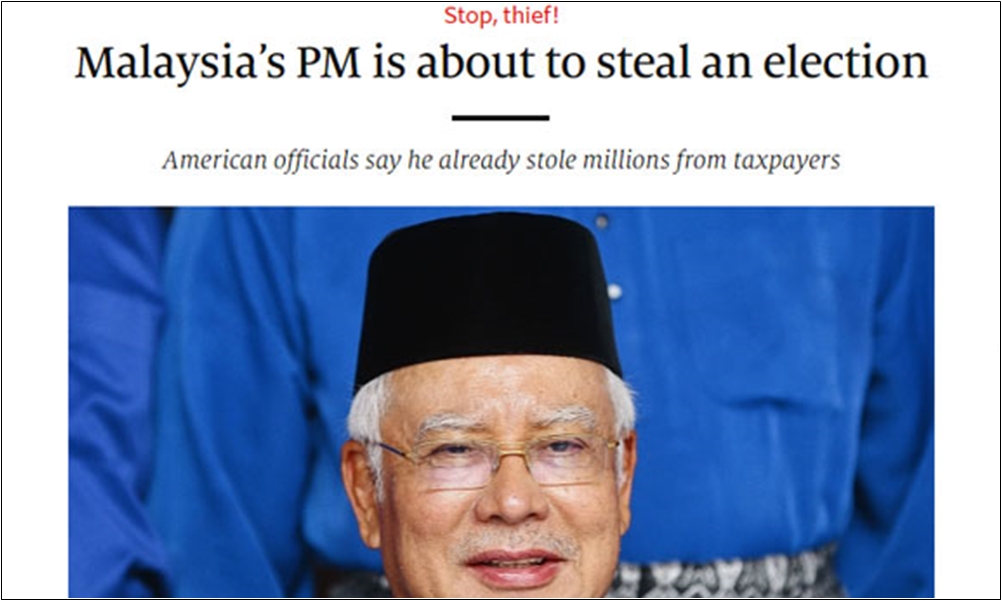
The titles of the two articles are self-explanatory: “Tilting the Playing Field” and “Stop Thief!” The articles explain that in Malaysia “the electoral boundaries are not the only way in which the system is stacked against the opposition.”
“The media are supine. The police and the courts seem more interested in allegations of minor offences… than they are in the blatant bilking of the taxpayer over 1MDB and the open violation of the constitution at the election commission.”
The second article concludes: “Najib may be venal, but he is not stupid. He fears that most voters would not return him to office if given a choice, so he is taking their choice away.”
Defending Najib and BN
In response, Ahmad Rasidi Hazizi, the Malaysian high commissioner to the UK, wrote that the articles “reeked of an arrogant colonial mindset, disparaging our prime minister, government, police, judiciary, election commission, media and even our voters.”
He noted that the articles were “based on falsehoods pushed by the opposition alleging gerrymandering in the electoral boundary redrawing exercises.”
Arguing that the redelineation process was grounded in democratic principles as practised in the West, he alleged that The Economist showed double standards by misreporting the Malaysian exercise.
“In Malaysia, these changes were proposed and implemented by the independent Election Commission and subsequently approved by the judiciary, whose impartiality is evidenced by the fact that it frequently rules against the government and senior ministers.”
Ahmad may be correct that The Economist harbours an arrogant colonial mindset in dealing with Malaysia.
However, if he had used the opportunity to research the subject of electoral gerrymandering and the way past elections in the country have been conducted, he would not have written a defence of BN’s record in “scrupulously” adhering to democratic principles in elections.
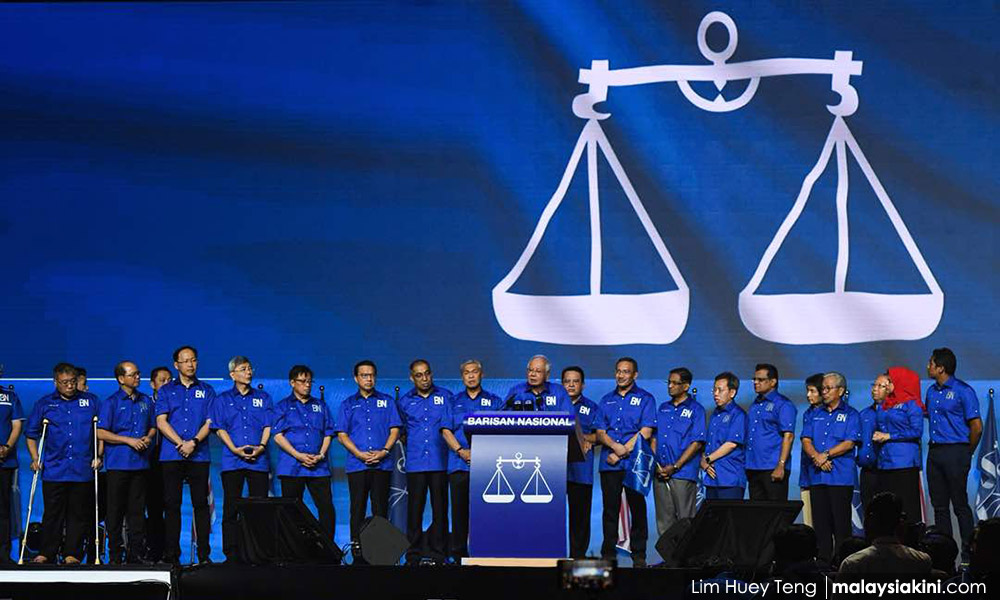
The fact of the matter is that anyone in the world wanting to understand the extraordinary longevity of BN rule does not have to look hard for evidence of how the Alliance and then the BN parties manipulated the electoral playing field by numerous underhand and unethical practices.
Ahmad himself would be spoilt for choice in selecting from the many researchers who have analysed Malaysian politics and concluded that one of the key factors in the government’s political dominance is its control of the “independent” Electoral Commission and the electoral system and processes.
Reference to the work of any of a large number of scholars will provide facts and figures on the reality behind the facade of a vibrant democracy in the country. They include Sothi Rachagan, Michael Ong, Mavis Puthucheary, Norani Othman, Lim Hong Hai, Wong Chin Huat, Harold Crouch, James Jesudason, John Funston, Rainer Heufers, Bridget Welsh, Mustafa K Anuar, James Chin, William Case, Graham Brown, Francis Loh Kok Wah, Ooi Kee Beng, Rustam Sani, Andrew Aeria, Dan Slater, Simon Barraclough, Gordon P Means, Clive Kessler and Diane Mauzy.
One scholar, Kai Ostwald, commenting recently on the country's electoral system in a paper titled “Malaysia’s electoral process: The methods and costs of perpetuating Umno rule”, notes that the Electoral Integrity Project, an independent academic project based at Harvard University and the University of Sydney, ranks Malaysia at 142 out of 158 countries.
This when measured by its electoral integrity score – based on electoral laws, electoral procedures, district boundaries, voter registration, party registration, media coverage, campaign finance, the voting process and vote count.
Ahmad should be aware that no academic of any repute – local or foreign – buys into the argument that Malaysia has an independent Electoral Commission or that we have had free or fair elections.
Najib's gamble
If there is one thing that may be faulted in The Economist article, it is the charge that Najib “fears that most voters would not return him to office if given a choice, so he is taking their choice away.”
The country will have an election soon and, at least for now, it is clear that the caretaker prime minister, while not taking the choice of voting away from the electorate, is also not taking chances that he will lose.
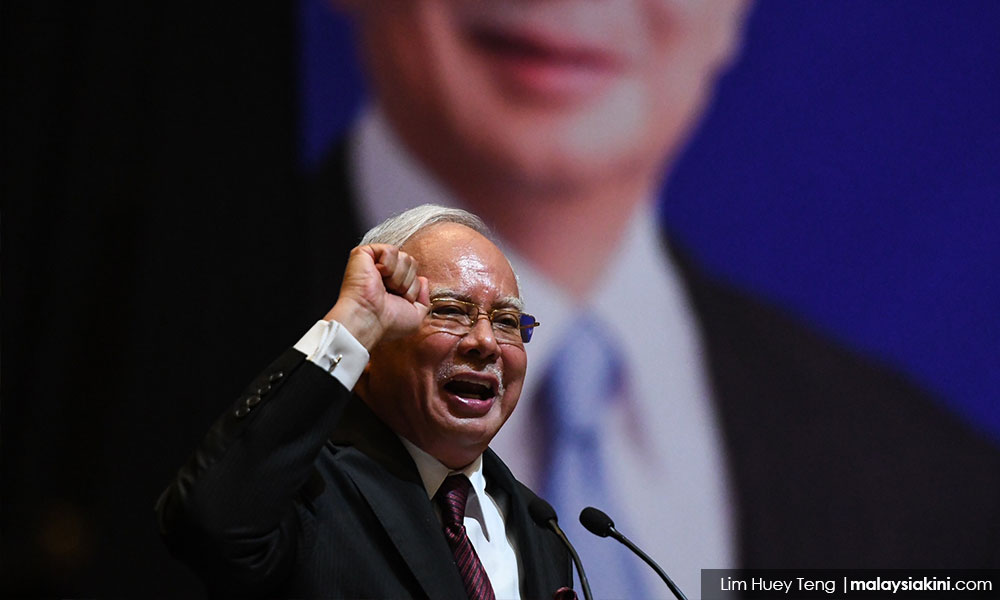
In fact, it is plainly evident to most Malaysians that the caretaker PM is currently engaging in the mother of all vote-buying and electoral gerrymandering exercises the nation has ever seen.
In a recent presentation at a forum on “Will the Malay ground shift?” I estimated that after the latest redrawing of electoral boundaries, the opposition had no more than a 10 percent chance of victory.
I also noted that the main hope for an opposition upset rested with Dr Mahathir Mohamad if he could tap into the sense of Malay shame and humiliation arising from the alleged conduct of Umno leaders. If so, he might help bring about a swing of eight to 10 percent in the rural and semi-rural constituencies that BN won with narrow margins in the last election.
The caretaker prime minister’s ostensible explanation for asking Malaysians to vote for him has been encapsulated in his resort to a Trump-like slogan: “Make my country great with BN."
However, it is also apparent that a change of government could open the floodgates of official charges against the outgoing prime minister arising from the 1MDB scandal.
Should the opposition win, the question should be asked whether BN will be agreeable to a peaceful transition of power in view of its record of electoral and post-electoral chicanery.
Even if the possibility of an opposition victory seems remote, it may be pertinent to request all parties – BN, Pakatan Harapan and others – to commit themselves to a peaceful aftermath of an election possibly carrying the highest stakes in the country’s history.
LIM TECK GHEE is a retired academician and is currently a public policy analyst.
The views expressed here are those of the author/contributor and do not necessarily represent the views of Malaysiakini.


Are you sure you want to delete this comment?
This action cannot be undone.