



Opposing BN, Harapan strategies in face of transformed Johor
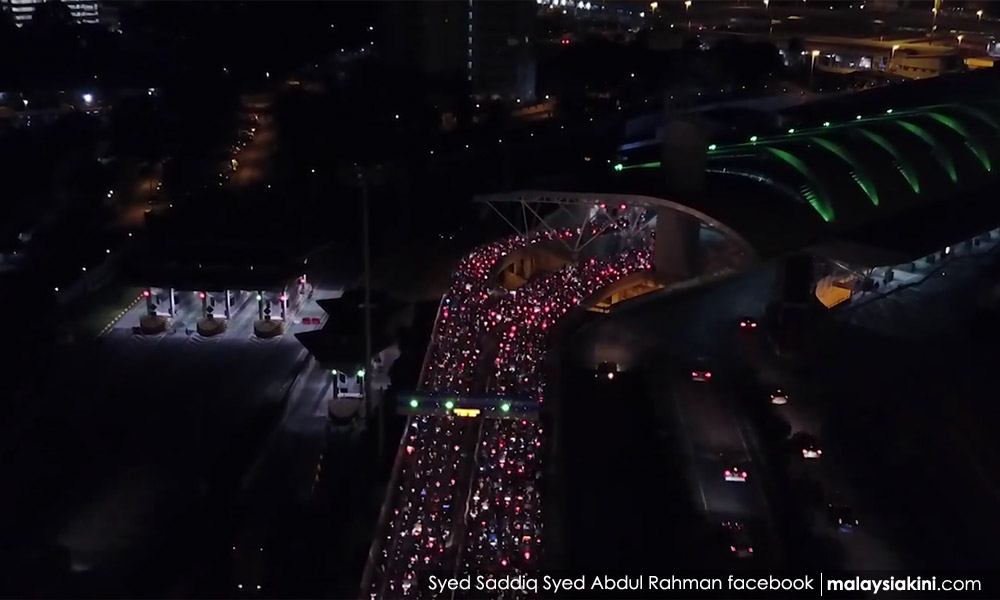
GE14 | Every day, some 300,000 people cross the Johor Causeway and the Malaysia-Singapore Second Link, many of whom are Malaysian labourers working in Singapore.
These labourers are not only Johoreans, but also Malaysians from across the country who have chosen to settle in southern Johor due to its proximity to Singapore.
GE14 | Every day, some 300,000 people cross the Johor Causeway and the Malaysia-Singapore Second Link, many of whom are Malaysian labourers working in Singapore.
These labourers are not only Johoreans, but also Malaysians from across the country who have chosen to settle in southern Johor due to its proximity to Singapore.
This has turned them into a key electoral demographic for the 14th general election.
Mindful of this, Pakatan Harapan leaders, particularly those in Johor, have tailored their political message specifically to this group and surprisingly, they have gained a large audience on social media.
For example, DAP's incumbent Johor Jaya assemblyperson Liow Cai Tung's video about the accident-prone Pasir Gudang Highway – a key road linking greater Johor Bahru towards the Singapore border – garnered more than 344,000 views and 10,000 shares.
Thousands of Malaysians use the 30km highway, which the video dubbed as the "Southern Johor death gate," for their daily commute in and out of Singapore.
The video highlighted some 6,000 accidents that occurred along the 40-year-old highway between 2015 and 2017, and included an emotional interview with someone who had lost a family member to a mishap there.
The government had moved to upgrade the ageing highway, but works have dragged on for six years, leaving unsafe conditions along parts of the highway.
Similarly, Bersatu Youth chief Syed Saddiq Abdul Rahman, who will be contesting in Muar, shared a video of how his father who had worked in Singapore woke up at 4.30am every day to brave the congested Johor Causeway.
"I didn't come from a wealthy family. If you look at my old home at Taman Perling, you will understand.
"For most families, dinner time is family time, but for my father, he was always absent as he had yet to arrive home.
"Even though work finishes at 6pm, he has to be stuck in a terrible jam and can only reach home at 10pm or 11pm," he said in the video which received more than 651,000 views and 20,000 shares.
Mixed constituencies
Internal migration due to the Singapore factor has altered the electoral demography of southern Johor, and this is particularly true for parliamentary seats in the greater Johor Bahru comprising Kulai, Iskandar Puteri (formerly Gelang Patah), Pulai, Tebrau, Pasir Gudang and Johor Bahru.
An example of the changing demography is Pengkalan Rinting, a state seat within the parliamentary seat of Pulai. Formerly known as Tambatan, the seat was a Malay-majority constituency.
However, at the end of 2017, Pengkalan Rinting comprised 41 percent Malays, 45 percent Chinese and 11 percent Indians, becoming a mixed race seat. It has been renamed Perling in the coming general election.
"There are many new housing developments here, such as in Bukit Indah and Selesa Jaya. Around 60 to 70 percent are Malaysian labourers working in Singapore," incumbent Pengkalan Rinting assemblyperson Cheo Yee How told Malaysiakini.
Cheo only won Pengkalan Rinting by a 1,970-vote majority, but in the polling districts of Bukit Indah and Selesa Jaya, a total of 6,274 people voted for him, compared to MCA which received 1,963 votes in those areas.
"Many of them were from northern states... Many of their families have also followed their children to settle down here," Cheo said.
In the last general election, the Kulai and Gelang Patah fell to the opposition for the first time while BN retained Pasir Gudang, Tebrau, Pulai and Johor Bahru with significantly reduced majorities.
BN won Pasir Gudang by 935 votes, Tebrau by 1,767 votes, Pulai by 3,226 votes and Johor Bahru by 10,135 votes.
In that election, 10,728 voters in Pasir Gudang, 14,728 in Tebrau, 16,598 in Pulai and 12,604 in Johor Bahru did not vote. The election outcome may have been different had they voted.
Since then, these seats have seen five digits increase in voters compared to the last general election, owing to migration from other states.
'Demoralising voters'
With their growing numbers, a local senior Umno leader, who spoke on condition of anonymity, conceded that they have become an increasing concern for the ruling coalition, especially at a time when Johor has become a frontline state in the 14th general election.
“In the past polls, most outstation voters were hardcore opposition supporters... it greatly impacted BN in southern Johor," he said.
For this reason, Harapan has rigorously encouraged those working in Singapore to come home to vote.
However, the Election Commission's setting a midweek polling day on May 9 may hamper their turnout.
While Putrajaya has declared May 9 a public holiday, it has no standing in Singapore and it will depend on the goodwill of employers there to grant their Malaysian staff the day off.
The Umno leader hopes that this will work to BN's advantage.
"Between salary and (unpaid) leave, they will choose wages. They came back in large numbers during the last general election but BN still won.
"I predict that they will be disappointed and will not come back to vote this time. This will help BN," he said.
To both BN and Harapan, the strategy for Malaysian voters working in Singapore is not so much about convincing them which coalition is better, but rather, it has become a game of inspiring or demoralising them.


