



Building coalition politics and fulfilling the people’s hopes
COMMENT | It was University of California Berkeley political scientist Arend Lijphart who first described Malaysia's political system as a "consociational democracy," meaning that each of the respective races in Malaysia would be represented by a key political party of their choice.
Right until May 9, 2018, which will go down in history as a monumental day, Malays had primarily believed that Umno was the main vehicle of representation to channel and articulate their interest, and that MCA and MIC would do the same for the Chinese and Indians in the country respectively.
But as much as May 9 was a huge electoral victory for Pakatan Harapan, with the seismic effects continuing to be felt from Kangar to Kota Kinabalu, there has to be due regard for the previous political system, even as Pakatan Harapan tries to strike out on an independent future to free the minds and habits of Malaysians.
In the event of any conflict or issue, arising from cabinet appointments, for instance, it helps if all sides can resort to using internal party mechanisms to forge a consensus. Speaking openly and directly to the media at the first instance – while emotionally cathartic – is politically damaging to a new government.
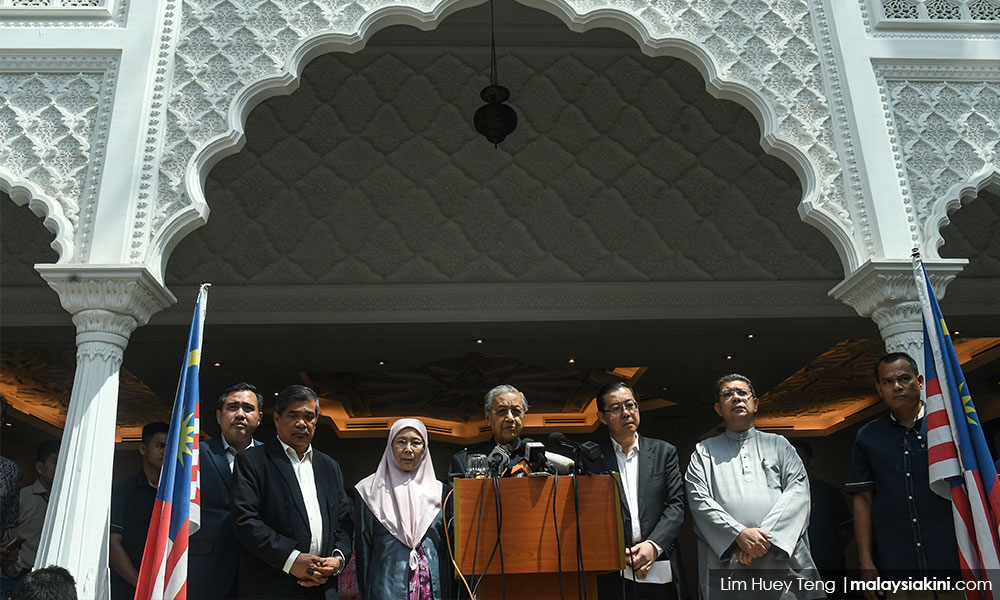
There are five reasons why Malaysian politicians, regardless of which party in Harapan, have to be wise and savvy, not just ‘fact-smart’. The latter involves a direct engagement with the media that can prove counterproductive to what Harapan hopes to achieve, especially in the first 100 days leading up to the next five years...
COMMENT | It was University of California Berkeley political scientist Arend Lijphart who first described Malaysia's political system as a "consociational democracy," meaning that each of the respective races in Malaysia would be represented by a key political party of their choice.
Right until May 9, 2018, which will go down in history as a monumental day, Malays had primarily believed that Umno was the main vehicle of representation to channel and articulate their interest, and that MCA and MIC would do the same for the Chinese and Indians in the country respectively.
But as much as May 9 was a huge electoral victory for Pakatan Harapan, with the seismic effects continuing to be felt from Kangar to Kota Kinabalu, there has to be due regard for the previous political system, even as Pakatan Harapan tries to strike out on an independent future to free the minds and habits of Malaysians.
In the event of any conflict or issue, arising from cabinet appointments, for instance, it helps if all sides can resort to using internal party mechanisms to forge a consensus. Speaking openly and directly to the media at the first instance – while emotionally cathartic – is politically damaging to a new government.
There are five reasons why Malaysian politicians, regardless of which party in Harapan, have to be wise and savvy, not just ‘fact-smart’. The latter involves a direct engagement with the media that can prove counterproductive to what Harapan hopes to achieve, especially in the first 100 days leading up to the next five years.
First and foremost, an election can only remove the top layer of the corrupt politicians at work. But an election cannot, at one go, remove the politicians’ hidden cronies, nominees and vested family interests.
Thus, more than anything, courage to stay the course of comprehensive reforms, should be used to root out what can be analogously referred to as the ‘deep state’, rather than to speak to the open media, let alone to tweet it, as President Donald Trump is inclined to do in the United States.
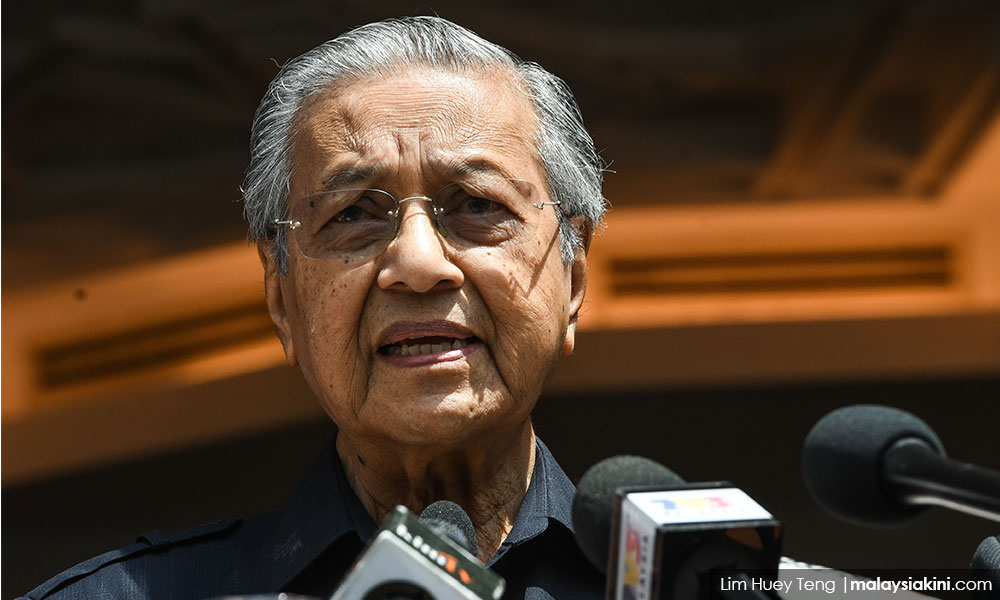
In politics, no news is good news. This period of calm can be used as a strategic platform to terminate the ‘termites’ that had been gnawing of the foundation of the state – which is the expertise of Dr Mahathir Mohamad by virtue of his extensive experience and previous track record.
Secondly, the whole point of an election is not merely to usher in the new only but to understand what has previously worked. And, if the latter has proven to be the case, there is no need to challenge it wholesale, in order to retain some semblance of stability to ensure the next phase of reforms.
For example, it defeats the purpose of reform if every single move by Mahathir is seen through the prism of ‘authoritarianism’. Doing so not only allow one to be entrapped by the past but to allow the past to be the script of the future.
Take the response of PKR Subang MP Wong Chen, for example. While he is a good colleague of mine who worked tirelessly in this monumental journey, Wong's blanket defence of Rafizi Ramli – that any failure to critique Mahathir now will lead to a return to the iron rule of Najib – is too simplistic and falls into the realm of confirmation bias, i.e., the tendency to interpret new events as confirmation of one's existing beliefs.
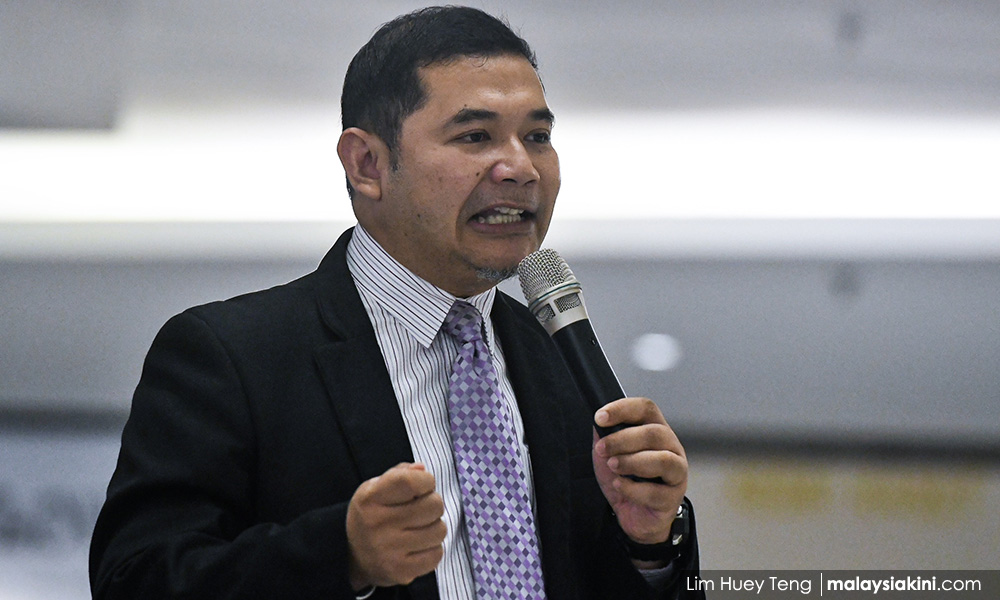
Well, to be fair to Mahathir, his problem is not criticism. In any Harapan presidential council, he gets his fair share of sound bites from everyone across the spectrum. But Mahathir rejoices in parrying these criticisms too, which is why he has earned the respect of PKR, DAP and Amanah together with the rest of Bersatu.
Democraty in Harapan alive and well
Democratic criticism is alive and well in the presidential council and other such meetings, resulting in many extended hours despite Dr Mahathir’s periodic flu bugs. Most presidential council members including me were pleasantly surprise to witness the ‘listening dictator’ who despite hours of deliberations by all and sundry, will get a decision at the end of the meeting.
Likewise in the Bersatu supreme council meetings, where all without fear or favour register their views, however juvenile it may be. Mahathir had the patience and ability to listen to intelligent arguments and sometimes otherwise.
There have been numerous times Mahathir changed his strong views on issues when it was debated intelligently with facts, numbers and context. I have yet to see a more ‘democratic dictator’ than him.
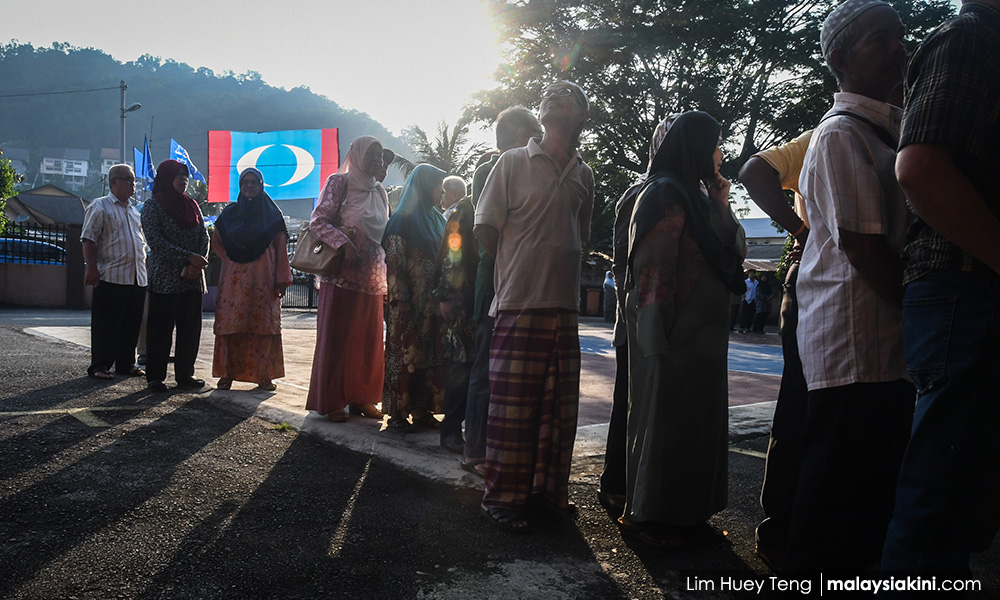
Thirdly, elections are extremely exhausting and difficult to pull through. Without the will and good cheer of the rakyat, indeed the people of Malaysia from all walks of life, it is almost impossible to remove the regime of Najib, granted the propensity of the latter to resort to using open and other more sophisticated forms of bribes, or what Mahathir criticised as the ‘cash is king’ approach.
When a coalition is new, and still exhausted by the recent election campaign, it helps to take a breather. Using internal party mechanisms to resolve issues will cut down on the sensationalism that the media thrives on to get their copies and viewership up.
Take the raids of Najib and Rosmah, for example. No such events immediately took place, as good governance is not the equivalent of a witch hunt, where the mob is set on the culprits. Yet the media spoke of it as if these incidents were real and immediate. The police clarified that they just went to investigate the CCTV recording at the luxurious Pavilion condo.
Elections are not one off events across the country too. There are party elections as well, as required by law in the Registrar of Societies. When things do not immediately go smoothly, surely the members of Bersatu and the likes, would now know how to rein in their respective leaders.
Thus, one cannot accuse Mahathir of operating in a vacuum. As Mohamad Sabu, the newly minted defence minister and Amanah president said, "any cabinet decisions rest in the prerogative of the prime minister." This is to give the prime minister some room of manoeuvre, without which the government of the day cannot run, but will always be bogged down by intense lobbying of special interest.
Fourthly, in any coalition, consensus can come in a variety of forms. Consensus can mean unanimity, where everyone agrees. But in the expediency of governance, consensus can also mean a policy of minus one. No doubt it is true that PKR has 47 seats in the Parliament. But DAP has 42, Bersatu has 13 and Amanah has 11.
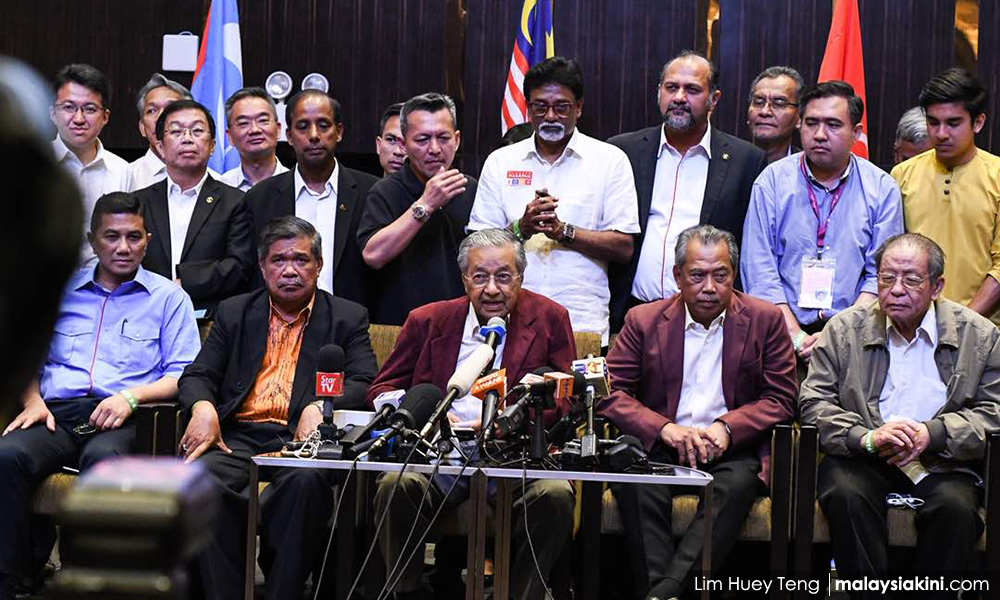
In the days to come, there is no telling how many defections will work in the favour of Harapan too, now that Umno and BN have been painfully defeated. Thus, each cabinet decision cannot be subject to intense scrutiny of one party as yet, precisely because tremors continue to be felt across the lay of Malaysia. Granted this reality, three of the most important cabinet portfolios have to be announced first, with the seven remaining portfolios to come.
The culture of accommodation
Fifthly, one must understand the culture of accommodation, not the attitude of winner takes all, which is both zero sum in orientation and execution. In any system, to accommodate the interest of diverse cultural and subethnic groups, the basic threshold is organisational finesse and etiquette, what most would call ‘team work.’
If every unhappy politician goes in different directions like a quark then what you have at the national stage is the behaviour of either Abdul Hadi Awang in PAS or Jeffrey Kitingan in Sabah.
In the case of Hadi, he attempted to transform PAS into an ambitious kingmaker, yet was oblivious to the moral weakness of this argument, since Islam as a religion is one in favour of peace, not necessarily power for the sake of power.
Jeffrey, however, kept switching sides in ways that betray his election pledge of ‘Sabah for Sabahans’, eventually ending up in the embrace of Musa Aman, which is what his constituents did not want. Pristine betrayal!
In all, coalition building requires time, patience, team work, ethics of self-restraint, and more than anything else, that altruistic ethos to take one for the government. The combination of such good habits and practices, over time, can lead to a culture of mutual existence that makes it difficult for the ‘deep state’ to attempt an early comeback.
And, there is every incentive for them to attempt a power lunge given the extent to which they have lost to the rakyat on May 9.
For once, it is no longer “I,” it is more “we”. It is no longer the party, it is more the rakyat. The rakyat have very high hopes on Harapan. They voted for credible reform and credible change. They want Harapan to listen and do more for the rakyat and the nation, than party politics or individual aggrandisement.
Harapan must be focused on delivering the beautiful Buku Harapan that was laboriously written by all parties in the coalition through intense contestation of ideas and hardcore research. That is the priority. That must be the priority.
My appeal to all in Harapan, never ever betray the great hope of the rakyat who have invested in the coalition with their votes. And their future. No one person or institution can claim that this is their victory. This is a collective victory of the rakyat.
RAIS HUSSIN is a Bersatu supreme council member, and heads its policy and strategy bureau.
The views expressed here are those of the author/contributor and do not necessarily represent the views of Malaysiakini.


Are you sure you want to delete this comment?
This action cannot be undone.