




Is Port Dickson an easy stroll along the beach for Harapan?
Port Dickson has long held a reputation as a weekend getaway for Klang Valley folk due to its many beaches and seafood restaurants.
But in the weeks to come, the town and its surroundings will serve as a political battleground for PKR’s Anwar Ibrahim, who hopes to earn the mandate from the people of Port Dickson to be their MP and eventually become prime minister.
Port Dickson is a parliamentary constituency that covers the entire coast of Negeri Sembilan, stretching from Sungai Sepang, which serves as the natural divider with Selangor, and Sungai Linggi, which borders Malacca...
Port Dickson has long held a reputation as a weekend getaway for Klang Valley folk due to its many beaches and seafood restaurants.
But in the weeks to come, the town and its surroundings will serve as a political battleground for PKR’s Anwar Ibrahim, who hopes to earn the mandate from the people of Port Dickson to be their MP and eventually become prime minister.
Port Dickson is a parliamentary constituency that covers the entire coast of Negeri Sembilan, stretching from Sungai Sepang, which serves as the natural divider with Selangor, and Sungai Linggi, which borders Malacca.
This constituency was created in 1974 under the name Teluk Kemang and was considered a BN and MIC stronghold until PKR’s Kamarul Bahrin Abbas finally wrested it away in 2008.
In the May 9 general election (GE14), PKR's Danyal Balagopal Abdullah retained the seat for his party by securing an impressive 59 percent of the votes cast. Yesterday, Danyal announced his resignation to facilitate Anwar’s return to Parliament.
This constituency has a diverse ethnic make-up and is also diverse in terms of political parties - Umno, MCA, MIC, PKR, DAP and PAS all contested for state seats within the constituency during the May 9 election.
According to the 14th general election data, the Port Dickson constituency comprises 43 percent Malays, 33 percent Chinese, 22 percent Indians and two percent others.
State constituencies within PD
Within the Port Dickson parliamentary constituency are five state constituencies - from north to south - Chuah, Lukut, Sri Tanjung, Bagan Pinang and Linggi.
The northernmost state constituency Chuah hosts Bukit Pelanduk, infamous for the Nipah virus outbreak in 1998 that claimed the lives of 105 people.
Chuah and Lukut have a Chinese-majority electorate.
Sri Tanjung is a mixed-ethnicity constituency and where most of Port Dickson’s oil and gas businesses are located.
The two southernmost state constituencies of Bagan Pinang and Linggi have a Malay-majority electorate and are also where most of Port Dickson’s sea-facing holiday accommodations - including several abandoned ones - are located. Bagan Pinang is also home to the Segenting military camp.
Since 2008, BN has only been able to hold on to Bagan Pinang and Linggi.
Coast and beyond
The Port Dickson parliamentary constituency is around 577sq-km in area - or about 70 percent the size of the state of Perlis.
While the constituency is vast, the population is largely concentrated along the coast, which will make campaigning easier.
Beyond the coast, the northern part comprises Chinese villages and estates that are becoming increasingly urbanised with new housing developments.
For campaigners, the challenge lies in the south, where many Malay villages sparsely dot the vast landscape, making it time-consuming, particularly for Pakatan Harapan, to penetrate these BN strongholds.
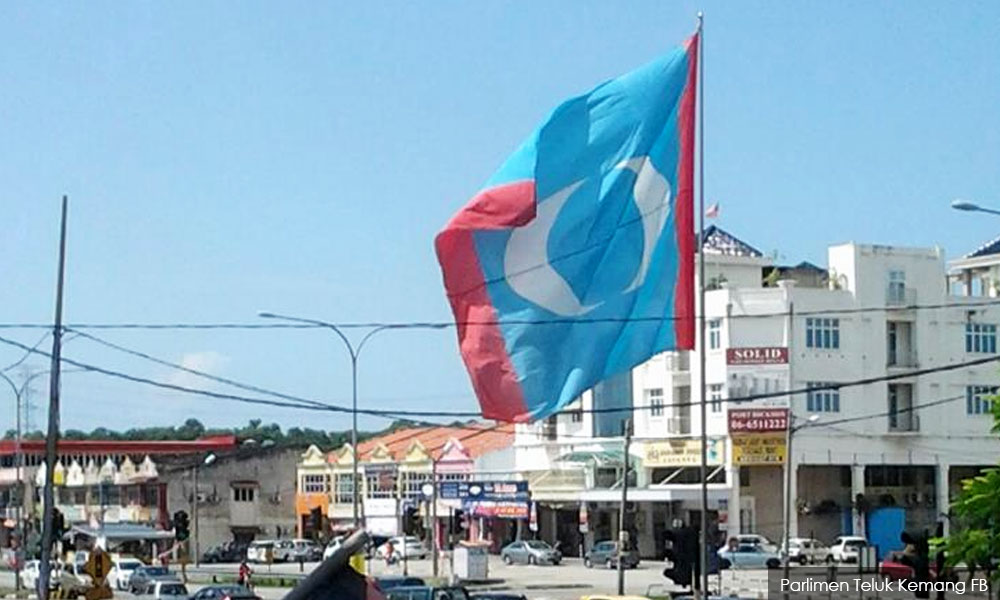
Some Port Dickson voters will be casting their ballots in a by-election for the second time. There was a by-election for Bagan Pinang state seat in 2009 which saw former Negeri Sembilan menteri besar Mohd Isa Abdul Samad from Umno beat Zulkefly Mohamad Omar of PAS.
Zulkefly is now part of PAS splinter party Amanah, which is a member of the Harapan coalition. He is also the Negeri Sembilan state assembly speaker.
Factors to be considered
Even though Harapan won Port Dickson with a 17,710 vote-majority on May 9, the low turnout observed in the three recent by-elections, as well as Umno's cooperation with PAS, mean a challenge is conceivable.
For example, during last Saturday’s by-election in Seri Setia, a constituency with only slightly fewer voters than Port Dickson, Harapan's share of votes declined by eight percent - to 58.6 percent compared with the 66.6 percent received in GE14.
This was in part due to the abysmal 44.1 percent turnout, down from 84.4 percent that cast their ballots during the 14th general election.
Since Harapan won in Port Dickson by securing only 59 percent of the votes on May 9, a similar eight percent drop would put the coalition in a precarious position. The turnout for Port Dickson during GE14 was 81.5 percent.
Another factor that may discourage voters from showing up is the argument that a forced by-election is unnecessary and a waste of public resources, since there is nothing impeding the incumbent from performing his duties.
Yesterday, PKR leaders were quick to address this by pointing out that Port Dickson voters will be motivated by the fact that Anwar is the prime minister-in-waiting and that there is potential for future rewards for the constituency.
PKR vice-president Rafizi Ramli also said his party took cognisance of the low turnout in the previous by-elections, adding that it would fall on party election director Nurul Izzah Anwar to mobilise voters.


Are you sure you want to delete this comment?
This action cannot be undone.