



Yeo: No electricity tariff increase to promote green agenda
The government will not accept any calls to increase electricity tariff as part of its agenda to promote energy efficiency in Malaysia.
Energy, Science, Technology, Environment and Climate Change Minister Yeo Bee Yin said there are many more effective ways which could be implemented to achieve the same goal, without burdening the people...
The government will not accept any calls to increase electricity tariff as part of its agenda to promote energy efficiency in Malaysia.
Energy, Science, Technology, Environment and Climate Change Minister Yeo Bee Yin said there are many more effective ways which could be implemented to achieve the same goal, without burdening the people.
"The tariff increase suggestion will not be accepted by me," she said during a ministry's townhall session on energy efficiency in Kuala Lumpur today.
"I believe our green agenda can go hand in hand with affordable electricity."
She said in response to townhall participants who suggested that the government should consider reducing subsidies on energy tariffs and instead introduce a new rate that reflects the true cost of supplying electricity.
Commenting further, Yeo said she had received many similar calls from industry players for the implementation of a "cost reflective tariff" across various sectors.
In rejecting the calls, she pointed out that an increase in tariffs would impose a burden on consumers who are from the lower-income groups.
"While you actually benefit some, you are giving a lot of difficulties to people at the bottom of the pyramid.
"What I hope is that renewable energy and energy efficiency will not go down that route."
At the same time, Yeo said there could be "unavoidable reasons" for an increase to electricity tariffs, as Malaysia's generation mix is highly reliant on fossil fuel which in turn is dependent on global fuel price.
"But we will not deprive the people just because we want to push for a green agenda," she stressed.
At a press conference later, Yeo reiterated that the government will not increase electricity tariffs solely as part of its agenda to promote energy efficiency.
"We cannot be increasing that (tariffs) just because we say 'let's increase the tariff so people use less electricity'.
"That doesn't work," she said.
Yeo previously said the government has allocated RM114 million to subsidise electricity surcharge for 81.7 percent of domestic users from July to December this year.
At the time, she said the allocation for the subsidy from the Kumpulan Wang Industri Elektrik (KWIE) would ensure domestic users would not have to pay any increase in electricity tariffs, which would be reviewed every six months.
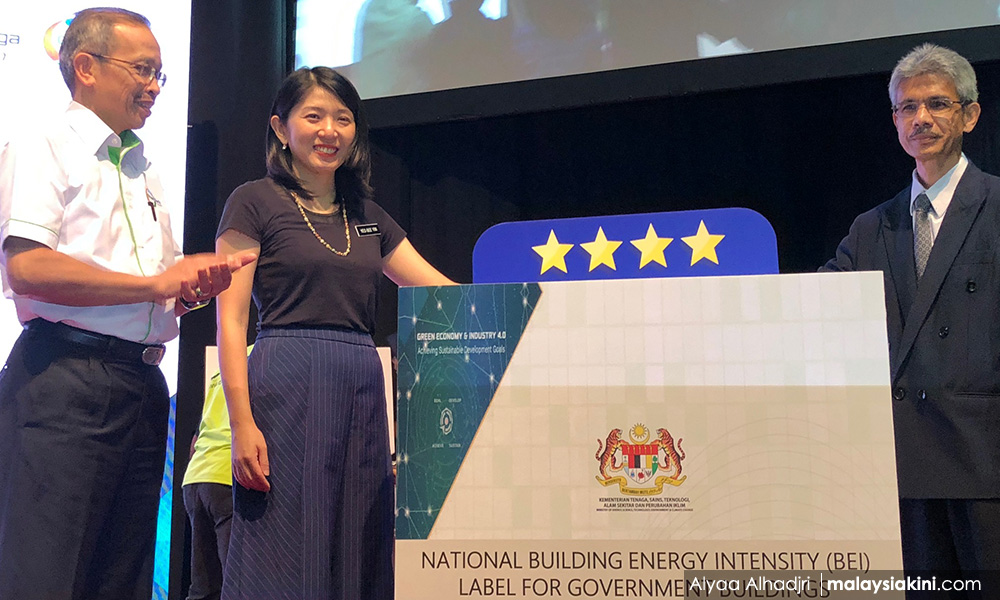
As part of the government's efforts to promote energy efficiency, Yeo, together with ministry secretary-general Ahmad Fauzi Hasan, earlier launched a long-term programme named the "National Building Energy Intensity (BEI) Labelling for Government Buildings" - ultimately aimed to reduce energy consumption and ease the federal utility bills.
The first phase to be implemented by the end of this year will involve 100 buildings occupied by federal ministries and its agencies, before it is expanded to some 1,900 government buildings including hospitals and schools, from next year until 2023.


Are you sure you want to delete this comment?
This action cannot be undone.