


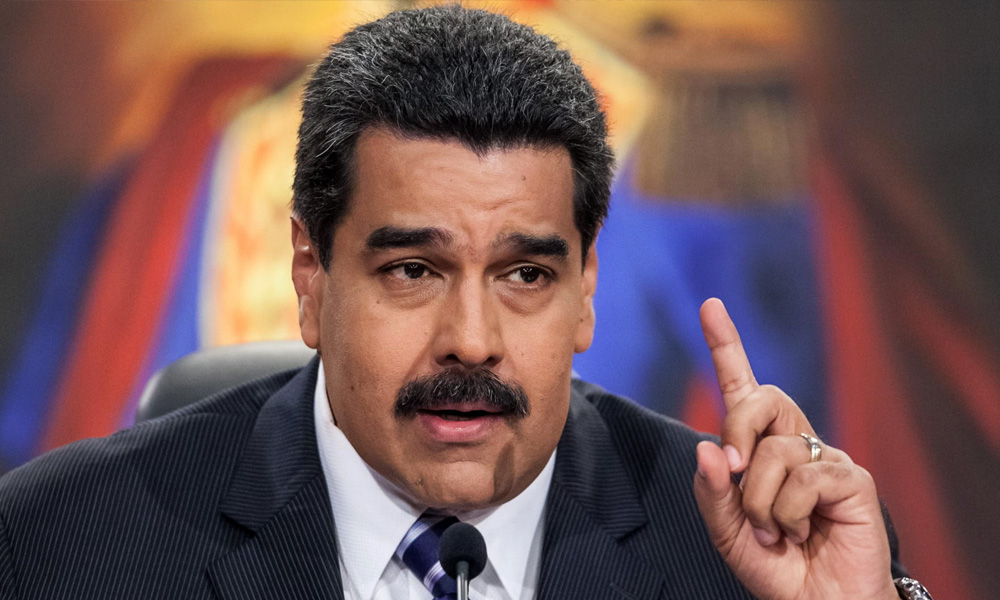

As nations turn against him, Venezuela's Maduro parades with military
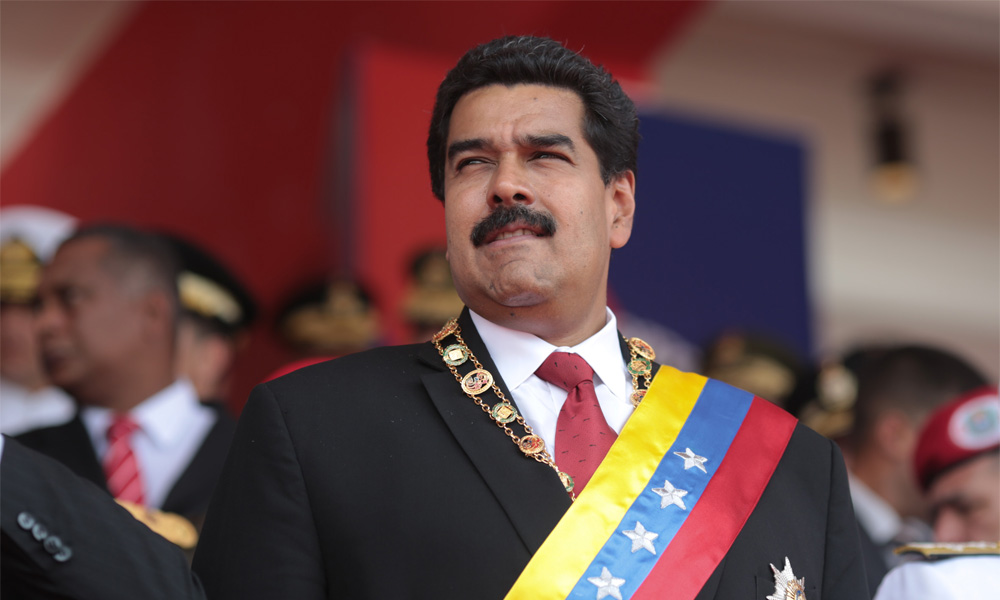
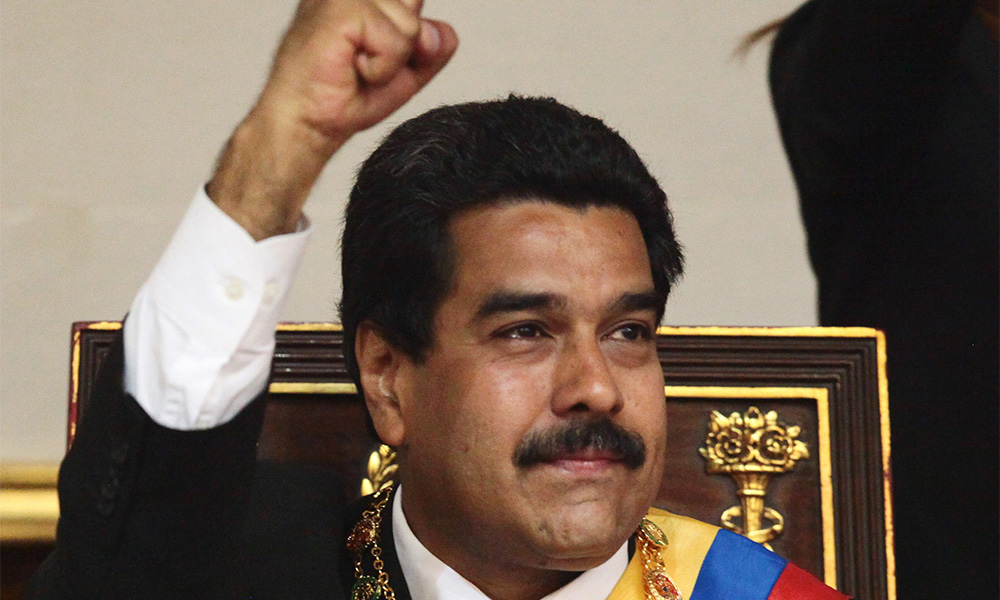
Venezuelan President Nicolas Maduro oversaw a display of the army's Russian hardware on Sunday, with anti-aircraft flak and tank rounds pounding a hillside to show military force and loyalty in the face of an international ultimatum to call fresh elections.
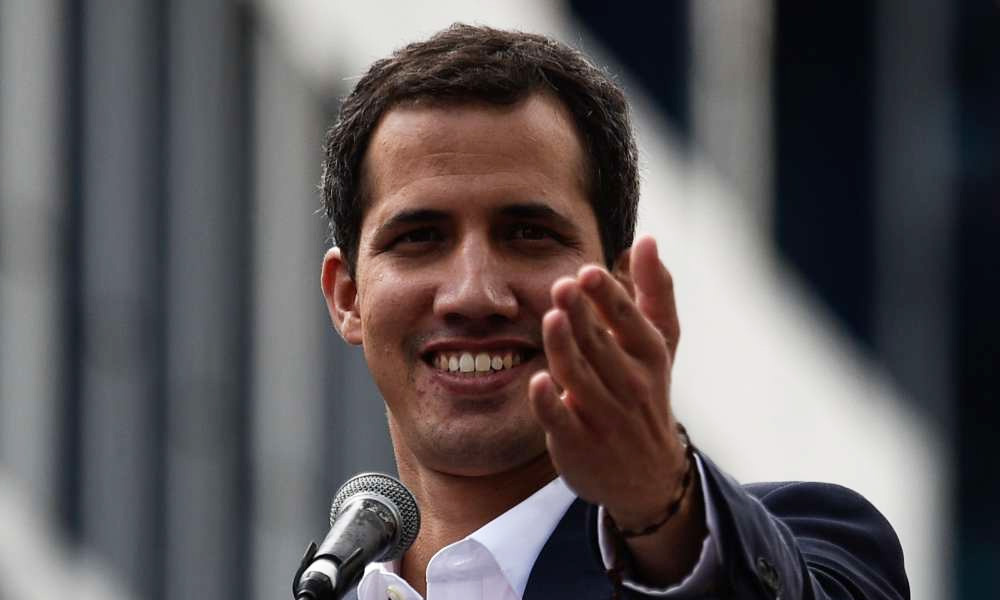
Maduro, 56, is confronting an unprecedented challenge to his authority after opposition leader Juan Guaido declared himself interim president citing a fraudulent election.
Guaido has won wide international support and offers amnesty to soldiers who join him. On Sunday, Israel joined the countries backing the 35-year-old leader.
Early on Sunday, flanked by Defence Minister Vladimir Padrino, Maduro watched a platoon of soldiers release volleys of rocket-propelled grenades, machine gun and anti-aircraft fire, and tank rounds at hillside targets, the Russian ordnance kicking up clouds of dust at the Fort of Paramacay, an armoured vehicle base.
Maduro said the display showed the world he has the backing of the military, and that Venezuela's armed forces are ready to defend the country.
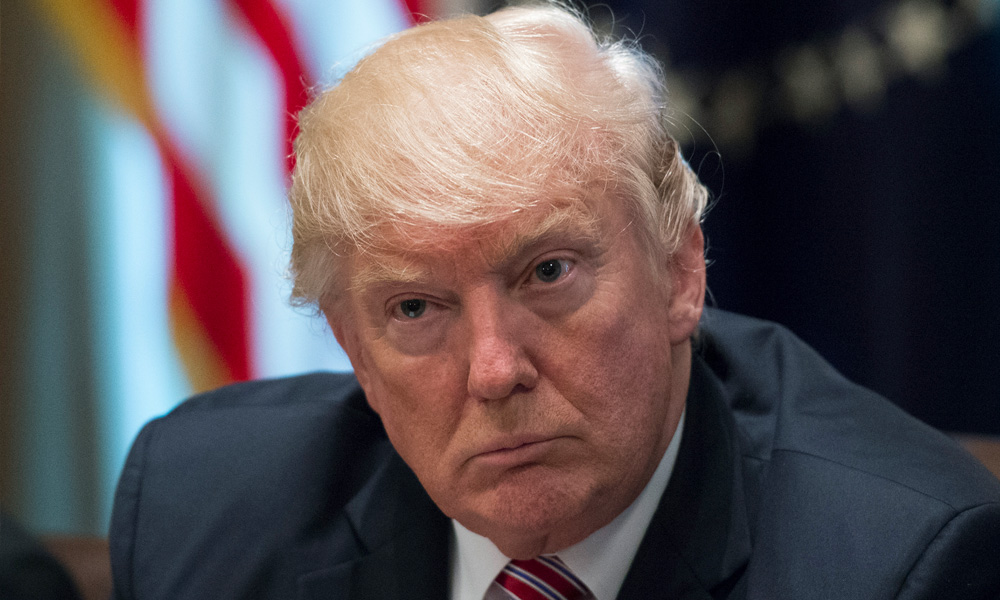
Maduro says Guaido is taking part in an attempted coup directed by US President Donald Trump's hardline policy advisers.
"Nobody respects the weak, cowards, traitors. In this world what's respected is the brave, the courageous, power," Maduro said, as the dust settled on the base.
The show of force was accompanied by a government publicity campaign online based on the slogan "Always Loyal, Never a Traitor," and followed a high-profile defection by the country's top military diplomat in the United States on Saturday.
The Fort of Paramacay, about two hours west of the Capital Caracas, was the site of an uprising in 2017, when a group of about 20 soldiers and armed civilians attacked the base. The leader of the attack, which was quickly subdued, said he was calling for a transition government.
At United Nation's Security Council debate on Saturday, Russia and China strongly backed Maduro and rejected calls by the United States, Canada, Latin American nations and European powers for early elections.
Both Russia and China are major creditors to Venezuela.
Since the government of Maduro's late mentor Hugo Chavez, the Opec nation has invested heavily in Russian weaponry, including Sukhoi fighter jets and heavy armoury.
The strategic alliance was in evidence last year, when two Russian nuclear-capable bombers landed in Venezuela. Reuters reported on Friday that private military contractors, who do secret missions for Russia, flew into Venezuela to beef up security for Maduro.
No elections
In a CNN Turk interview that ran on Sunday, Maduro rejected an international ultimatum to call elections within eight days and said Guaido (photo) violated the constitution by declaring himself interim leader.
Maduro also said he was open to dialogue and that meeting Trump was improbable, but not impossible. The broadcaster dubbed the interview from Spanish into Turkish.
Washington on Saturday urged the world to "pick a side" on Venezuela and financially disconnect from Maduro's government.
Venezuela has sunk into turmoil under Maduro with food shortages and protests amid an economic and political crisis that has sparked mass emigration and inflation that is seen rising to 10 million percent this year.
Britain, Germany, France and Spain all said they would recognise Guaido if Maduro failed to call fresh elections within eight days, an ultimatum Russia said was "absurd" and the Venezuelan foreign minister called "childlike".
Washington, Canada, most Latin American nations and many European states say Maduro stole his second-term election win last May. The former bus driver and union leader cruised to victory after blocking the main opposition candidates from running. Turnout was low.
Turkish President Tayyip Erdogan had voiced his support for Maduro in a phone call on Thursday.
- Reuters


BUT Chavez programmes triggered more contradictions; O&G wealth was increasingly used to fund social programmes and empowered political appointees on basis of ideology etc. At the same time not enough effort was made to diversify the economy. Worst mismanagement and corruption became rampant (power corrupts even the most idealistic). And Maduro (a bus-driver who became a Union Leader and subsequently Chavez right-hand man) exemplified this incompetency and exacerbated mismanagement. He has to resort to more authoritarianism, a trend which started with Chavez. (4) LASTLY it is not helped by a US Government hell-bent on blocking and obstructing any country (especially one within it's backyard) with "socialist tendencies". AND the nail is declining oil prices since the 1990s (mainly the US fracking industry). THE LESSONS? (1) Resource curse. BUT it need not be a curse if husbanded well (ref. Norway and it's oil wealth). (2) Economic over dependence on one commodity. (3) Class divide and income gap (not race) is important for social stability. (4) An over-reliance on free-market-libertarian policies exacerbate class divide and wealth gap. Free-market must be carefully balance with social programmes. (4) As always "power corrupts" even the most idealistic. (5) Governance and management is the corner stone in any policy whether free-market or socialistic.
While some commentators interpret Venezuela in simplistic terms (a narrative driven by the international western, principally, American media) a more accurate interpretation holds lessons for Malaysia. The common media message is Venezuela as a failed state due to the dictatorial powers of Maduro and his socialist party OR the failure of socialist policies. While some of the aforesaid message may have some grain of truth, the hard truth (or facts) lie somewhere in between. Key summary (1) Resource curse, Ven. has the largest oil deposit in the world and is a key oil exporting nation since the early 20th century. Ven was a key creator of OPEC. Up to the late 1970s, oil was key to her economy and under 'centrist' government rule, Venezuela became one of the richest (even matching the US in the 1950/60s) in wealth, development and the middle class. BUT this over-dependence came to be the root of its current problem. By 1975 75% of govt expenses were derived from oil and 20% of national output was derived from O&G. With nationalisation of O&G industry in 1976 govt spending increased 170%. (2) An overly open-unrestrained economy increases wealth gap leading to social strain. By the 1980s, with oil prices declining (relative to previous decades), this over-dependence led to declining economy, The middle class shrank by 25%. Class division deepens which led to the rise of Hugo Chavez. For free-market-libertarians class-division and excessive wealth gap are REAL and give some traction to the theory of the "instability of unrestrained free-market leading to boom-bust". (3) Idealistic socialist or populist policies are usually stymied by human in-competencies and the old human "passions" such as avarice and the intoxication of power. Chavez set into motion socialist programmes which uplifted millions of previously impoverished citizens. Till today Chavez is revered amongst the poor.
Venezuela. Terrible country. Someone from their country needs to do something but hands are tied. Need UN intervention.
Are you sure you want to delete this comment?
This action cannot be undone.