


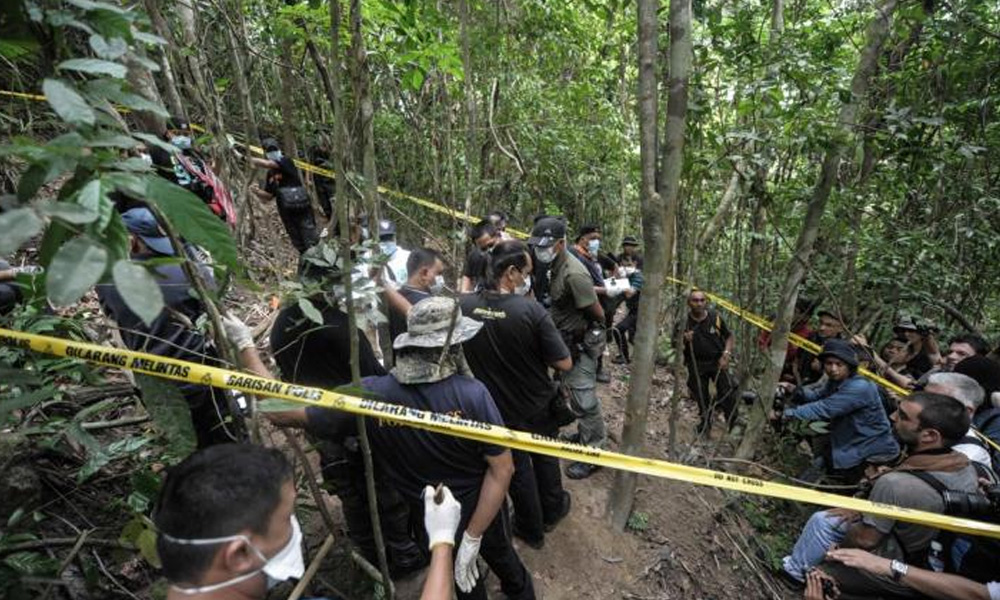

Wang Kelian mass graves: Suhakam fingers cops over 'four-month delay'
Police had dispatched its forensics team to exhume the bodies at the Wang Kelian human trafficking campsite in May 2015, four months after the mass graves were discovered.
This was among the findings of a 121-page report prepared by the Human Rights Commission (Suhakam) and NGO Fortify Rights titled “Sold like a Fish”, which was revealed in Kuala Lumpur this afternoon....
Police had dispatched its forensics team to exhume the bodies at the Wang Kelian human trafficking campsite in May 2015, four months after the mass graves were discovered.
This was among the findings of a 121-page report prepared by the Human Rights Commission (Suhakam) and NGO Fortify Rights titled “Sold like a Fish”, which was revealed in Kuala Lumpur this afternoon.
Suhakam, in a statement, said the delay could have affected evidence to facilitate police investigations.
“The four-month delay in exhuming the bodies delayed post-mortem examinations and, in turn, hampered forensic specialists from identifying the cause of death of exhumed remains,” the commission said.
The report also urged Malaysian authorities to ensure those responsible face the music in tandem with international human rights laws.
“If possible, Suhakam and Fortify Rights also suggest that the Royal Commission of Inquiry (RCI) identifies the individuals who committed the crimes and bring them to justice in Malaysia,” it added.
The RCI on Wang Kelian, headed by former chief justice Arifin Zakaria, is expected to reveal its findings in June.
The mass killings made headlines in 2015 when police discovered 139 graves, 106 bodies, believed to be Rohingyas, and 29 illegal immigrant detention camps deep in the jungles of Bukit Genting Perah and Bukit Wang Burma, a few hundred metres from the Malaysia-Thai border in Wang Kelian.
Malaysian authorities have only prosecuted four foreigners linked to the trafficking syndicate, while the Thai authorities have charged 62 individuals, including nine civil servants.
According to the 121-page Suhakam report, some 170,000 Rohingya and Bangladeshis were smuggled in through the Malaysia-Thai border, between 2012 and 2015.
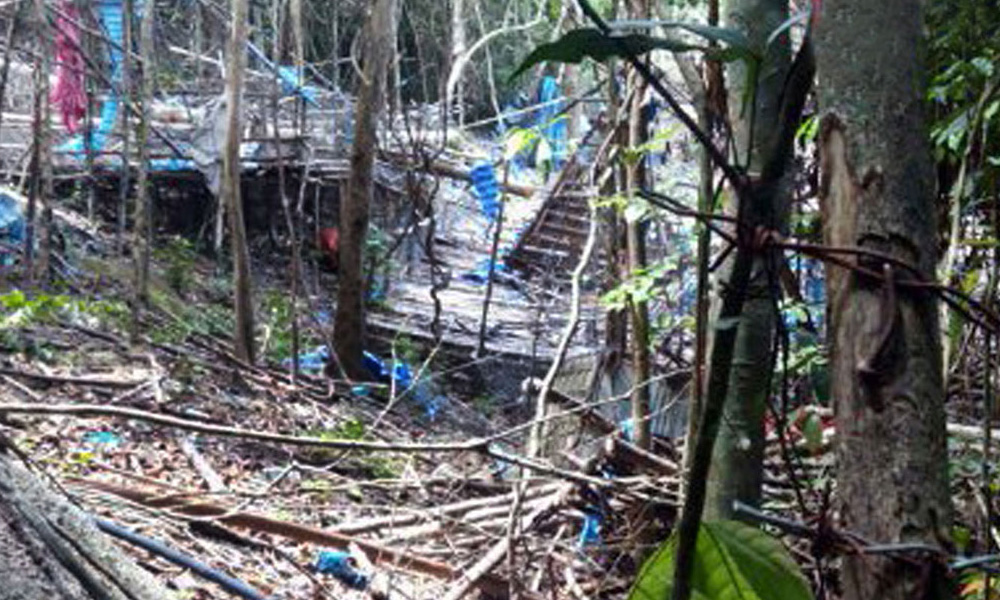
The report said that in that period, the traffickers managed to reap in between RM175 million and RM349 million from the activity.
It also contains interview with more than 270 witnesses, including the survivors of the camp, traffickers, civil servants and others.
"The traffickers comprised Myanmar nationals, Thais and Malaysians, who tortured the victims with pipes, baseball bats, belts, wires, nails, and threatened and intimidated them.
"Every victim was forced to pay US$2,000 in exchange for freedom. Those who could not afford to pay, were deprived of food, drink, and shelter, contributing to illness, disability, and even death," read the report.
The victims also comprised female children who were sold into slavery and marriage in Malaysia, it added.
"People died every day. Some jumped off boats as they could not take the torture inflicted on them."
The trafficking survivors told the same story about their predicament - that the traffickers approached them at their villages, talking about job opportunities in Malaysia, and once they got on the boat, they were tortured for ransom.
"Some victims are even sold as slaves and into the sex trade. The female victims are often kept in the boats or in the traffickers' camps, to gratify the lust of the latter.
"We hope the new government in Malaysia will right the wrong, by giving justice to the Rohingya, and other victims of this crime."



Are you sure you want to delete this comment?
This action cannot be undone.