




Bank Negara calls for 'critical' labour reforms with many M'sians underpaid
Bank Negara has urged the government to improve labour laws and reform the labour market, following research which suggests Malaysian workers are not adequately compensated for their work.
Benchmarked against their counterparts in the US, Australia, United Kingdom, Germany and Singapore, Malaysian workers are being paid a third less for a comparable level of productivity...
Bank Negara has urged the government to improve labour laws and reform the labour market, following research which suggests Malaysian workers are not adequately compensated for their work.
Benchmarked against their counterparts in the US, Australia, United Kingdom, Germany and Singapore, Malaysian workers are being paid a third less for a comparable level of productivity.
This was based on a study published in the central bank’s 2018 Annual Report, which was released to the public today.
"If a Malaysian worker produces output worth US$1,000 (RM4,079), the worker will be paid US$340 (RM1,387) for it.
"The corresponding wage received by a worker in benchmark economies for producing the same output is higher at US$510 (RM2,080)," the study read.
Despite being made up of many labour-intensive industries, the Malaysian economy affords employees a lower share of the national income – 35.2 percent of the GDP – when compared to benchmark economies (52.7 percent).
The study also found that there was "insufficient" creation of high-skilled and high-paying jobs.
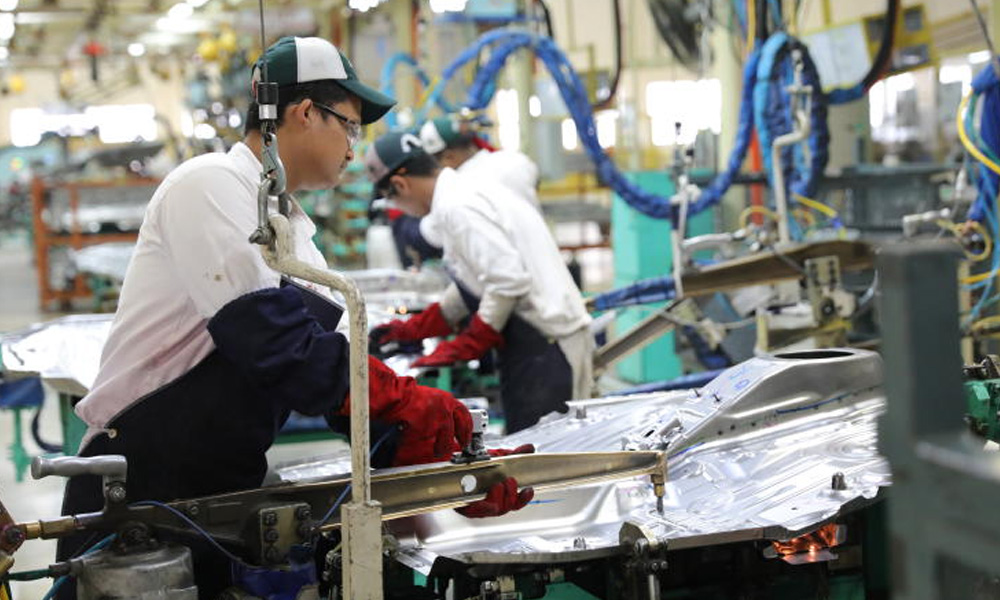
From 2010 to 2017, the number of low-skilled and low-wage jobs grew by 4.6 percent, while high-skilled and high-wage jobs grew by just 2.8 percent.
This was coupled with the expansion of labour-intensive industries, which pay relatively low wages.
Labour reforms ‘critical’
Commenting on the findings today, bank governor Shamsiah Mohd Yunus urged Pakatan Harapan to focus on creating more high-skilled and high-paying jobs if it wanted Malaysia to be a high-income economy.
She also called for urgent reform of the labour market to allow for more equitable compensation of Malaysian workers.
“Comprehensive reforms are critical," she said. "Attracting quality investment that will generate more high skilled jobs should be our focus.
“Beyond that, we need to reduce labour dispatches, improve labour laws and ensure that wages reflect productivity."
RELATED REPORTS
Cash transaction limit in the works to curb money laundering
Malaysian economy not in deflation - Bank Negara





Report this comment
Are you sure you want to delete this comment?
This action cannot be undone.