


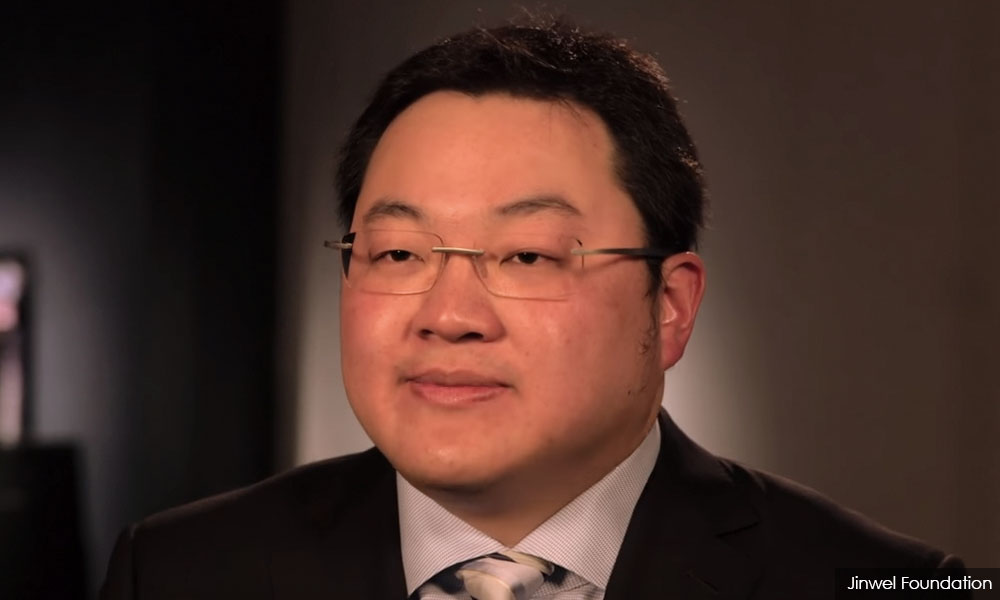

Court wants evidence of conversation between banker, Jho Low
A prosecution witness in the SRC International money laundering and corruption trial of former premier Najib Abdul Razak has been compelled to produce evidence of an alleged conversation between fugitive Low Taek Jho and an Ambank banker.
Kuala Lumpur High Court judge Mohd Nazlan Mohd Ghazali today allowed the bid by Najib's defence counsel Muhammad Shafee Abdullah and co-counsel Harvinderjit Singh, which followed a lengthy back-and-forth with the prosecution...
A prosecution witness in the SRC International money laundering and corruption trial of former premier Najib Abdul Razak has been compelled to produce evidence of an alleged conversation between fugitive Low Taek Jho and an Ambank banker.
With the trial entering its fourth day today, Kuala Lumpur High Court judge Mohd Nazlan Mohd Ghazali allowed the bid by the defence, which followed a lengthy back-and-forth with the prosecution.
The fourth prosecution witness, former Bank Negara investigation officer Ahmad Farhan Sharifuddin, was ordered to produce the items seized from its raid on the Jalan Raja Chulan Ambank branch on July 6, 2015.
Farhan had earlier testified that on the day of the Ambank raid, he met banker Joanna Yu Ging Ping on the 24th floor of the building, where she had handed over the evidence.
"My ruling on this application, based on the grounds of request for producing of documents relating to the communication mentioned by the defence, is relevant," the judge said.
"The witness is required to produce the evidence pertaining to the communication."
Read more: Day 4: Najib stopped by 'student' as court adjourns
Seized phone
When Nazlan asked the defence what evidence they wanted Farhan to produce in court, Najib's defence counsel Harvinderjit Singh replied that they needed the emails and Yu's seized Blackberry phone – which may contain conversations with Low, and several other individuals linked to the case.
“I seek communication from Yu, Daniel Lee and Krystle Yap. These are people in the (Ambank) Relationship Department, who communicate with the Ambank branch, and they communicated with most people (related to the case).
“(The defence needs) emails and the (seized) Blackberry phone to check whether there are people who communicated with Low,” he said.
Harvinderjit then read out a list of other names that may have bearing on Najib's defence if they appeared in conversations in the seized items – Nik Faisal Ariff Kamil, Jerome Lee Tak Loong, Terrence Geh Choh Heng, Jasmine Loo Ai Swan, Shahrol Azral Ibrahim, Mohammed Azhar Osman Khairuddin, Ismee Ismail, and See Yoke Peng.
Nazlan reminded the lawyer that if conversations with these people are contained in the seized items, they need to be produced in court, to which Harvinderjit agreed.
Lead defence counsel Muhammad Shafee Abdullah then added that they are also seeking to include another official recording that the bank may have in a Blackberry communication.
Attorney-General Tommy Thomas then stood up and assured the court that the prosecution he is leading will attempt to comply with the order.
Thomas also remarked that the whole matter began during Harvinderjit’s cross-examination of Farhan over what the witness has in his safekeeping from the Ambank raid.
Assembling evidence
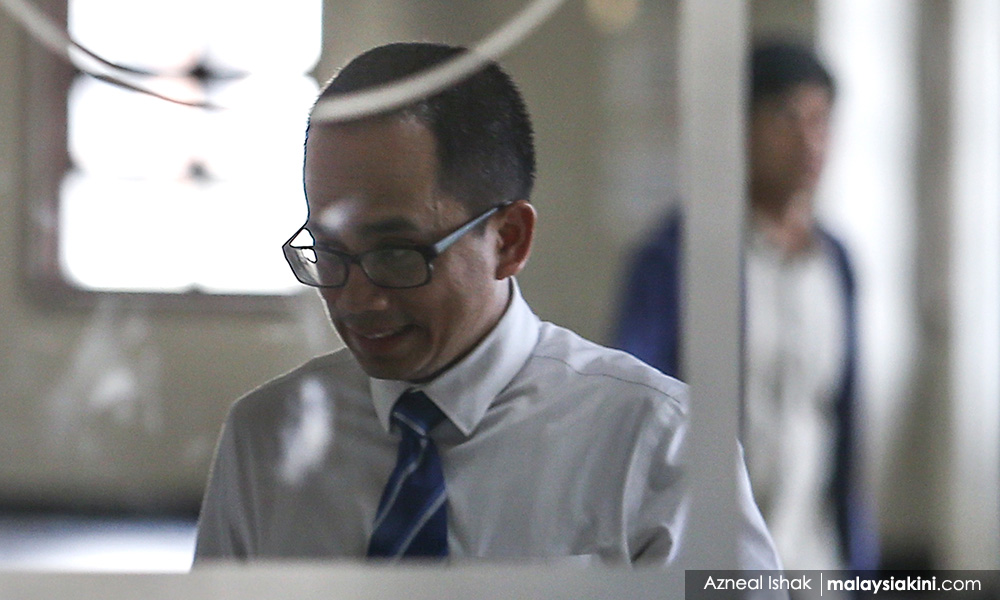
Earlier this afternoon, Harvinderjit (below) asked Farhan whether he could produce at least some of the documents and items from the raid.
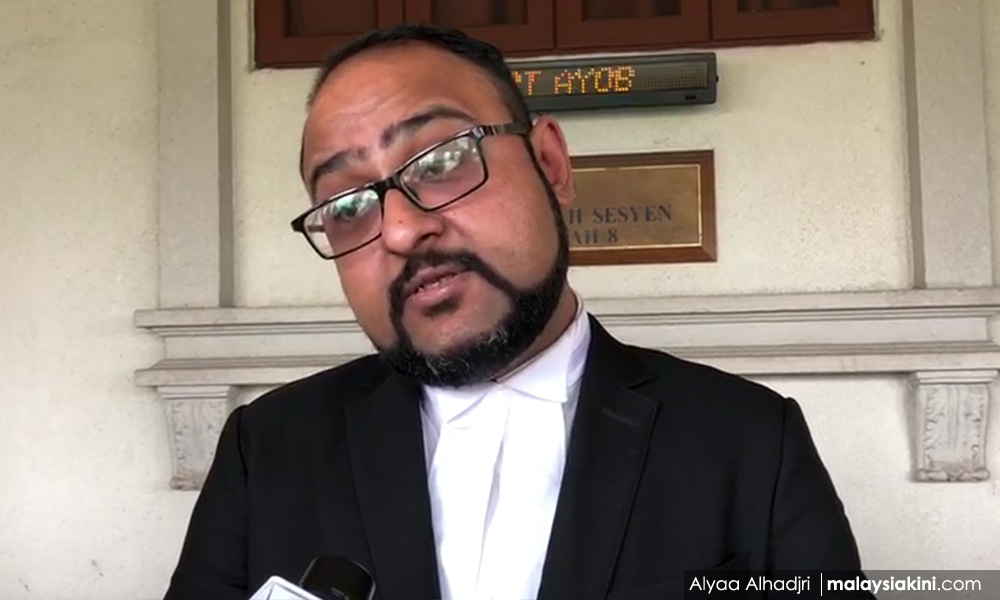
“We will attempt to comply. The whole discussion began when these people said that these items (sought by the defence) were in his (Farhan’s) custody.
"He may have 200 over items under his custody,” Thomas said, adding that the prosecution can help with the production of the items in court.
This prompted Harvinderjit to state: “Who is the filter (on what seized items by Farhan should be produced in court). The prosecution or the witness. They (prosecution) may filter it out."
Thomas countered by saying that the prosecutors are officials of the court and that they do their duty truthfully.
Deputy public prosecutor Suhaimi Ibrahim told the court, however, that Farhan may not be able to produce all the evidence sought by the defence tomorrow, and asked whether the prosecution could proceed with a different witness first.
Among the witnesses that may be called to the stand tomorrow are Nimma Safira Khalid, an officer with Affin Bank.
Nimma was previously identified as the individual who handed over bank documents on the three bank accounts of Ihsan Perdana – the corporate social responsibility arm of SRC International – during a raid by Bank Negara.
The raids on both Ambank and Affin Bank came four days after the Wall Street Journal reported that investigators believed at least US$700 million had flowed into Najib's bank account.
'No knowledge of wrongdoing'
Speaking to reporters outside court, Shafee (below) said that the defence needed to scrutinise the evidence seized from Yu to prove that Najib had no knowledge of the purported wrongdoings that he is charged with.
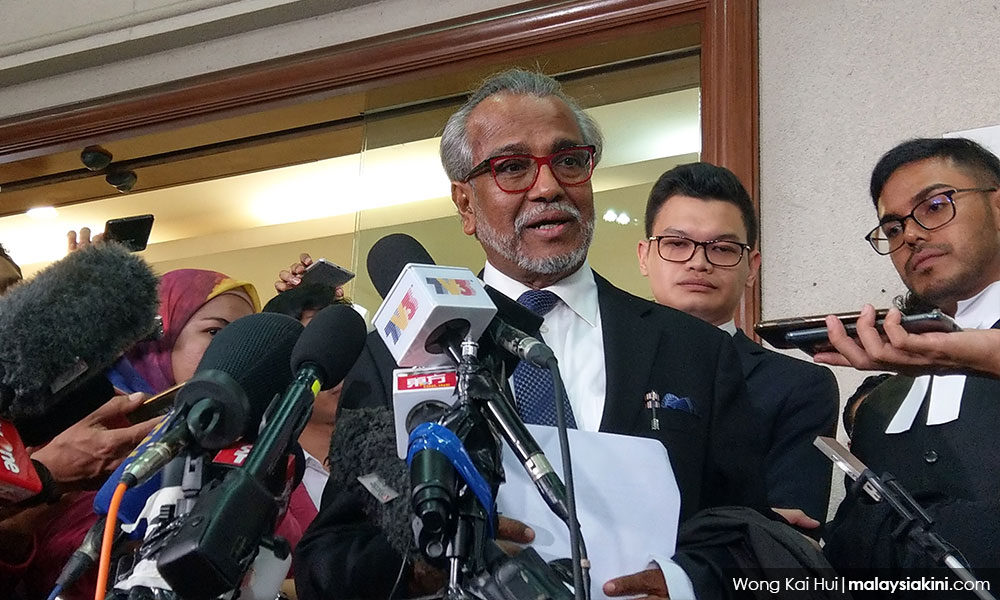
"It is especially true in this case, as he (Najib) does not deal with accounts (at Ambank) directly.
"That is why you see name of Nik Faisal (Ariff Kamil), his secretary who had died, and Low, and what directions they gave the bank (Ambank). That is relevant (to Najib's defence).
"I know of the (alleged) Blackberry communication as it is (reported by) Sarawak Report, (the book) ‘Billion Dollar Whale’, and all the articles by the Wall Street Journal.
"Those conversations between Yu and Low are critical, as they suggest that Low is trying to tell Yu about these monetary transactions, to make sure prime minister (Najib) does not know," he claimed.
'Proper procedure'
The back and forth between the defence and prosecution began when Thomas objected to the line of questioning taken by Harvinderjit towards Farhan.
He told the judge that Harvinderjit's cross-examination verged on affecting the testimony’s admissibility and relevance.
"Furthermore, at the end of the day, it is also for the protection of the accused," he said, adding that this may affect the other trials faced by Najib later.
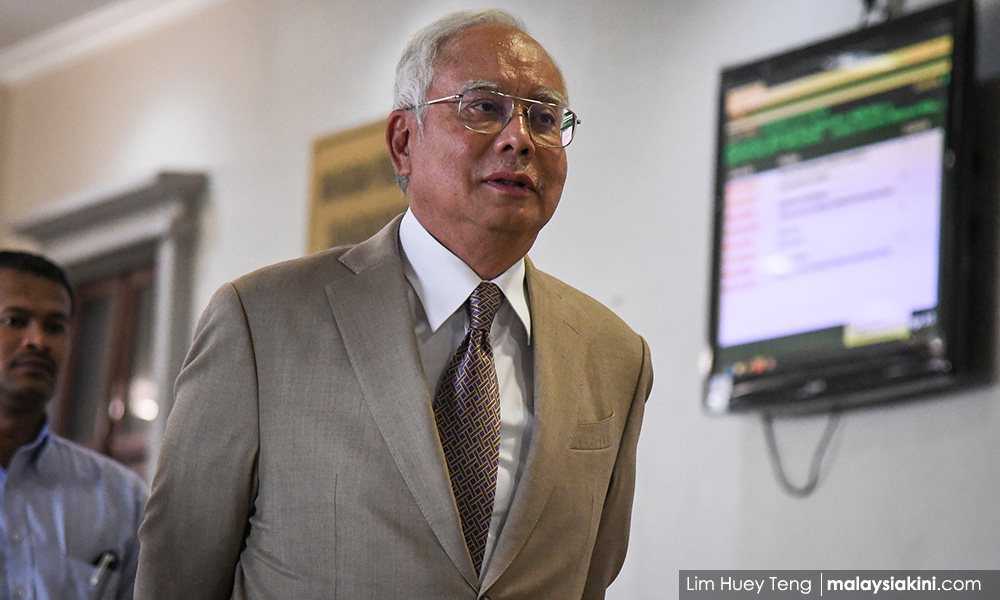
Harvinderjit countered that Farhan needs to answer the questions, as it involves the operation of accounts of Gandingan Mentari and the accused, among others.
Proceedings took a more acrimonious turn when deputy public prosecutor V Sithambaram objected to the defence’s bid for Farhan to produce documents from the Ambank raid, calling it a "fishing expedition."
"They (defence) must satisfy admissibility and necessity. What they are doing is a fishing expedition. We need proper procedure (via official application),” he said, adding that this goes against Section 51 of the Evidence Act 1950.
"If they keep asking for documents to check whether they are relevant or admissible, this is set to be a long trial."
Harvinderjit then accused the prosecution of trying to block Najib's application. Shafee then chimed in, saying it is up to the courts to decide whether to allow the bid or not.
He stressed that the matter is relevant as the documents were seized from Ambank– which has a bearing on Najib's defence, in terms of transactions linked to his account with the bank.
"There must be leeway for us to explore. We are not seeking the witness' (Farhan's( communication with the MACC, just those (documents seized) in his possession, which were not in my client's defence,” he said.
Proceedings got to the point where Harvinderjit even began reading excerpts from Wall Street Journal articles and Billion Dollar Whale.
The lawyer said the excerpts – that purportedly refer to Yu's communication with Low – were not meant to be taken as the defence admitting the truth of the allegations, but rather to highlight the need for them to scrutinise the evidence in Farhan's possession.
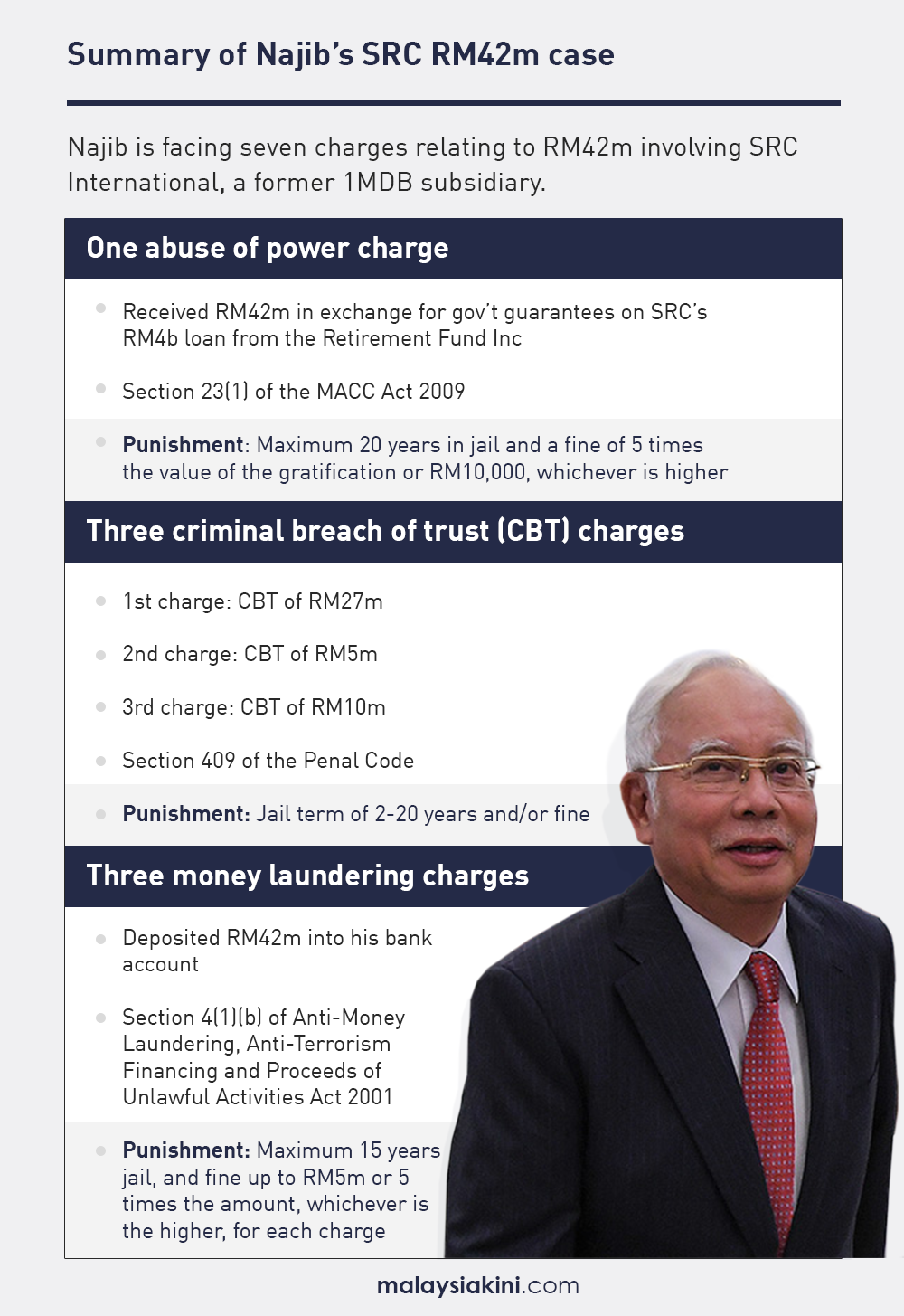
Najib is being tried on three counts of criminal breach of trust under Section 409 of the Penal Code, three counts of money laundering under Section 4(1)(b) of the Anti-Money Laundering, Anti-Terrorism Financing and Proceeds of Unlawful Activities Act 2001 (AMLATFAPUAA) 2001, and one count of abuse of power under Section 23 of the MACC Act 2009 in relation to funds amounting to RM42 million linked to SRC International, a former 1MDB subsidiary.
If convicted, the Pekan MP can be sentenced up to 20 years in jail, whipping and fine for the CBT charges; a maximum 20 years' in jail and a fine not less than five times the amount of bribe involved or RM10,000, whichever is higher, for the abuse of position charge; and jail time not exceeding 15 years, and a fine up to RM15 million or five times the amount involved, whichever is higher, for the money laundering charges.


Report this comment
Are you sure you want to delete this comment?
This action cannot be undone.