



Apply rule of law across board for better economic climate - author
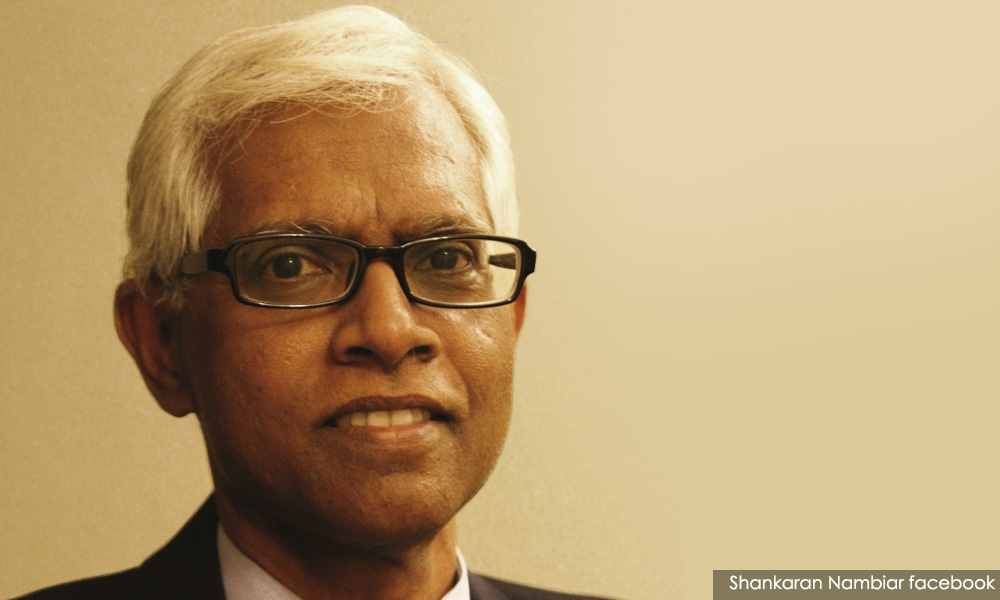
In his new book "Malaysia Economy on the Edge of Transformation", Shankaran Nambiar (above) said the rule of law is one of the important factors for the reform of the Malaysian fabric.
In an interview with Malaysiakini, Shankaran was asked if the MACC's newfound passion to combat corruption, or the Finance Ministry's eagerness to expose past misdeeds of the previous BN government, were good or bad for the economy...
In his new book "Malaysia Economy on the Edge of Transformation", Shankaran Nambiar (above) said the rule of law is one of the important factors for the reform of the Malaysian fabric.
In an interview with Malaysiakini, Shankaran was asked if the MACC's newfound passion to combat corruption, or the Finance Ministry's eagerness to expose past misdeeds of the previous BN government, were good or bad for the economy.
The economist, who hails from Penang, replied: "Surely, the Finance Ministry should have exposed past misdeeds as that is a part of the minister's job. The extent of the damage must be announced, as it was."
"However, beyond that, there should be clear policies on how such misdeeds can be avoided, how checks and balances can be introduced to ensure this does not happen again, or can at least be minimised," said the senior research fellow now attached to the Malaysian Institute of Economic Research.
Finance Minister Lim Guan Eng exposing the previous administration's corruption and wrongdoings did not go down well with PKR president Anwar Ibrahim.
Anwar, who is the prime minister in waiting, said Lim should instead concentrate on assuring investors to invest in the country.
He was backed by Bloomberg's Andy Mukherjee who said Lim's stance risked leaving investors with an "uncertain fiscal outlook".
This was in line with Najib's view that Lim's exposé on the country's RM1 trillion debt and liabilities will only frighten away investors.
One year later, new MACC chief commissioner Latheefa Koya's appointment has kept Malaysia on its toes as she has vowed to probe all graft cases, including reviewing cases which were labelled with "no further action".
To this, Shankaran said implementing the rule of law means that the law should apply to everyone, without discrimination.
He said the government should allow the process to take its course, regardless of who is under scrutiny.
"It is expected that people in positions of such authority should be a bit like monks, going beyond their friendships and hatreds," said the former economist lecturer, who now resides in Kuala Lumpur.
"You can't have the law being applied to people you don't like and being brushed aside for people you like."
Shakaran said if such a scenario happens, only a particular category of investors would be selected, especially those who would thrive through corruption.
"These may not be the best investors. These investors may crowd-out honest investors," he explained.
"Ultimately, even corruption-loving investors will leave the market because the cost of doing business would have gone up."
Shankaran's 155-page book, published by SIRD this year, focuses not only on the Malaysian economy but how Pakatan Harapan could transform it.
The author of an earlier book "Malaysia in Troubled Times", he offers some insights and suggests what could be done to carry Malaysia forward.
"At a regional or global level, I think there has to be a re-thinking process on where Malaysia should be fitting itself," Shankaran said.
"A great deal has happened in the world in the last 10 years in terms of technology, the rise and decline of global powers, the manner in which countries are realigning themselves."
Shankaran said these scenarios have economic significance.
He said it would be ridiculous to act as if we are at the centre of the world and all that is happening in the world - and sometimes that is how we do tend to speak, if not act.
"And that is another reason why you should read the book - to create your own reality check as to how Malaysia fits into the new global scenario."



Are you sure you want to delete this comment?
This action cannot be undone.