




UM chair: Let independent body choose VCs
An independent committee should be set up to handle the appointments of vice-chancellors of local universities, said Universiti Malaya (UM) Board of Directors chairperson Arshad Ayub.
An independent committee should be set up to handle the appointments of vice-chancellors of local universities, said Universiti Malaya (UM) Board of Directors chairperson Arshad Ayub.
"There should be a permanent committee of 11-15 people of prominence and experienced in higher education matters," he said when fielding questions during a talk organised by the UM Academic Staff Association (PKAUM) late Wednesday.
"They should prepare a list of at least 100 people to choose from for the 18 VC posts, 54 deputy VCs and members of the board of directors or governors of the respective universities."
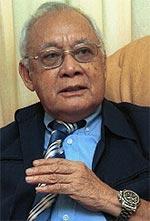 He also agreed with a suggestion that VCs should be given a five-year tenure, instead of the present three, as that would be sufficient time to implement new administrative policies.
"It is important to have the right VCs in place since they are empowered to appoint faculty deans who in turn appoint heads of departments.
"Then there are issues of promotion and appointment of lecturers, which leads to questions of how much power is vested in who and whether or not public funds are spent wisely."
Stressing on the direct impact of governance on standards, he said the feedback from faculty staff will help in drafting a policy for the university's betterment.
Selection body
PKAUM, through a letter published in the Star on March 21, supported a proposal in Azmi Sharom's open letter to Higher Education Minister Mustapa Mohamad for an independent appointment committee for VCs.
In calling for the committee's immediate establishment, its secretary Rosli Omar said VCs were not appointed "to run a business enterprise or a corporatised government agency".
He said they were chief academic officers whose primary duty was "to foster and promote a culture of research and teaching and to instill a spirit of learning and pursuit of knowledge".
"Having a search committee that functions in an independent and transparent manner would be a crucial and major step in this process of re-building our universities."
PKAUM said the committee should comprise "former academics of repute" and "representatives of the senate, board of directors and academic union" of that particular university.
In recent years, the academic standards in the country's top universities including UM have reportedly seen a decline as revealed in the Times Higher Education Supplement World University Ranking 2005, which sparked off a debate on the methodology itself.
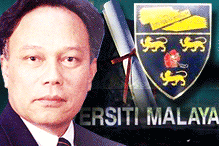 Arshad also quashed rumours that he was at odds with UM Vice-Chancellor Dr Hashim Yaakob (right) whose three-year contract is expiring at the end the month.
Internal politics
The session revealed a long-standing internal dispute with management-level faculty members disparaging academic staff members of PKAUM, an academic staff union.
The question-and-answer session was also heated with one faculty staff expressing disappointment over the media's "cavalier use of the phrase declining academic standards".
The senior mathematics lecturer, who claimed to be happy in UM, rebuked a young lecturer who asked how to reconcile the "regression of academic freedom" with shaping critical thinking among students.
"What's stopping you from talking to students if it's not seditious? As long as it's not seditious, you are free to speak what you want. I also intend to reply to PKAUM's letter in the Star which I disagree with," declared the senior academic.
Several deans also used the open floor to criticise PKAUM for being unethical and allegedly instigating the media to criticise UM's academic standards, and accused it of arbitrarily postponing its annual general meetings citing insufficient quorum when that was not the case.
At the end of it, Arshad advised the staff to set aside their differences and work on improving the standards in UM and among students.
In an immediate response to malaysiakini , PKAUM vice-president Dr Junedah Sanusi said there was no case because the Trade Unions Department had found the claims to be baseless.
Baseless allegations
She said the department had investigated claims by the losing party for the top post in the last three election since 2003 and nothing was found to substantiate the claims.
"The elected exco of PKAUM is recognised as legitimate by the one and only body that has a right to determine the legitimacy of the proceedings of the elections."
She said claims that PKAUM is not on talking terms with UM administration was also unfounded.
"In fact, the last Departmental Joint Council meeting between the administration and PKAUM was on Feb 17."
The issue here, said Junedah, is the elected PKAUM exco is doing what the union is supposed to do by raising issues of service, promotion and better working environment for its members.
"In addition, PKAUM is trying to help cultivate an atmosphere of open discussion without fear of being penalised during promotion exercises or being branded as a traitor to the country.
"This is what is missing is our universities today. Intellectual, academic discussions without personal or career repercussions. Academic freedom."
Chiding the deans for their accusations, she said that "to be subservient to the administration is a clear conflict of interest to our members".


