




Children imprisoned in India’s attempt to control tempers in Kashmir
On the night of August 4, Abrar Ganie, 16, was reading Keki N Daruwalla’s ‘Love Across the Salt Desert’ - a story of five young boys released by a juvenile court after being arrested over a year ago for illegally crossing the border into India from neighbouring Pakistan.
The book forms part of Ganie’s English syllabus prescribed by education department for class 12th. Ganie was reading the book to prepare for his upcoming annual examination.
Beside him, his mother, Shakeela, was awake to ensure her son did not fall asleep and partly to make him feel secure. Late night raids and patrolling by Indian armed forces in civilian areas had picked up and rumour-mongering that something unusual would happen was rife.
Fear of the armed forces had muzzled the entire village of Hugam in Anantnag district, nearly 60 km south of capital city Srinagar. The hooting of owls and barking of street dogs send shivers down the spine of villagers who are awake, instilling fear that the men in uniform have arrived.
The eerie silence of the nondescript village of Hugam was broken by the thud of jackboots of the Indian armed forces marching along the dirt alleys.
Shakeela whispered into her son’s ears to turn off the lights, as unrelenting dog barks became intense.
The armed men cordoned off the neighborhood and nearly one dozen of them entered the Ganies’ courtyard...
On the night of August 4, Abrar Ganie, 16, was reading Keki N Daruwalla’s ‘Love Across the Salt Desert’ - a story of five young boys released by a juvenile court after being arrested over a year ago for illegally crossing the border into India from neighbouring Pakistan.
The book forms part of Ganie’s English syllabus prescribed by education department for class 12th. Ganie was reading the book to prepare for his upcoming annual examination.
Beside him, his mother, Shakeela, was awake to ensure her son did not fall asleep and partly to make him feel secure. Late night raids and patrolling by Indian armed forces in civilian areas had picked up and rumour-mongering that something unusual would happen was rife.
Fear of the armed forces had muzzled the entire village of Hugam in Anantnag district, nearly 60 km south of capital city Srinagar. The hooting of owls and barking of street dogs send shivers down the spine of villagers who are awake, instilling fear that the men in uniform have arrived.
The eerie silence of the nondescript village of Hugam was broken by the thud of jackboots of the Indian armed forces marching along the dirt alleys.
Shakeela whispered into her son’s ears to turn off the lights, as unrelenting dog barks became intense.
The armed men cordoned off the neighborhood and nearly one dozen of them entered the Ganies’ courtyard.
Shakeela and her son were alerted by the abrupt midnight knock on their main door. The continuous banging on the door woke up the other members of the family, and triggered fear among them. Ganie’s father, Manzoor Ahmad got up from his bed to unlatch the door.
“Open it fast. Where is Abrar?” came the shouts.
“No sooner had I unbolted the door, men in uniform flung it open, barged inside and slapped me. Where is Abrar?” recounts Ahmad. “I replied, nervously, he is upstairs studying.”
The men rushed upstairs and brought down Ganie.
“They dragged my son out of the house, holding him by his collar,” Ahmad said.
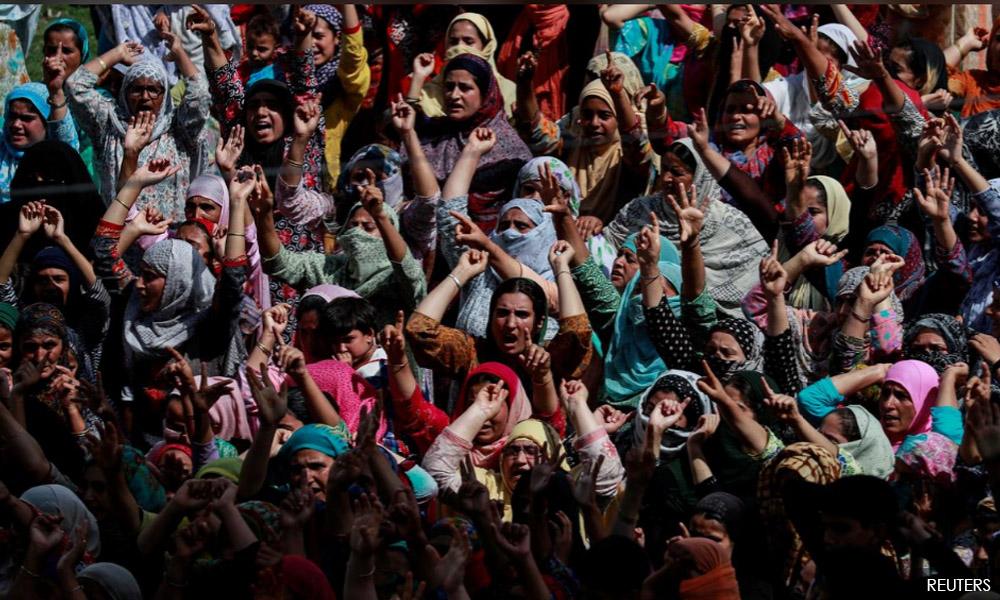
Ganie is one among hundreds of people who were detained in the run-up to Aug 5, the day New Delhi abrogated Article 370 of its constitution. The move stripped the disputed region of its separate flag and constitution. The Indian government also bifurcated the region into two federally governed “Union Territories”.
He was arrested on August 4, and subsequently booked by District Magistrate Anantnag under the draconian Public Safety Act (PSA). Under PSA, authorities in Indian administered Kashmir can detain a person up to two years without trial.
Initially, he was lodged at Srinagar Central jail. Two weeks after, he was sent several thousand kilometers away from his home to a jail in the Bareilly district of the northern Indian state of Uttar Pradesh, where he was lodged with hardcore criminals.
Authorities could not sent people detained under the PSA in Indian administered Kashmir to outside Indian states until last year. However, in August 2018, Governor Satya Pal Malik, backed by the rightwing Hindu government of Bhartiya Janata Party (BJP) in New Delhi, removed the provision and allowed the administration to shift detainees to gaols outside the region.
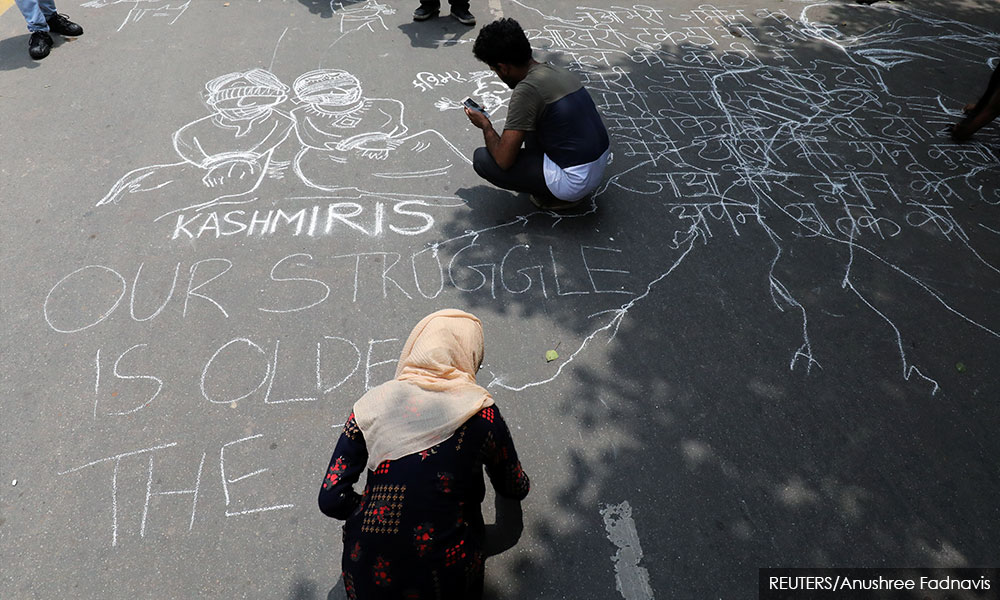
Ganie was accused by authorities of having a “natural bent of mind towards secessionism” and “leading big violent mobs and raising” anti-India slogans during a protest demonstration in June 2018.
“You (Ganie) have been found involved in organizing and mobilizing youth to participate in anti-national activities, besides instigating youth to enforce ban calls given by various separatist elements,” reads the dossier framed by the senior police official of Anantnag district, Altaf Khan.
In the dossier his age is shown by police as 22 years, a claim his family strongly contests.
Unable to get his son released, helpless Ahmad challenged his son’s detention before the High Court on the grounds that he was a juvenile and could not be detained under PSA.
Ahmad supplemented his claim with Ganie’s date of birth certificate that showed, as accessed by Malayskini, he was born on March 15, 2003.
In 2012, the local government in Indian administered Kashmir declared it illegal to hold minors under PSA. As per law, a person below the age of 18 is considered a minor.
Ganie’s counsel Mir Shafqat Hussain said allegations against his client were vague and the detaining authority “misused its authority” to detain him under an illegal and unjustified order.
After spending nearly two months in custody, Ganie was released on September 29 on high court directions.
Ganie’s mother alleged that his son was kept in a congested cell, and was beaten by prison wardens.
“He has torture marks on his body. He has grown weak and suffers from depression,” Shakeela said. “In Bareilly jail, authorities did not allow us to meet him, and for two months we were unable to see him.”
Following his release, Ganie spends most of his time inside his house and does not go out to play cricket or meet his friends.
“He wants to spend time in isolation. He even refused to appear in the ongoing board exams because his crucial two months for preparation were wasted in jail,” Shakeela said.
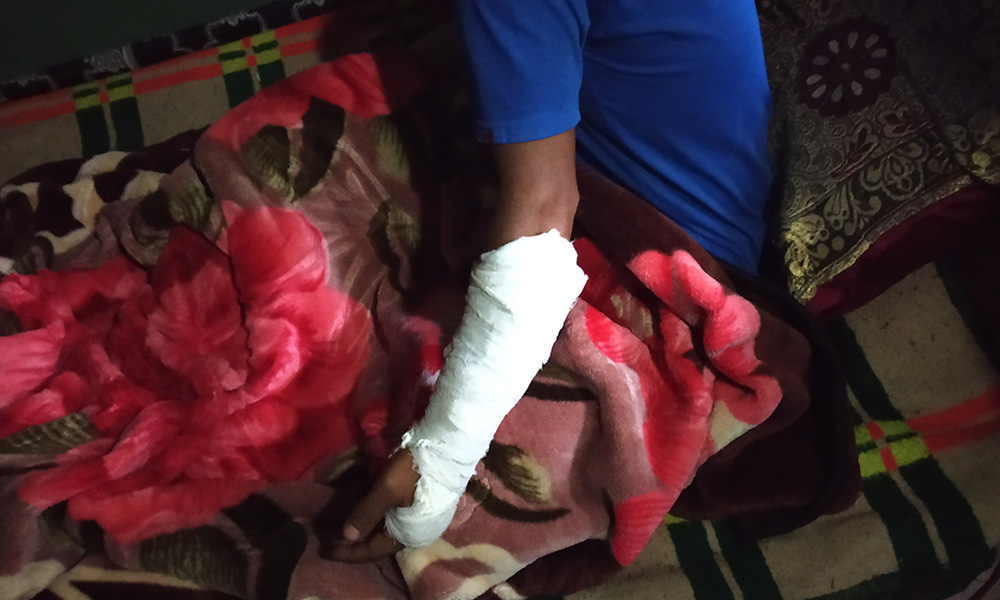
Hundreds of people, including minors, have been detained or arrested by the Indian authorities in the disputed region after the August 5 decision. Nearly 600 politicians, including three former chief ministers of the region, have been detained under the PSA.
The region’s Director General of Police, Dilbag Singh, in his report on October 1 before the Supreme Court of India, admitted that 144 children had been detained since August 5. Singh claimed most of them have been released, and 46 were sent to observations homes.
However, lawyers dispute the police claim on child detentions, and say many cases have gone unrecorded.
“Police are not accepting that they have detained minors. It is only when we produce their (minors) school date of birth certificates in the court, are they declared as minors and released,” said Hussain, who has worked on thousands of PSA cases since the 90s.
Amnesty International (AI), in its October report on Kashmir tabled before the US Congress, said arbitrary detentions were not limited to mainstream politicians.
“AI was able to obtain various copies of the habeas corpus petitions filed against detentions under the controversial PSA in Kashmir High Court between August 5 and October 16, 2019. Out of the 576 petitions filed in 2019, 326 were filed in this period, indicating a pattern of mass detention since the unilateral abrogation of Article 370. Out of these 326 cases, at least four cases of illegal detention of minors were recorded,” it said.

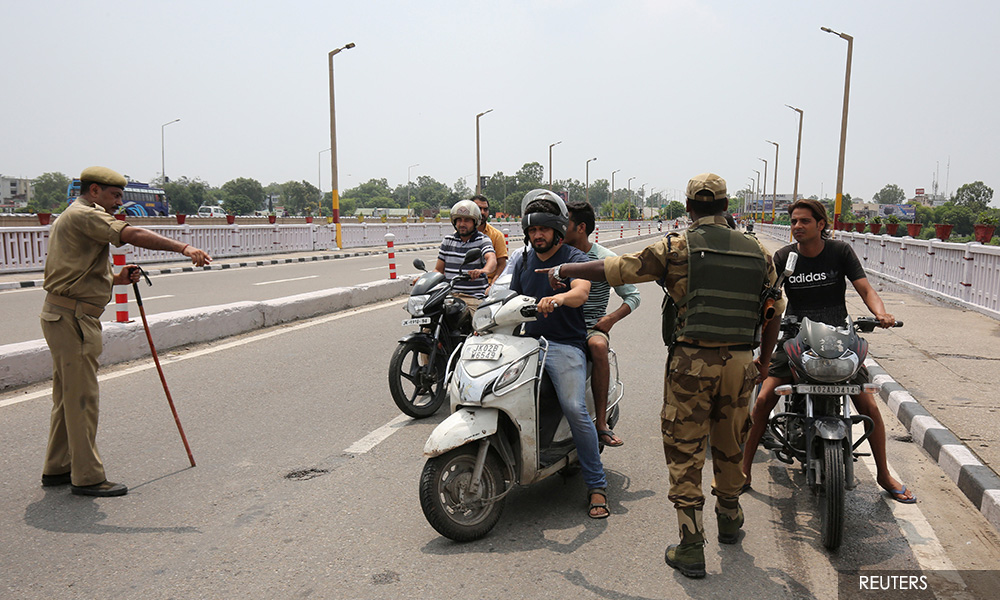
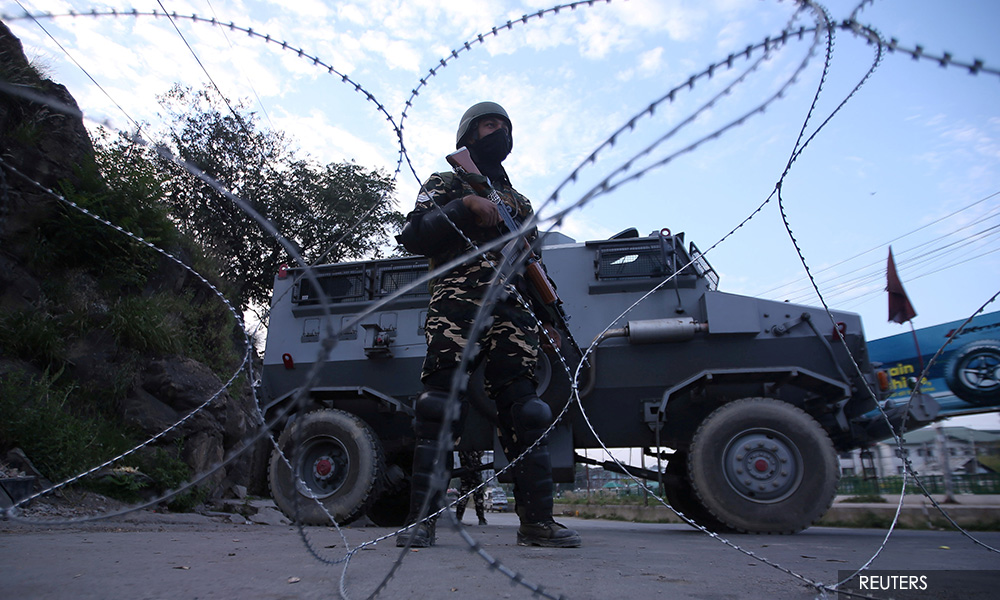
Indian administered Kashmir is on edge since August 5. Thousands of paramilitary troops are deployed in towns and villages in the region in anticipation of protest demonstrations against the decision.
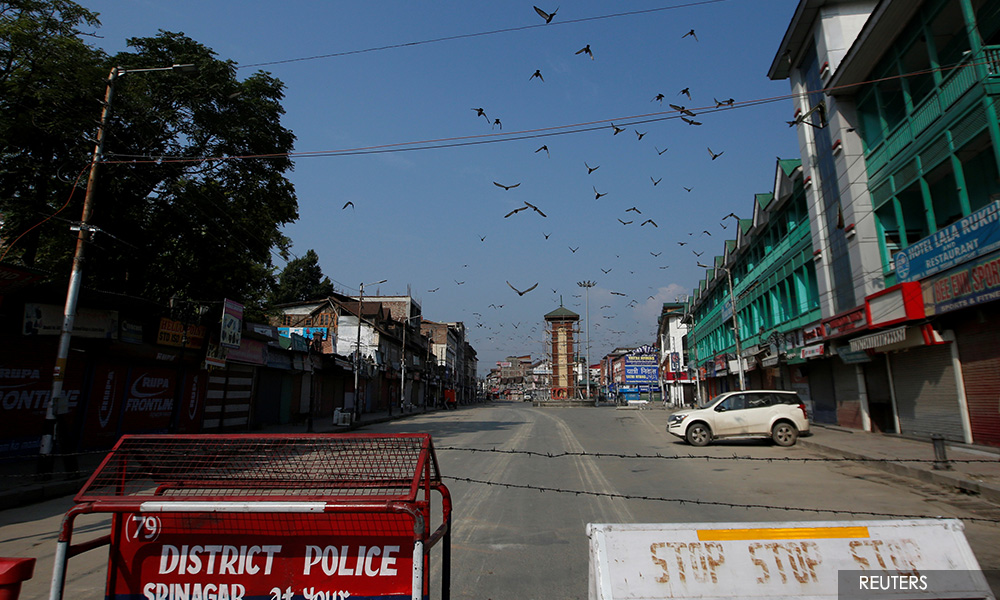
Authorities have eased the restrictions on public movement, and partially restored communications. However internet and text messages facilities continue to remain completely suspended.
A shutdown in the restive region last Monday entered into the 92th straight day, as markets remained closed and public transport off the roads.
Kashmir is a disputed territory between India and Pakistan claimed by both in its entirety. The two countries have fought three wars, two exclusively over Kashmir.
The abrogation of the special status of Indian administered Kashmir has heightened tensions between New Delhi and Islamabad.


Are you sure you want to delete this comment?
This action cannot be undone.