




IPCMC rejection: Anwar slams Umno Youth
Parti Keadilan Rakyat (PKR) adviser and former deputy premier Anwar Ibrahim lambasted Umno Youth for rejecting the proposal to form the Independent Police Misconduct and Complaints Commission (IPCMC).
Parti Keadilan Rakyat (PKR) adviser and former deputy premier Anwar Ibrahim lambasted Umno Youth for rejecting the proposal to form the Independent Police Misconduct and Complaints Commission (IPCMC).
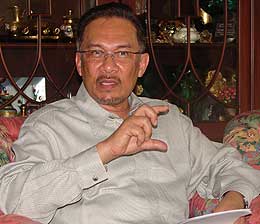 Describing the
rejection
as 'extreme', he said the youth wing - which he had once led - should be idealistic and not protect the corrupt and the oppressors.
Describing the
rejection
as 'extreme', he said the youth wing - which he had once led - should be idealistic and not protect the corrupt and the oppressors.
"Umno Youth should not reject the proposal. As representatives of the youth they should be the first to support it. I was a leader of that movement once and we were always in the front line to oppose anything that oppressed the people.
"I remember we had the BMF (Bumiputera Malaysia Finance) scandal then, Umno Youth was among the first to call for an independent inquiry into the corruption," he told a press conference at his house in Kuala Lumpur yesterday.
Supporting the establishment of the IPCMC, Anwar - a victim of police abuse himself - said the proposal was timely given the rampant complaints of police abuse.
"The commission would certainly be good to deliberate the issue openly and independently and we all should support it," he added.
While he understood the police's reservation, he said there was no reason for the force to reject it entirely.
9th Malaysia Plan
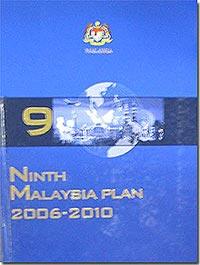
In another development, Anwar also commented on the 9TH Malaysia Plan (9MP), saying that he was disappointed that the government had failed to address the issue of accountability.
 "The issue here is not funds but confidence of investors. Malaysia will lose its competitive advantage to other countries...not only because the current attraction to China and India as investment destinations...but more because of the issue of governance accountability, corruption, cronyism which have not been addressed," he said.
Instead of embarking on bold reforms, he said the government chose to continue feeding Malaysians with the outdated agenda of the New Economic Policy (NEP) which had proven to enrich the cronies and families of the ruling clique.
"This will put Malaysia in the back seat because economic decisions are made involving companies which were not chosen based on merits," he added.
Anwar also complained that inadequate attention has been given to enhance the quality of education and training human resource development, namely for the poor and marginalised.
He also noted that the allocation for primary education had been reduced from RM5.3 billion in the previous plan to RM4.8 billion.
Rich and poor
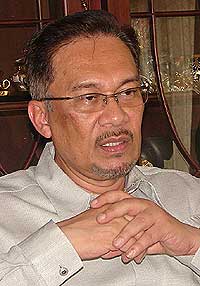 "Those in the business sector and giant conglomerates do not see this as a major problem but we do! This is because there is a major problem in the gini-coefficient, the gap between the poor and the rich ...not only among the Malays but also among the Chinese and more so among the Indians," he said.
He added that the government seemed to ignore the need for a serious commitment to tackle poverty as a national problem instead of a racial one.
He also criticised the report's finding that the income of Malaysian Indians had improved and that they were doing better than the Malays.
"This kind of (...) statistics which is general in nature can be very misleading. You take three top Indian billionaires out of the calculation and you'll find the poverty level among the Indians atrocious.
"If there is no serious commitment to deal with the contentious issue affecting the Indian community - the plight of the poverty-stricken Indians, their concerns regarding religion and cultural factors, I foresee major problems in terms of ethnic relations in this country," he said.


Are you sure you want to delete this comment?
This action cannot be undone.