




Treaties to shore up anti-piracy efforts
Malaysia said today that it will sign a number of intellectual property treaties to shore up anti-piracy efforts ahead of a proposed free trade deal with the United States.
Malaysia said today that it will sign a number of intellectual property treaties to shore up anti-piracy efforts ahead of a proposed free trade deal with the United States.
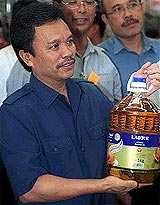 The international pacts, which will protect inventions and original research, will be signed next month, said Minister of Domestic Trade and Consumer Affairs Shafie Apdal.
"I am aware that there are many calls for Malaysia to join international IP (intellectual property) agreements," Shafie said at a discussion on IP cooperation between the United States and Malaysia.
"I will endeavour to formalise Malaysia's accession to the (treaties) next month," he told the audience of officials, businesses and lobbyists.
Malaysia and the United States agreed in March to start negotiations on a free trade agreement (FTA), which is expected to see Malaysia tighten laws to meet stringent US requirements for intellectual property rights protection.
Despite government crackdowns, illegal discs are freely available in Malaysian shopping malls and street markets, and pirates even offer home delivery services for the latest movies and games.
US Ambassador to Malaysia, Christopher LaFleur, praised Malaysia's efforts but indicated future trade negotiations would have to tackle intellectual property protection.
Protection
"IPR protection is going to be a big component in those discussions," he told reporters at a joint press conference with Shafie.
 "Both sides want to benefit from an increasingly free and open exchange of intellectual property, and the basis for that has to be confidence that, for both of us, our intellectual property is going to be protected," he said.
Shafie said Malaysia was committed to fighting piracy and that a special court to hear piracy cases and amended laws to prosecute shop owners whose premises are used for illegal sales are expected by 2007.
Malaysia has hailed the economic potential of an FTA with the US, its largest export market, but activists say they fear the country will be pressured into unfair trading concessions.
They say the FTA will see the end of cheap generic medicines as US companies enforce patent rights, but LaFleur said the rights of corporations, who invest heavily in developing new drugs, had to be protected.


Are you sure you want to delete this comment?
This action cannot be undone.