


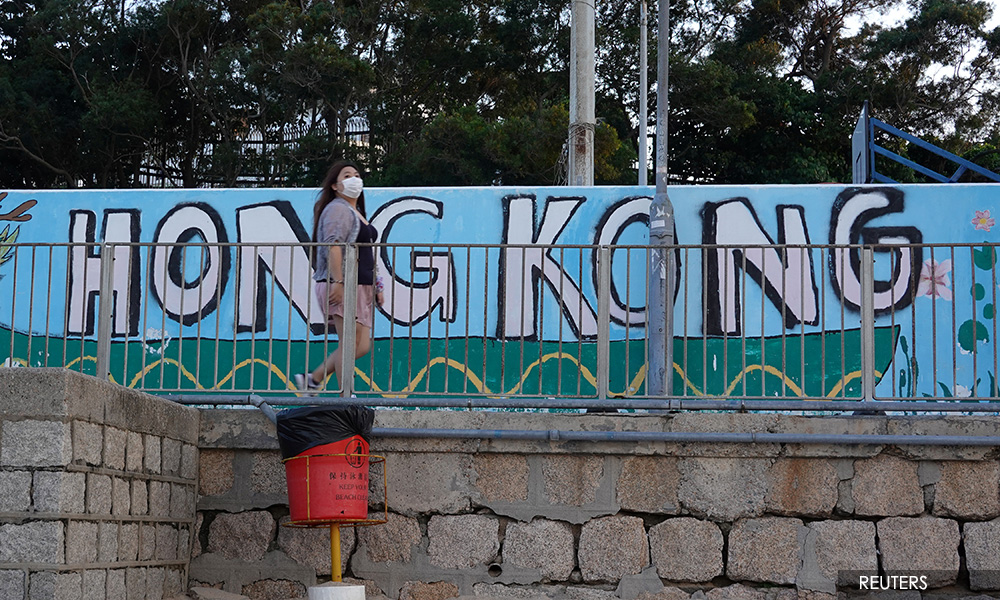

US firms in HK awake to 'sad day' as Trump vows to curb economic ties
The American Chamber of Commerce in Hong Kong said today it was "a sad day" for the global financial centre, hours after US President Donald Trump moved toward stripping the city of its special treatment in a bid to punish China.
In some of his toughest rhetoric yet, Trump said Beijing had broken its word over Hong Kong's high degree of autonomy by proposing new national security legislation and the territory no longer warranted US economic privileges...
The American Chamber of Commerce in Hong Kong said today it was "a sad day" for the global financial centre, hours after US President Donald Trump moved toward stripping the city of its special treatment in a bid to punish China.
In some of his toughest rhetoric yet, Trump said Beijing had broken its word over Hong Kong's high degree of autonomy by proposing new national security legislation and the territory no longer warranted US economic privileges.
Trump told reporters at the White House that China's move on Hong Kong was a tragedy for the world, but he gave no timetable for the moves, leaving Hong Kong residents, businesses and officials to ponder just how far his administration will go.
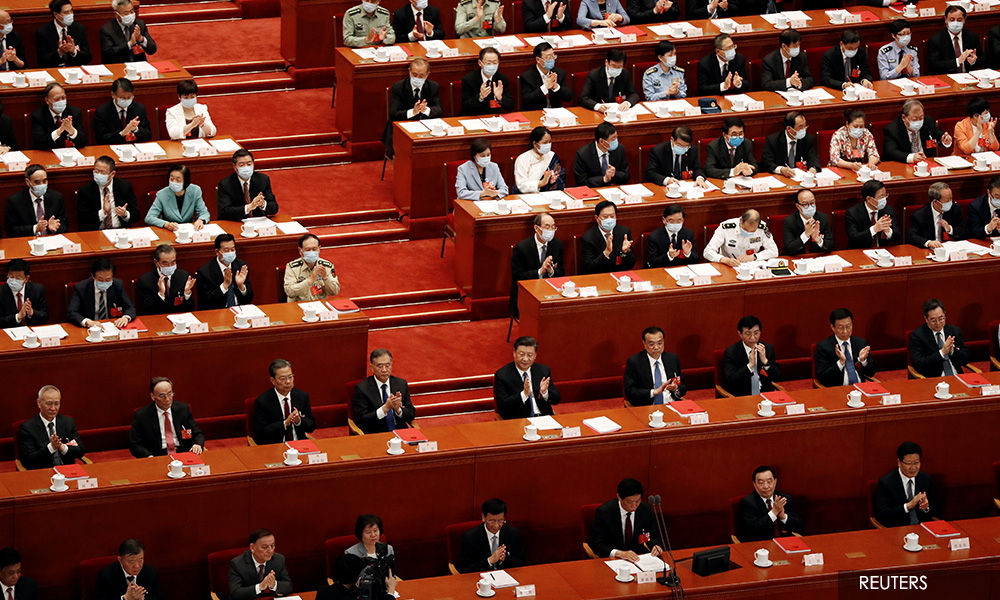
China's Parliament this week approved a decision to create laws for Hong Kong to curb sedition, secession, terrorism and foreign interference. Mainland security and intelligence agents may be stationed in the city for the first time - moves critics say put the city's extensive freedoms at risk.
Authorities in Beijing and Hong Kong insist the legislation will target only a small number of "troublemakers" who threaten China’s national security. They say such action is urgently needed after months of sometimes violent anti-government protests rocked the city last year.
Protests movements are simmering again as Hong Kong emerges from its coronavirus shutdown. Demonstrators are expected to take to the streets tomorrow, Sunday.
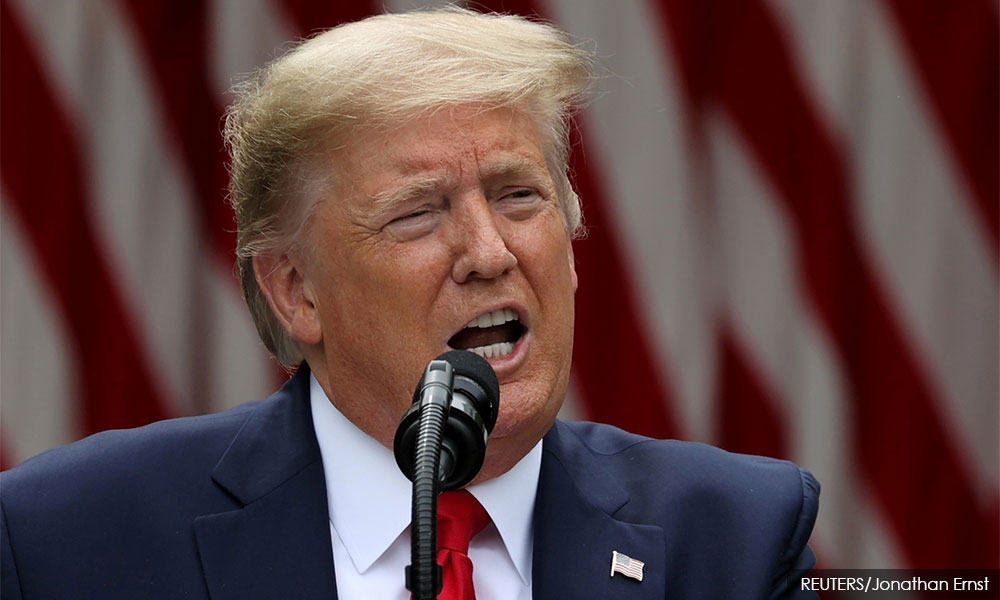
Trump (above) did not name any sanctions targets but said the announcement would "affect the full range of agreements we have with Hong Kong", including the US-Hong Kong extradition treaty to export controls on dual-use technologies and more "with few exceptions".
China's Global Times, published by the People's Daily, the official newspaper of China's ruling Communist Party, said Trump's decision was a "recklessly arbitrary" step.
The Hong Kong government - which has a long history of working ties with US counterparts, distinct from Beijing - has yet to respond, although it warned on Thursday that the move could be a double-edged sword.
More than 1,300 US firms have offices in Hong Kong and provide about 100,000 jobs. In the past decade, the US trade surplus with Hong Kong has been the biggest among all its trading partners, totalling US$297 billion (RM1.29 trillion) from 2009 to 2018.
Washington has also worked quietly with Hong Kong on anti-terrorist and money-laundering efforts, and US envoys have long valued Hong Kong's separate membership in some large international economic organisations.
"Hong Kong is an articulate champion of free markets and effective champion of free markets and the reduction of trade barriers," according to a fact sheet on the US Consulate's website.
Britain, meanwhile, is prepared to offer extended visa rights and a pathway to citizenship for almost three million Hong Kong residents in response to China's push to impose national security legislation in the former British colony.
- Reuters



Are you sure you want to delete this comment?
This action cannot be undone.