


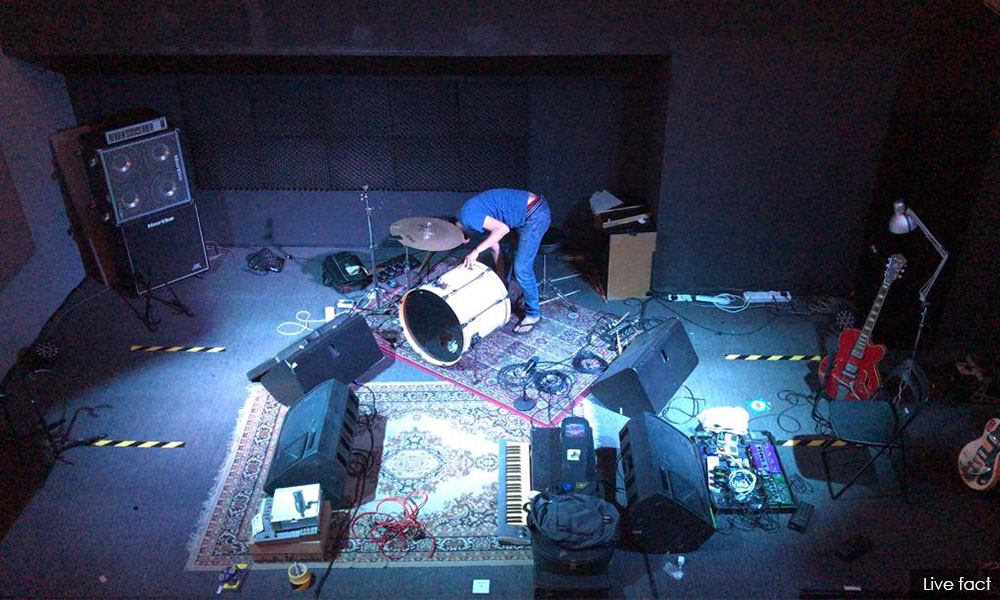

Long-standing policies barrier to music industry even before Covid-19
SPECIAL REPORT | The lack of adequate government funding and policy barriers are the major challenges facing the local arts industry, several music event organisers told Malaysiakini.
Brian Gomez, the owner of live music venue Merdekarya in Petaling Jaya, Selangor, posted on social media in March urging the local government to return the deposits for entertainment and F&B license holders to ease the burden of businesses reeling under the economic storm caused by the Covid-19 pandemic.
For Merdekarya's venue in Bukit Gasing, Petaling Jaya, he claimed the deposit paid amounted to RM12,000 - the equivalent of four-months rent.
According to Brian, this included RM10,000 for the entertainment license and RM2,000 for the cafe and liquor-selling license.
"When we talked to other restaurant owners, they would say...
SPECIAL REPORT | The lack of adequate government funding and policy barriers are the major challenges facing the local arts industry, several music event organisers told Malaysiakini.
Brian Gomez, the owner of live music venue Merdekarya in Petaling Jaya, Selangor, posted on social media in March urging the local government to return the deposits for entertainment and F&B licence holders to ease the burden of businesses reeling under the economic storm caused by the Covid-19 pandemic.
For Merdekarya's venue in Bukit Gasing, Petaling Jaya, he claimed the deposit paid amounted to RM12,000 - the equivalent of four-months rent.
According to Brian, this included RM10,000 for the entertainment licence and RM2,000 for the cafe and liquor-selling licence.
"When we talked to other restaurant owners, they would say the deposit is a kind of 'pre-summons', meaning that if we were issued a summons and were unable to pay, the Petaling Jaya City Council (MBPJ) could deduct from the deposit.
"If all these venues close down, the council would lose the licence fees, so if they return our money to us first, for Merdekarya, at least we can cover four months' rent. That money can go a long way for us," he told Malaysiakini.
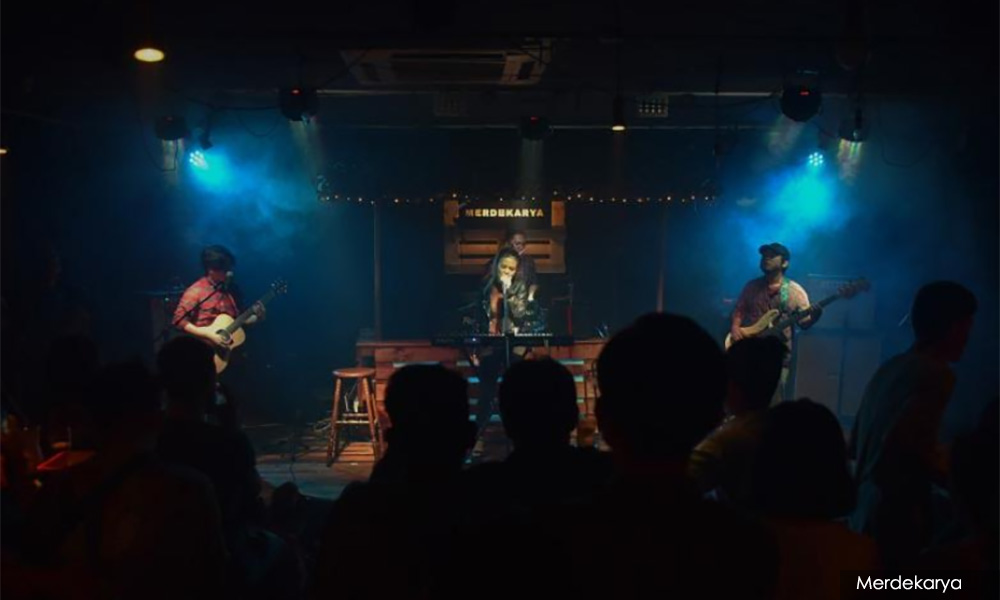
Brian further lamented that businesses in this line of work had to contend with much higher deposit payments than other industries, some of which are only required to pay several hundred ringgit.
"If you open an accounting firm or law office, you don’t get charged tens of thousands of ringgit (in deposits), so why are we being singled out?" he asked.
Brian opined that venues hosting live music shows should not be categorised as regular pubs. Instead, he suggested that the government creates a specific licence category for art venues.
"I wrote to MBPJ in 2015, suggesting they establish a category for arts.
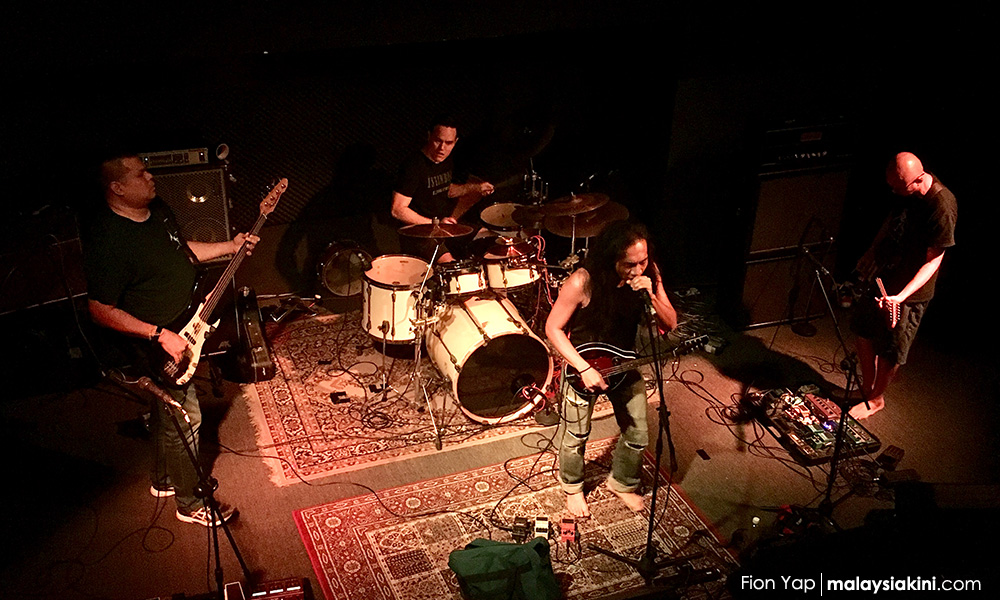
"We are not in the same category as a normal bar, we are a grassroots music bar. All the performers here are local musicians, and they write their own music.
"With licensing reform and better tax incentives, we can encourage a vibrant arts scene for the country," he added.
S’gor exco: It’s 'complicated'
On the other end, the authorities said returning deposits would be "complicated" and could amount to very little help in the end.
When contacted by Malaysiakini, the Selangor state executive councillor in charge of Local Government, Public Transportation, and New Village Development, Ng Sze Han, confirmed that he had received a similar suggestion from Bukit Gasing assemblyperson Rajiv Rishyakaran on returning the licence deposits.
Despite acknowledging the suggestion had merits, Ng said it involved complicated accounting procedures and may not end up helping most businesses.
He said: "If we want to return the deposits, we would not just do it for one industry. Most businesses are paying only a few hundred ringgit in deposits, so we should consider how much this would actually help.
"We are still looking into the suggestion, (but) we have to find a solution that can help substantially."
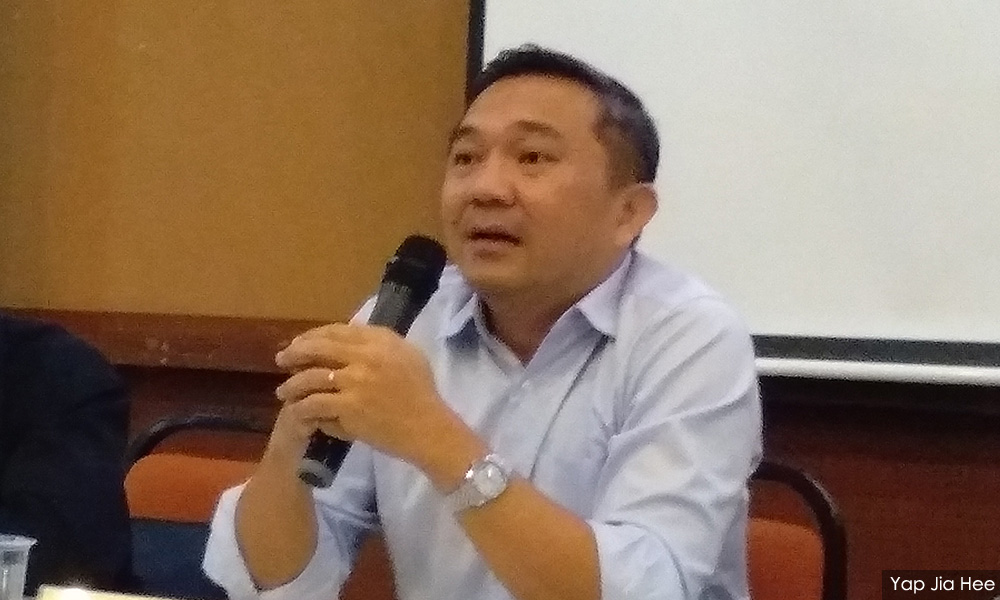
Even so, Ng (above) disagreed with the assumption that the hefty deposits were used to settle unpaid summonses. Instead, he explained that the deposits are meant to prevent businesses from violating regulations.
"The reason why the entertainment industry has to pay a high deposit is pubs and music bars are often the businesses with the most complaints and violations.
"I know some of the players will say, 'if I violate the rules, you can give us summons. And if we pay for the summons, why should we pay the deposits first?' But that is not the case.
"Although we do not allow violators to renew licences without paying a fine, some of them still take advantage of loopholes. When they get too many summonses, they will simply close down and go out of business," he said.
According to the MBPJ's annual report, the authorities over the past three years have seized assets at "entertainment venues" more than a hundred times, while between 60 to 170 fines were issued each year.
However, the annual report does not break down which businesses fall under the entertainment venue category, making it difficult to pinpoint how many were music bars and pubs.
In addition, licensing fees and deposit rates differ among local councils, and the rates are not available online.
Getting a slice of the monetary cake
This is not the first time the government has been accused of sidelining the local performing arts industry.
Over the past few months, the government launched a series of stimulus packages, dubbed Prihatin and valued at RM260 billion, aimed at cushioning the rakyat from the economic blow caused by the health crisis.
Unfortunately, allocations for the arts were largely missing.
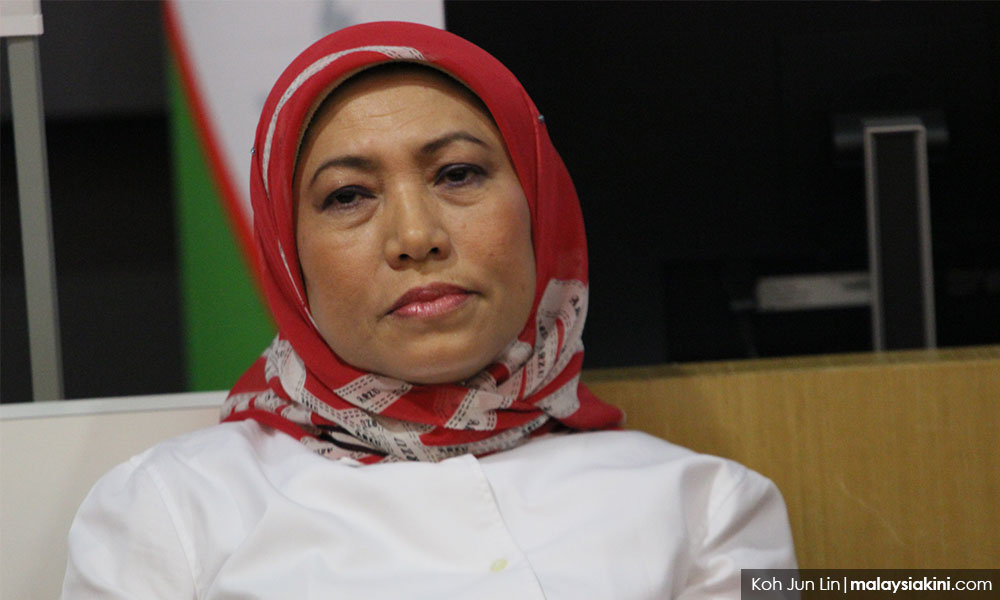
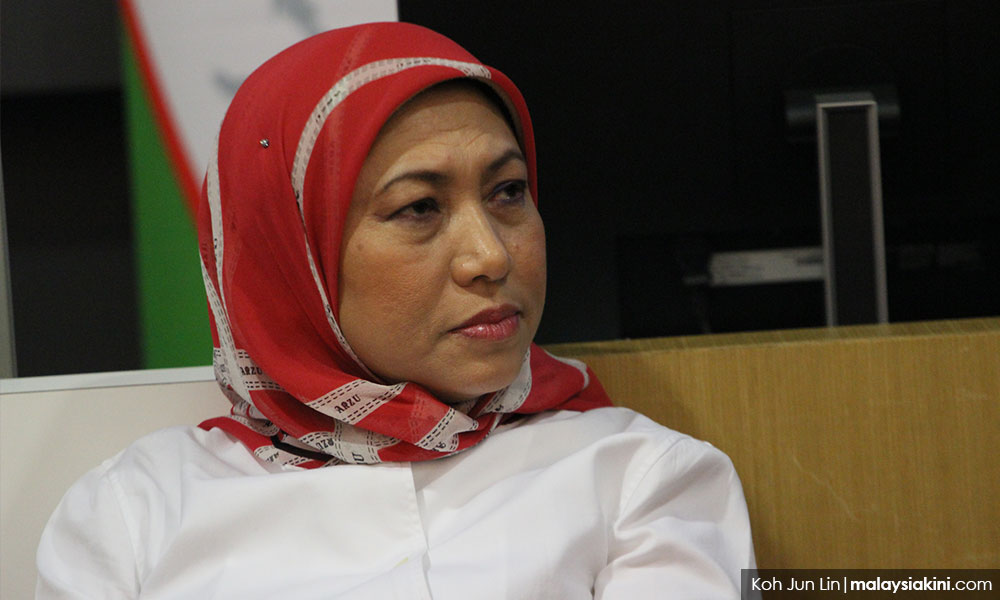
To add insult to injury, controversy followed after Tourism, Arts, and Culture Minister Nancy Shukri (above) commented during an interview in April that it would be "easy" for those in the arts sector to adapt to the current situation.
The minister also denied that the arts sector was being sidelined by the government, in preference to the tourism sector amid the Covid-19 pandemic, saying instead that the former is a "complementing" element and would be "the fastest to recover".
In response, ReformARTsi, a coalition of over 100 artistes and 53 art groups, said the industry was already "sorely underdeveloped and unsupported" by the government, pointing instead to the lean RM5 million allocation in the national budget.
ReformARTsi also pointed out that many musicians were out of work after finding it hard to book gigs in the current economic landscape.
Yet, the government does provide some monetary aid. When questioned on this, both Brian Gomez and Live Fact’s owner Shane Tan referred Malaysiakini to the Cultural Economy Development Agency (Cendana).
Cendana is a government agency established in September 2017, focusing on the visual arts, performing arts, independent music, as well as small and medium-sized art venues with capacities of fewer than 500 people.
The agency reports to the Multimedia and Communications Ministry and it is supported by MyCreative Ventures Sdn Bhd, a wholly-owned company of Minister of Finance Incorporated.
Last year, Cendana received RM5 million from the government in Budget 2020 to support art exhibitions and visual artists.
During the movement control order (MCO), Cendana was the only government unit to release more than six funding programmes to ease the burden of artists in the wake of the outbreak.
While appreciating the timely help, Tan pointed out that these funding programmes should be made available to practitioners in more categories, such as music festival organisers, music venue operators, and musicians, instead of just artists and their organisations.
"Only then can everyone get a piece of the cake," Tan said.
Various funding programmes

Responding to this issue, Cendana CEO Izan Satrina Mohd Sallehuddin (above) told Malaysiakini that the next phase of funding would target arts organisations, including more arts venues.
Izan revealed that Cendana is currently conducting a survey to measure the propensity of consumers to visit art and culture venues or to participate in related activities, post-MCO.
Once the data is collected, her team will be able to offer better plans to cushion the financial impact of Covid-19 for a greater section of the arts industry.
Meanwhile, Reza Salleh, who is the manager of Cendana’s independent music sector, stressed that the output from the agency varied, depending on the purposes of the various funding programmes.
Among the examples that Reza cited is the Create Now Funding Programme, which provides rapid response grants, and the Independent Music Funding Programme, which helps album production or online showcases.
Digital output, he explained, is not limited to online shows. He touched on Merdekarya as one example. Reza said the live music venue had set up a database of musicians on its website, which included the bands’ details, video references, as well as links for donations.

Being a musician himself, Reza (above) said that, unlike the musicians who are always feeling shy or intimidated by paperwork when applying for grants, music venues are more open toward seeking resources.
Political will is needed for a holistic policy
Even so, Brian said funds and grants have a limited reach.
"Fund and grants will only benefit very few people, there are probably 2,000 to 3,000 artistes in the Klang Valley, but maybe only five people can get the grants.
"I think whatever system that is used for funding the arts sector needs to be across the board. There has to be will and attention from the government to see the arts as something important and also something that can generate income for the country."
Izan also agreed that political will was required for a holistic policy to be developed so that the government could continue to invest in the arts industry over the long run.
"Right now, funding for the arts is done every year. We have to lobby for the arts. Sometimes when we get the government grants, we try to stretch it to ensure there is continuous funding.
"Otherwise, if we finish the grants in the first year, we might have no money for the scene the next year. This is also something that we really want to avoid.
"Half of the team is from the arts scene, and they know the difficulties and struggles of the industry. So we tried to ensure Cendana continues to be there for the scene as long as possible," Izan said.
However, she acknowledged that some blanket policies needed to be reorganised so as to benefit more industry players.
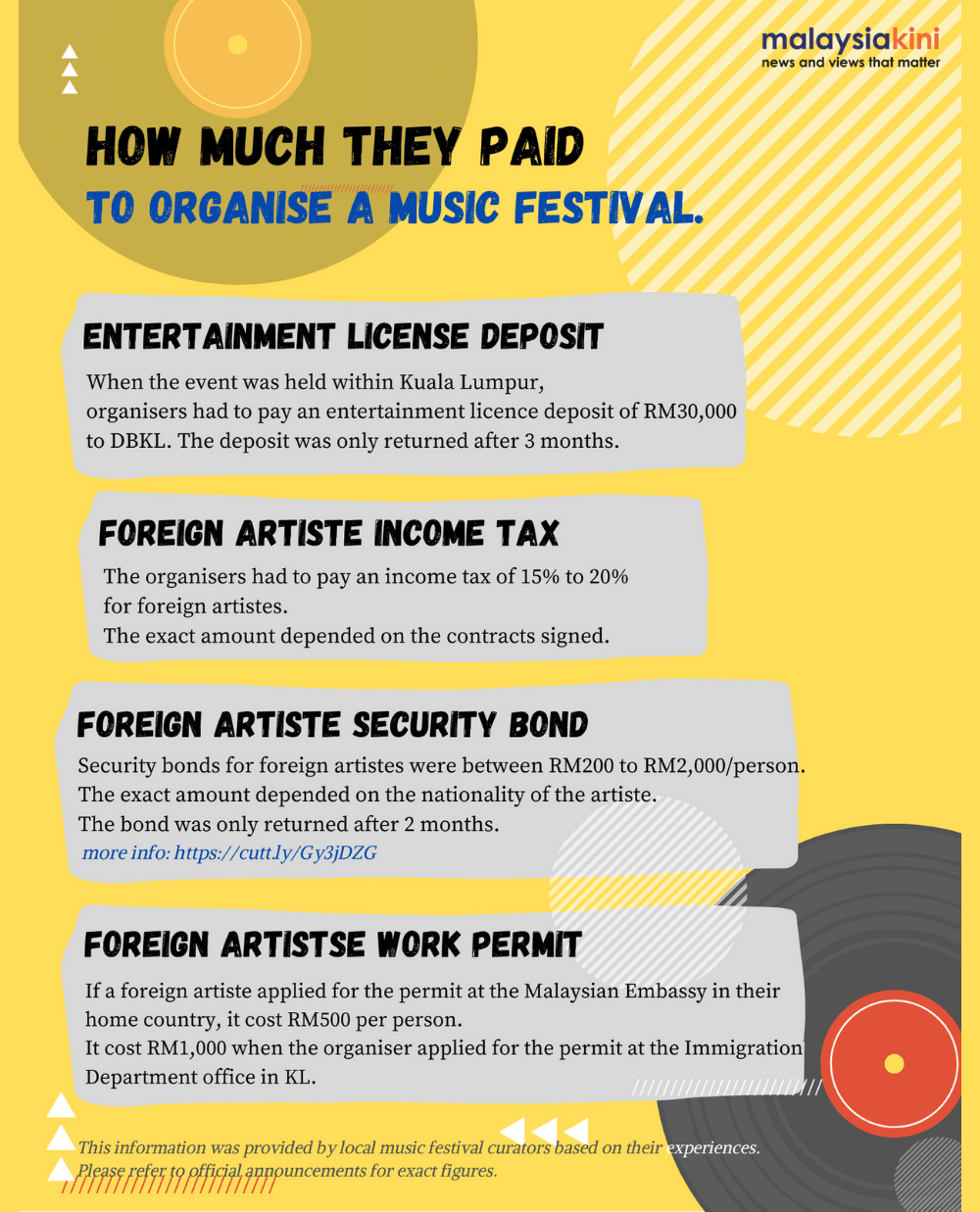
For example, when it comes to licences and working permit fees, all the event organisers pay the same rate, regardless of the size of events, and currently, there is "no distinction between commercial and non-commercial events".
As a result, some organisers would be able to sell thousands of tickets and recoup their costs, especially concerts involving foreign bands. However, it is a very different story for smaller, independent event organisers as they cannot hope to match such levels of ticket sales.
"We also need to take a look at the administrative cost, which includes taxes, bonds, licensing fees, and others, of bringing in international artistes to perform here. Compared to our neighbour Singapore, our administrative cost is relatively high.
"To benefit the sector in the long term, policies are always the best enabler. Therefore, it is always encouraging when policies are revised for the betterment of the industry.
"This would then make the domestic art industry blossom and become more vibrant with various arts activities," Izan suggested.
Arts-related funds tend to be 'conditional'
According to the "Covid-19 Impact on the Arts Report" by Cendana during the first phase of the MCO, 93 percent of the 519 artistes surveyed were negatively impacted, with 70 percent having lost all or most of their income.
The results also showed that about 94 percent of the artistes fully or partially depended on the arts to make ends meet.
Additionally, 63 percent of them do not have an active Employees Provident Fund (EPF) account.
While the arts industry struggles in the storm clouds of Covid-19, grants provided by the government mostly come with certain conditions and projects must be completed within a short time frame.
In other countries, however, compassionate policies go a step further by allowing reductions in rent during this period or offer certain forms of subsidies for art venues.
Singapore offered arts venues that operate in national cultural institutions a 30 percent reduction in rental from March to June, while Taiwan’s government provided a salary and operating subsidy for arts practitioners who went through a drastic decline in revenue of more than 50 percent.
In the UK, York’s chancellor decided to waive the business rates of theatres and music venues for one year as well as providing a grant of £25,000 (RM133,868) for these businesses with a rateable value of under £51,000 (RM273,091).
Essentially, according to Izan, the more the government puts into the industry, the more the country gets out of it.
According to data provided by Izan, creative industries accounted for 1.9 percent of Malaysia’s gross domestic product (GDP) as of last year, while contributing 2.4 percent in the Klang Valley.
"What is common in other countries is usually three percent to seven percent of the creative industries contributing to their GDP, which is a slightly higher percentage.
"But they also put a lot more investment into the scene," Izan added.
Fortunately, the latest National Economic Recovery Plan (Penjana) saw RM225 million set aside for grants and financial services for the arts, culture, and entertainment sector.
Under this, MyCreative Ventures was allocated RM100 million in soft loans with an interest rate of 3.5 percent and RM30 million in grants for the creative, events, and exhibition industries while Cendana received RM10 million, among others.
PART ONE: Hollow note: M'sia's live music scene muffled as Covid-19 battle drags on



Report this comment
Are you sure you want to delete this comment?
This action cannot be undone.