


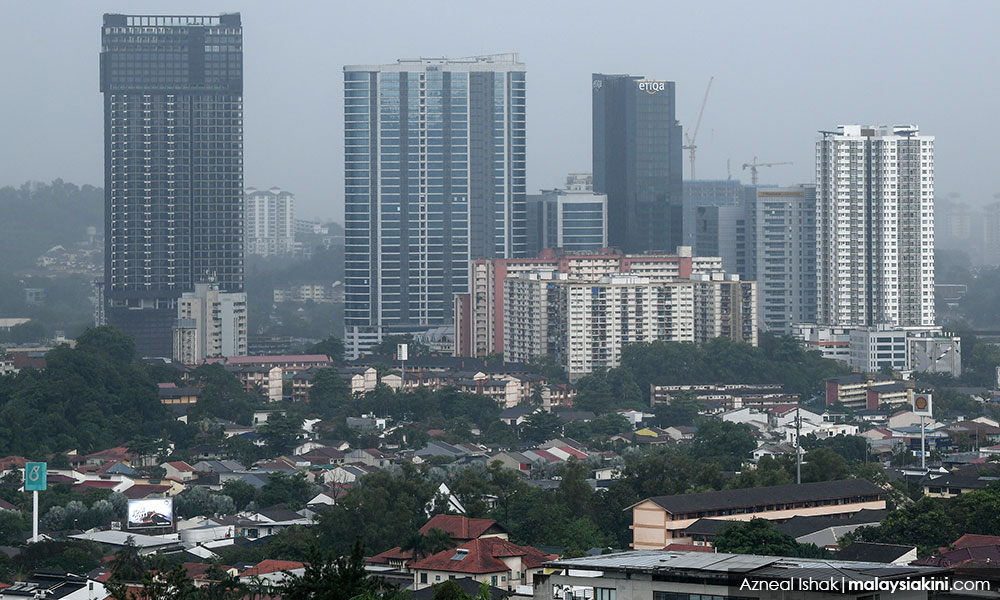

DOSM: Pivot to SMEs, domestic markets and agriculture
The Department of Statistics (DOSM) has recommended that policy measures encourage small and medium enterprise (SME) transformations and focus on both the domestic market and agriculture sector.
In its second edition of the Malaysian Economic Statistic Review for 2020, which looked at economic data for the first quarter of the year, DOSM said the Covid-19 pandemic minimises the chances of investments from abroad and hence there was a need to focus on stimulating domestic investments.
The Department of Statistics (DOSM) has recommended that policy measures encourage small and medium enterprise (SME) transformations and focus on both the domestic market and agriculture sector.
In its second edition of the Malaysian Economic Statistic Review for 2020, which looked at economic data for the first quarter of the year, DOSM said the Covid-19 pandemic minimises the chances of investments from abroad and hence there was a need to focus on stimulating domestic investments.
The DOSM said although policy measures have recently been put in place to help SMEs, the long term viability would depend on the ability of small businesses to evolve.
Among others, DOSM said SMEs, which contributes about 40 percent to the overall economy, must adopt new technology, bring their businesses online, automate their processes and reduce costs to push the economy forward.
"This sector has the potential to intensify profits and drive the economy. This can be done with steady and continuous support by the government," read the report.
DOSM said that recovery of the manufacturing industry was unlikely to happen in the short-term because the sector was export-driven and hence the government should expand other sectors such as food-based agriculture, household-related services and small-scale construction activities to compensate for the fall in output.
It said that Malaysia mostly relies on food imports and the current disruption in supply and demand presented an opportunity to invest in food sustainability.
"Developed nations who are the main producers of such food products invested heavily on technology and human capital to increase self-sufficiency and trade with the rest of the world.
"These nations have long innovated to modern farming with higher yields by encouraging their youngsters to explore agriculture-based entrepreneurship.
"Malaysia can emulate this model with the pool of high-quality talents, especially youth graduates that we continue to produce who can delve into modernisation opportunities in Agriculture sector, backed up by the private and public sectors," read the report.
On the tourism industry, the DOSM noted that this sector contributed 15.2 percent of economic output but employed 23.5 percent of the workforce.
The DOSM expected that international tourism numbers are not expected to recover soon and, hence, suggested that policy measures can be put in place to encourage domestic tourism.
Overall, the DOSM noted that Malaysia's economy continued to grow during Q1 2020 year-on-year at 0.7 percent while many regional neighbours dipped into negative territory.
The DOSM also noted that the Asian Development Bank has forecasted that Indonesia, Philippines, Thailand and Malaysia will likely experience negative growth (-4.0 percent) overall in 2020, while Vietnam's economy is expected to grow 4.1 percent.
Malaysia's first-quarter 2020 performance at a glance based on DOSM statistics:
- Unemployment had risen to 5.0 percent in April, up from an average of 3.2 percent between 2010 and 2019.
- Manufacturing output in April 2020 contracted by 37.2 percent year-on-year. The worst-hit was the electrical and electronic products sub-sector.
- In April 2020, Malaysia experienced a trade deficit (value of imports outweighs exports) of RM3.5 billion. This is the first month that Malaysia recorded a trade deficit since October 1997.
- The wholesale and retail industry shrunk by 36.6 percent in April on a year-on-year basis.
- Motor vehicle sales dropped by 93.2 percent in April on a year-on-year basis.
- The Consumer Price Index (CPI) was -2.9 percent in April compared to the same period the year earlier, mostly due to the cheaper transport cost and fuel. Food, in general, was more expensive.
- The Producer Price Index (PPI) was -5.1 percent in April compared to the same period a year earlier, with the decline driven almost entirely by the mining industry.


Report this comment
Are you sure you want to delete this comment?
This action cannot be undone.