




Split opinions over 'job guarantee scheme' proposal
The suggestion by Umno information chief Shahril Hamdan that the government introduce a federal job guarantee scheme to counter rising unemployment has been met with mixed reactions. Some experts called it a misplaced idea while some political and union representatives viewed it positively.
Shahril, who is also Umno Youth deputy chief, said yesterday that not enough was being done to curtail unemployment during the recovery movement control order (MCO). He wanted a federal job guarantee programme, which he felt would work better to mitigate unemployment than any other plan.
Universiti Tun Abdul Razak economics professor Barjoyai Bardai, however, felt that the proposal was too much of a stretch.
"This is too far from what the government is practicing currently because, in Malaysia...
The suggestion by Umno information chief Shahril Hamdan that the government introduce a federal job guarantee scheme to counter rising unemployment has been met with mixed reactions. Some experts called it a misplaced idea while some political and union representatives viewed it positively.
Shahril, who is also Umno Youth deputy chief, said yesterday that not enough was being done to curtail unemployment during the recovery movement control order (MCO). He wanted a federal job guarantee programme, which he felt would work better to mitigate unemployment than any other plan.
Universiti Tun Abdul Razak economics professor Barjoyai Bardai, however, felt that the proposal was too much of a stretch.
"This is too far from what the government is practising currently because, in Malaysia, we do not interfere so much with the private sector. Trying to guarantee jobs to all workers is very extreme."
"We do, however, need to do more than just rely on the stimulus package right now too," he said, adding that the government needed to promote a rapid change in the mindset of workers to embrace a new economy.
Barjoyai (below) pointed out that everybody needed to think of how to reinvent themselves to survive in the post-Covid era instead of relying on the government to guarantee a job for them.
"Guaranteeing a job opportunity is even more extreme than what a communist government like in China would do. (Even) they cannot guarantee work for all their citizens," he said.

The professor warned that employment was not a foolproof way to make a living. He advised that learning technological skills and how to be independent would better prepare youths for success.
"We should not be gearing our youth towards guaranteed employment. Employment itself has some constraints and restrictions. The idea is to equip young people with technological knowledge, skills and entrepreneurship.
"This will prepare youth to be independent and they can supply services to the private sector and the government. In the new economy, they could even be operating as a self-employed business venture from home," Barjoyai surmised.
On June 5, Prime Minister Muhyiddin Yassin said the government would allocate RM9 billion to tackle the rising rate of unemployment and ensure job sustainability during the Covid-19 recovery period.
Unveiling the National Economic Recovery Plan (Penjana), he said the allocation would benefit three million workers in the country.
Muhyiddin said that this included extending with an extra RM5 billion the wage subsidy programme introduced in the Prihatin Rakyat Economic Stimulus Package (Prihatin) and Prihatin's additional packages.
Under the programme, employers are to be given financial aid to provide jobs to the unemployed and youths.
Youths worst hit
Also last month, Lee Hwok Aun, a senior fellow and co-coordinator at the ISEAS-Yusof Ishak Institute in Singapore, conducted an analysis based on figures released by the Statistics Department. He found that high unemployment among young Sabahans and Indians were a cause for concern.
The academic pointed to structural problems deriving from a low quality of education, skills mismatch and low-quality jobs.
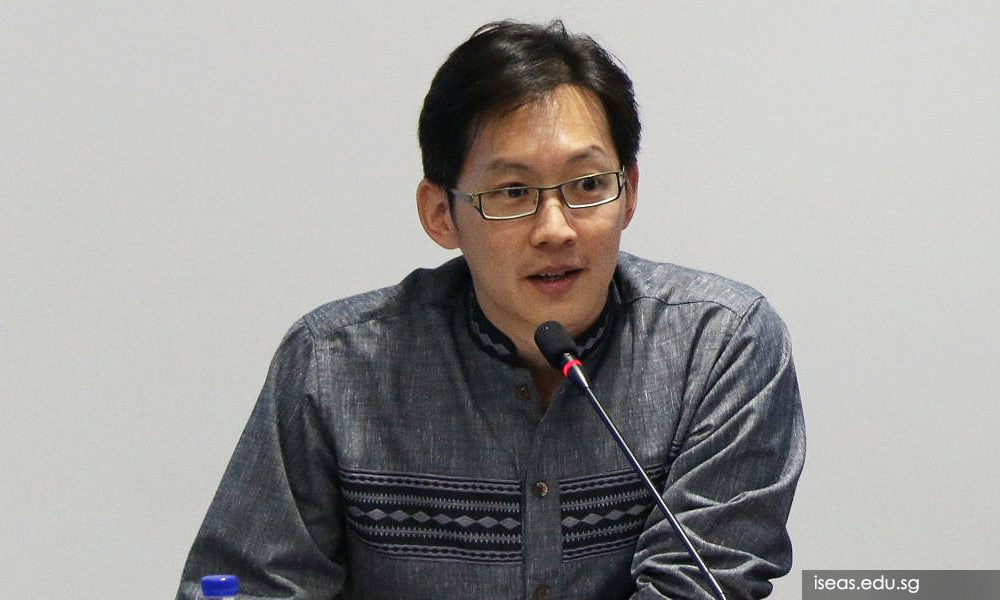
Lee (above) said those factors had stressed labour markets in recent years, and he warned that there were trends in certain sectors that could be compounded by an imminent recession sparked by the Covid-19 pandemic.
"Malaysia’s youth unemployment vastly exceeds the other age groups. In 2019, unemployment rates were 14.4 percent for 15 to 19-year-olds, 9.5 percent for 20 to 24-year-olds, 3.8 percent for 25 to 29-year-olds, and under two percent for all other age groups," he said.
While acknowledging youth unemployment as a challenge, Sunway University Business School economics professor Yeah Kim Leng also opposed the idea of guaranteed jobs.
"A federal job guarantee scheme is inferior to policies and strategies that enhance the operating environment for businesses and entrepreneurs to thrive," he said.
He added a better idea would be to invest in start-ups that generate sustainable returns and well-paying jobs.
Instead of guaranteed jobs, Yeah said the government could consider fiscal incentives and non-monetary support for firms to lower recruitment and talent search costs.
The government was also advised to co-sponsor expensive, industry-specific skills training and development programmes, particularly in the fields of advanced manufacturing, high-end services and industry-oriented research and development.
"The spillovers will generate more market-driven, and therefore sustainable, employment opportunities rather than resorting to job guarantees which could perpetuate labour inefficiencies, labour market rigidities as well as an erosion of competitiveness at the firm and industry levels," said Yeah.
Existing unemployment schemes underused
Malaysian Employers Federation executive director Shamsuddin Bardan also rejected the idea, saying, "Nobody can guarantee any job, especially during the economic slowdown arising from Covid-19."
"Generally, any employer’s ability to retain employees and their ability to create jobs, let alone quality jobs, is very much challenged during this period," he emphasised.

However, Shamsuddin (above) said that the underlying principle of a job guarantee was noble and the core idea was quite simple. The government strives to provide a job - at a living wage - to anyone who wants a job.
"Malaysia already has a few programmes and implementing agencies in place to address unemployment, but something akin to a job guarantee is worth considering if it will make a difference and can be implemented effectively," he told Malaysiakini.
Despite that, Shamsuddin questioned if Malaysia would be able to muster the resources required for such a bold new undertaking - especially if there may not currently be any mass unemployment to give the initiative an emergency impetus.
"We should first look at the magnitude of the problem and the adequacy of existing programmes. Some evidence suggests that Malaysian workers are not adequately convinced about the unemployment assistance on offer.
"Consider the Employment Insurance Scheme (EIS), which had about seven million members just prior to the Covid-19 crisis and provides allowances and re-employment services.
"In April 2020, when there were about 311,000 unemployed persons aged 25-64, only 21,745 (seven percent) reported a loss of employment to claim the benefits," he revealed. Some 17,000 applications were approved by end-April.
Shamsuddin said the low number of applications for the EIS was "puzzling" and that, "before plunging into a new initiative, we should examine what is currently on offer and why the take-up is so low."
He argued that various local governments were well poised to administer the proposed job guarantees and suggested that rather than introducing some grand plan, Malaysia should experiment with initiatives to enhance job offerings and work conditions, especially for youth.
Among the enhancements, he proposed were imposing a living wage as a condition for government contracts, hiring locals for public work projects and offering acceptable work conditions.
Worth considering in certain sectors
On the other hand, former Batu MP Chua Tian Chang, also known as Tian Chua, believed it was important to have such a scheme.
"The government must think on a few fronts. A comprehensive job protection scheme with unemployment benefits is something to look at," said Tian (below), who is Malaysia Productivity Corporation chairperson.
"Subsidies for on-job training to ease employer's burden, tax and other forms of relief to encourage job creation, especially in sectors like IT, logistics and agriculture could generate more jobs," he added.

Former two-term Sungai Siput MP Dr Michael Jeyakumar Devaraj also felt that the idea of guaranteed jobs was conceptually sound.
He said guaranteed jobs would be good because there are many now bereft of life's necessities as they were without jobs or income. He also warned of a fatal flaw in the minds of many who think that the economy may bounce back soon.
"The hope of a quick recovery is a major fallacy. We are hearing people talking about a pick-up in the third quarter, but many sectors are deeply wounded, not just in Malaysia but in our trading partners around the world which affect export markets," he told Malaysiakini.
"Some industries like airlines and tourism may take years to return to pre-MCO levels. These are not normal markets because the aggregate demand has fallen so much and naturally, this is going to hit even harder on employment prospects Jeyakumar added.
He suggested the government look at jobs with a social element including reforestation, waste management, cleaning up of rivers, and cleaning up low-cost public housing areas. Such jobs could be given to smaller companies that must employ Malaysians.
"This is one way of keeping our workers employed and contributing to social development. It’s a win-win," he said.
He also commended certain elements of the economic stimulus package such as loan moratoriums. However, aside from job protection and creation, he admitted it was likely that Brim-like payments would continue to be needed for some time more.
Government should do more
Lembah Pantai MP Fahmi Fadzil, meanwhile, took the position that job creation was an essential duty of the government.
"The Pakatan Harapan coalition had previously embarked on a Malaysia@Work programme, costing RM6.5 billion, to generate 350,000 new jobs but that was before Covid-19.
"Now, we have to be even bolder. Taking a cue from Schumpeter’s 'gale of creative destruction', we have to look at where jobs are being lost," said the PKR communications director.
He pinpointed the tourism and hospitality sectors as facing critical job losses and said that the government must provide a "soft landing" for workers in those sectors to transition into new jobs.
A comprehensive labour redeployment scheme was something that was clearly needed in Malaysia, he envisioned, and immediate focus should be on jobs in public education and public health.
Malaysian Trades Union Congress (MTUC) secretary-general J Solomon (below) also weighed in on the issue saying the MTUC hope the proposal of a federal guarantee would the government to consider Emergency Employment Regulations (EER).

The EER prevents employers from retrenching workers for a specific period of time.
"The underlying principle [...] is to stem retrenchment. Official figures show more than 800,000 people were out of jobs in the first five months of the year. We believe it is actually much higher than that," Solomon told Malaysiakini.
"The government has projected the economy turning around in the coming months and therefore it is all the more necessary to implement EER to ensure employers do not lay off workers, especially those who have been given various bailouts and aid by the government," he said.
He called for Sharil to reveal the full details of the proposal which he believed was made in good faith to rein in unemployment despite assurances from various quarters that the economy was strengthening.
"This is despite many workers being rendered jobless and thousands of fresh graduates entering the shrinking job market. MTUC has no objection to any scheme that can ensure workers retain their jobs without being forced into taking deep pay cuts," he said.
"As things stand, we question the effectiveness of the RM9 billion allocated under the Penjana stimulus package to stem unemployment as the number of jobless people has been increasing and not stabilising," he added.





Report this comment
Are you sure you want to delete this comment?
This action cannot be undone.