



US seeks stronger alliance with Asean in advancing 'free and open' strategy
ASEAN’s centrality will continue to be the core of the US-Asean diplomatic relations as the US looks to forge stronger alliances and partnerships with countries in this region under the Free and Open Indo-Pacific (FOIP) Strategy.
US assistant secretary of defence Reed Werner said the document, which emphasises on shared prosperity, stability, peace, and sovereignty of nations in the Indo-Pacific, is the “guiding light” on how the US views and approaches Asean.
“It is an important document for...
Asean’s centrality will continue to be the core of the US-Asean diplomatic relations as the US looks to forge stronger alliances and partnerships with countries in this region under the Free and Open Indo-Pacific (FOIP) Strategy.
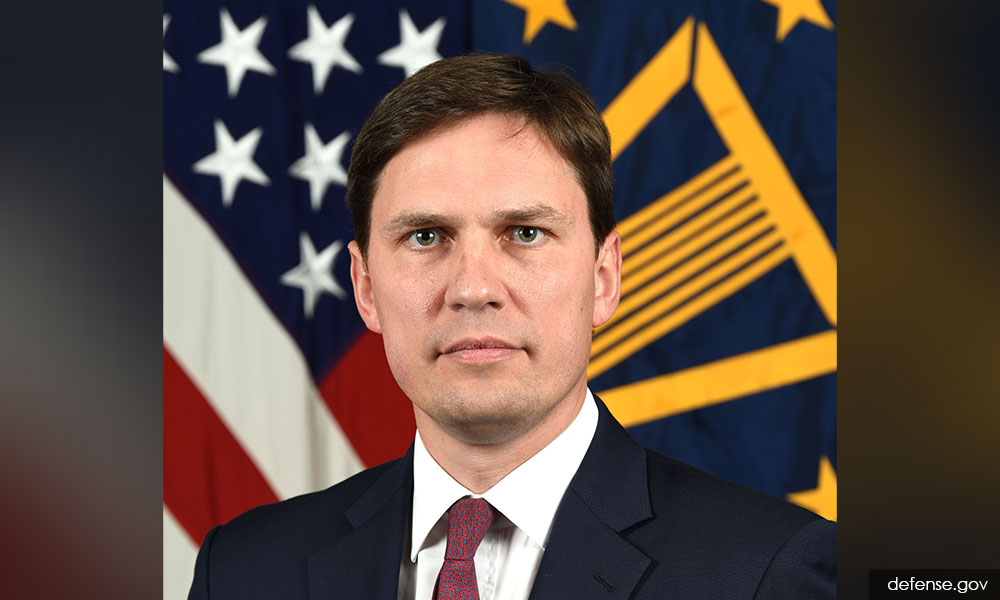
US assistant secretary of defence Reed Werner (photo, above) said the document, which emphasises on shared prosperity, stability, peace, and sovereignty of nations in the Indo-Pacific, is the “guiding light” on how the US views and approaches Asean.
“It is an important document for us and how we view the region. It outlines the whole government's approach to Southeast Asia. So, allies and partners figure prominently in that strategy.
“Our free and open vision is one that is based on principles of cooperation, inclusiveness, and a number of other principles. This is also a guiding light for how we approach the South China Sea issue,” Werner said in a phone interview with Bernama from Washington, recently.
He said under the strategy, the Department of Defence (DoD) will continue to focus on increased investments and defence cooperation with Asean in capacity building through various programmes, on top of ongoing bilateral and multilateral training and exercises.
Among them are the Indo-Pacific Maritime Security Initiative as well as the Section 333 funds, which focus on building partnerships in maritime security and domain awareness with countries in the Indo-Pacific region including Malaysia, the Philippines, Indonesia, Vietnam, Thailand, Sri Lanka, and Bangladesh.
According to the Free and Open Indo-Pacific Strategy paper released by the US in November last year, since the beginning of the Trump Administration, the US government, through both initiatives had provided nearly US$250 million for maritime security in the Indo-Pacific region to enhance information sharing, interoperability, and multinational maritime cooperation.
“From the DoD’s perspective, we tried to make this strategic vision a reality based on three pillars,” Werner said.
The three pillars, he said, are preparedness in response to a crisis, bolstering alliances and partnerships, and to promote strength in the coalition.
“Probably the most important are our alliances and partnerships. This is a central theme that runs through our National Security Strategy, our National Defence Strategy, and the Indo-Pacific Strategy,” he said.
He added that although the US has long-established alliances in the Asean region with Singapore and the Philippines, there are several defence ties that are also emerging, including with Malaysia, Vietnam, and Indonesia.
Werner said the US hoped that Asean will play a more significant role in advancing the shared principles and vision of the strategy.
“Our expectation is that Asean as a whole and the countries independently will advance these principles, but equally and importantly stand up for those principles amidst outside coercion. That is important,” he said.
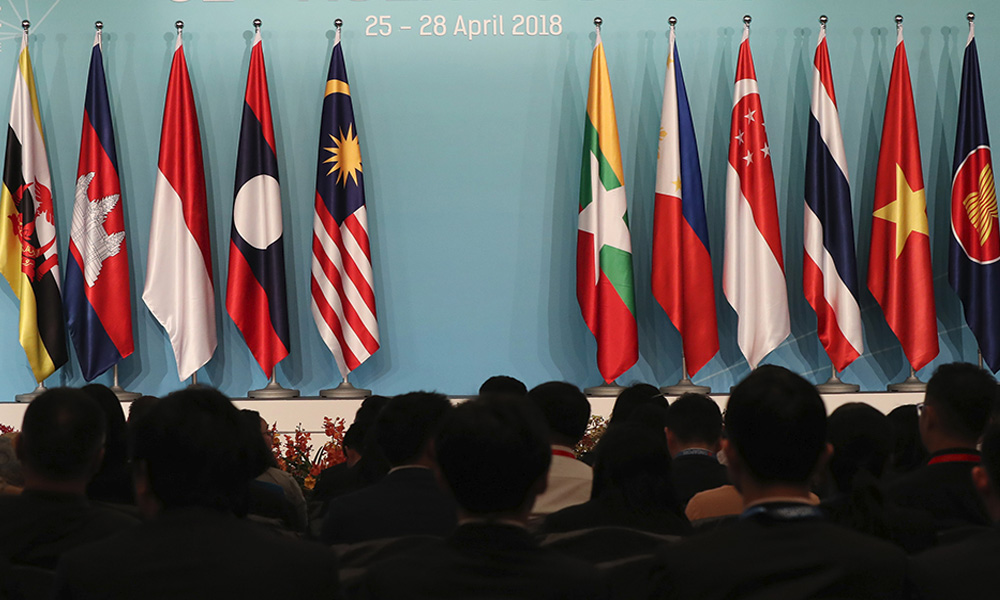
Asean was formed in 1967. Today, it consists of 10 member countries - Brunei, Cambodia, Indonesia, Laos, Malaysia, Myanmar, the Philippines, Singapore, Thailand, and Vietnam.
The US began to engage Asean as a dialogue partner in 1977. In 2010, it became the first non-Asean country to establish a mission to Asean, headquartered in Jakarta, Indonesia. And in 2016, they elevated the relationship to strategic partners.
- Bernama


Are you sure you want to delete this comment?
This action cannot be undone.