


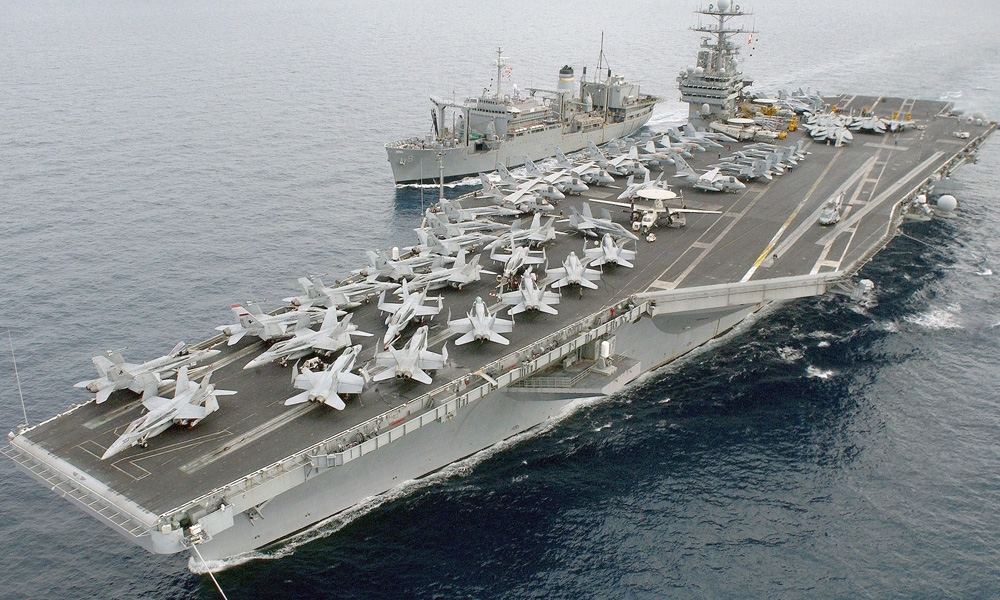

US military fleet to continue transits in South China Sea
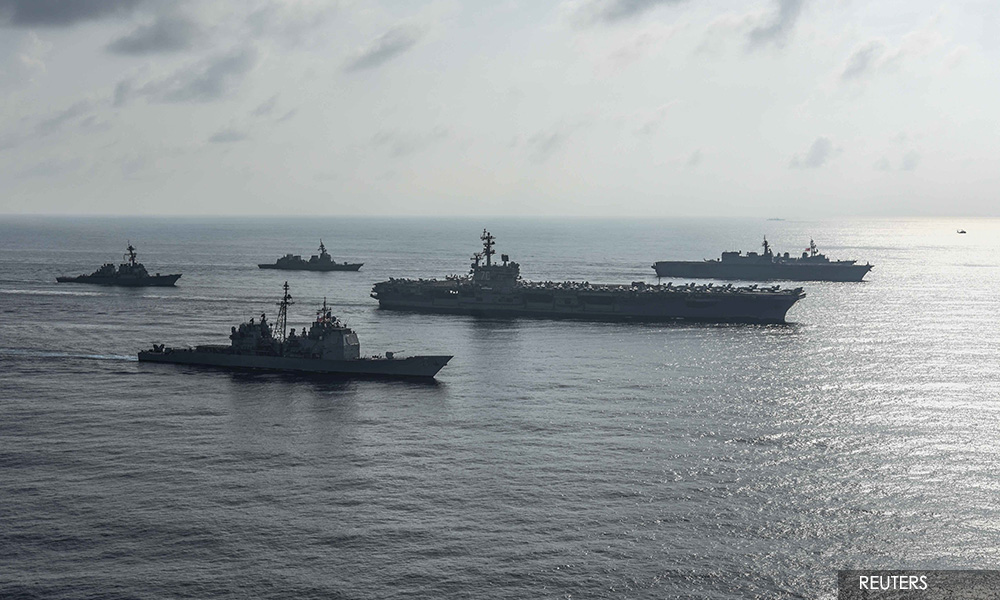
The United States (US) military fleet will continue to make transits in the South China Sea, the US deputy assistant secretary of defence for South and Southeast Asia Reed B Werner said.
He said this is part of the Department of Defence’s policy to ensure freedom of navigation and overflight in international waters...
The United States (US) military fleet will continue to make transits in the South China Sea, the US deputy assistant secretary of defence for South and Southeast Asia Reed B Werner said.
He said this is part of the Department of Defence’s policy to ensure freedom of navigation and overflight in international waters.
“(The) Department of Defence maintains a consistent military presence worldwide including the South China Sea, where we conduct regular maritime operations, training exercises, as well as presence operations and freedom of navigation operations.
“The latter - freedom of navigation operation, was conducted with the purpose to exert the legal rights of all countries - not just ours, to have access to certain waters, where there may be excessive maritime claims,” he said.
Speaking to Bernama in a phone interview from Washington, Werner pointed out that what the US is doing in the highly contested maritime area was nothing in scale or scope as compared to the activities that are carried out by China, he said – in reference to the activities of the People’s Liberation Army (PLA) in the South China Sea.
"We should distinguish between what the US is doing and what the PRC (People's Republic of China) is doing. We are conducting transit and regular joint exercises with partners in the region. That is something that is beneficial and happens all over the world. We conduct joint exercises.
“I think the right way to interpret our exercises in the South China Sea are (that) they are all tied to freedom of navigation and overflight. So, as we continue to view the threat to freedom of navigation and overflight, we will continue to conduct these transits. They are sometimes classified as exercises. In reality, they are largely transits,” he said.
He added that it is critical for the passageways to be kept open.
“That is, by and large, the purpose (of) our carriers and our naval vessels that are transiting every week and every month,” he said.
The strategic maritime waterway is a focal point of overlapping territorial claims by several countries – Brunei, Malaysia, the Philippines and Vietnam, which, collectively, are among the member states of Asean – as well as China and Taiwan.
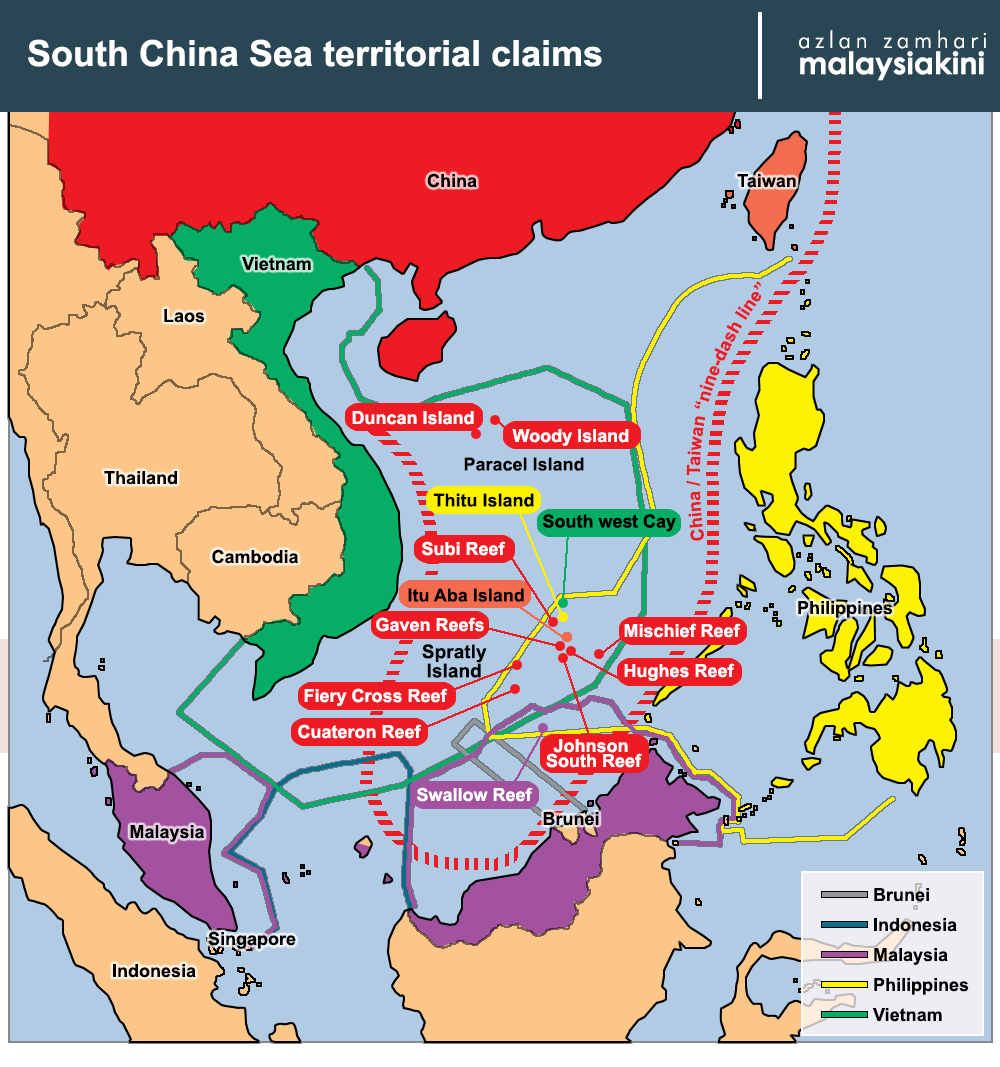
Tensions in the South China Sea have escalated in recent years, triggered by China's extensive military activities, including the building of artificial islands, as well as due to the action by the US, which has also heavily increased its military presence in response to China's action.
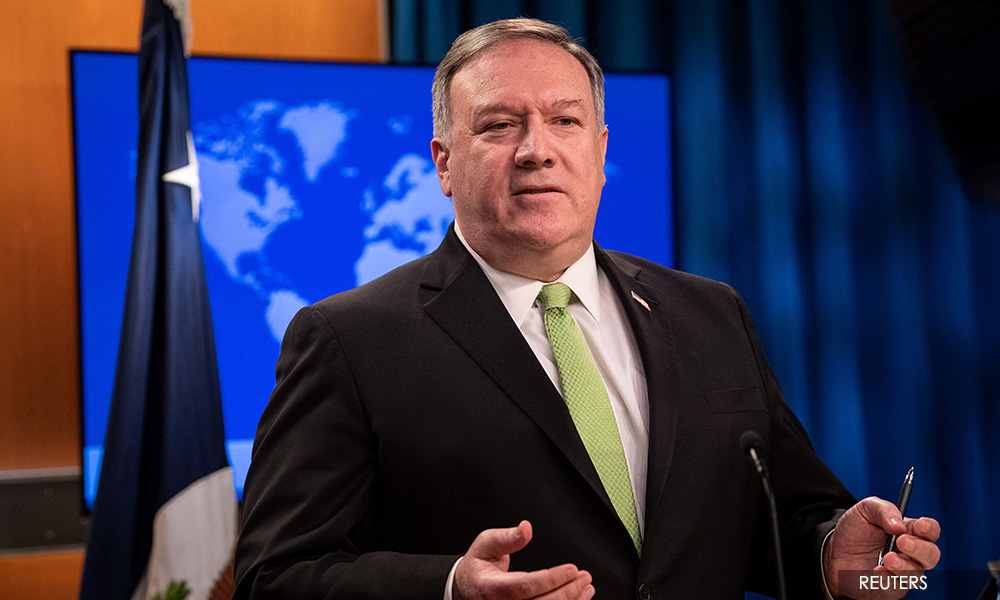
On Monday, US Secretary of State Mike Pompeo announced that Washington viewed Beijing’s claims across most of the South China Sea as completely unlawful. He added that China has no legal grounds to unilaterally impose its will on the region.
“In the South China Sea, we seek to preserve peace and stability, uphold freedom of the seas in a manner consistent with international law, maintain the unimpeded flow of commerce, and oppose any attempt to use coercion or force to settle disputes. We share these deep and abiding interests with our many allies and partners who have long endorsed a rules-based international order.
“These shared interests have come under unprecedented threat from the People’s Republic of China (PRC). Beijing uses intimidation to undermine the sovereign rights of Southeast Asian coastal states in the South China Sea, bully them out of offshore resources, assert unilateral dominion, and replace international law with ‘might makes right’,” Pompeo (below) had said in the statement.
In response, the Chinese embassy in the United States described the US’ accusation as completely unjustified.
According to report by Xinhua News Agency, a spokesperson from the embassy said: “The US Department of State had disregarded the efforts of China and Asean countries for peace and stability in the South China Sea, deliberately distorts the facts and international law including the United Nations Convention on the Law of the Sea (UNCLOS), exaggerate the situation in the region and attempts to sow discord between China and other littoral countries”.
“We advise the US side to earnestly honour its commitment of not taking sides on the issue of territorial sovereignty, respect regional countries' efforts for a peaceful and stable South China Sea and stop its attempts to disrupt and sabotage regional peace and stability," the spokesperson said.
Werner said China must halt all unlawful activities in the South China Sea, and return to rule of law in resolving the disputes with other claimants.
He said the US is concerned with the ongoing conduct by Chinese armies across the maritime area, adding that Beijing must stop its "bullying behaviour'’ to prevent the destabilisation of the region.
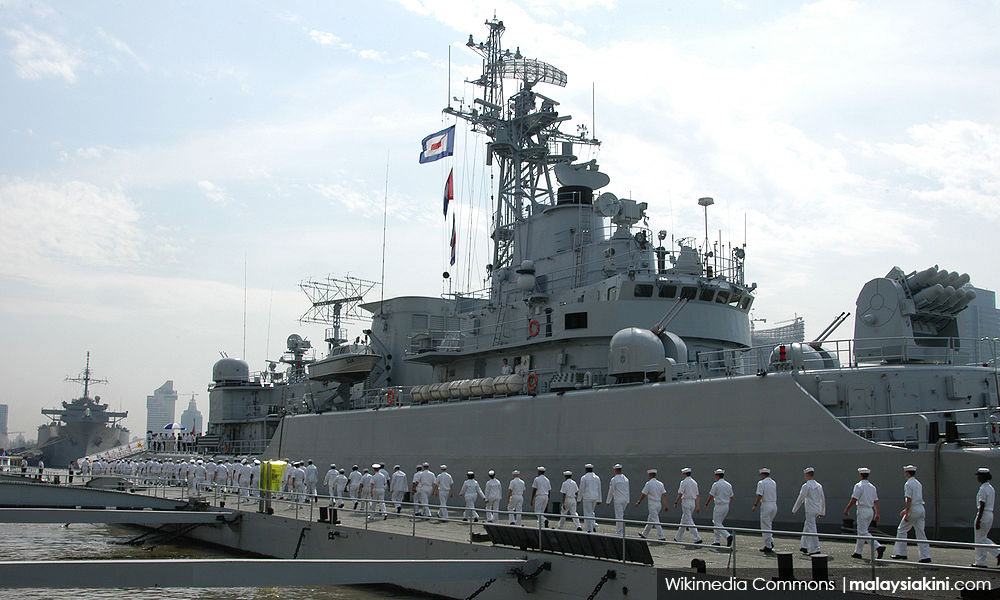
"We are calling on the Chinese to stop militarising the islands that we believe to be unlawful, their occupations to be unlawful, and stop conducting (it) like they are doing right now.
“Those are contested waters and we view that type of large scale exercises (as) destabilising. That concern had been shared by other governments in the region and voiced by other governments in the region - publicly and in some instances privately,” he said.
Werner said the US government also repeatedly asked Beijing to resolve the disputes based on the 1982 United Nations Convention on Law of the Sea (UNCLOS).
"They (China) are the signatory to UNCLOS and the Arbitral Ruling with/which binding and they chose not to honour it. So again, we ask them to stop bullying, stop militarising and stop breaking the agreement; we say this privately and we had said this publicly. These are the messages that we continue to channel to Beijing,” he said.
Likewise, he said the US also encouraged the Asean countries to continue to speak out on the issue and to regularly protest privately or publicly to Beijing when there is any activity deemed to be objectionable and could destabilise the region.
“It needs to be done every time they find something objectionable, lest their positions erode over time, and it should be done publicly and to draw attention to what they find objectionable.
“That's important,” Werner added.
- Bernama



Are you sure you want to delete this comment?
This action cannot be undone.