



History of Sabah’s past defections
The current political imbroglio playing out in Sabah, which is now heading toward snap polls after the dissolution of the state assembly, has dominated headlines over the past few days.
Yet, party-hopping and attempts to change state governments is not a new phenomenon in the East Malaysian state's politics. Similar events even took place as recently as the previous general election in 2018.
In fact, the former chief minister Musa Aman being unceremoniously denied entry at the palace gate - as he attempted to meet with Governor Juhar Mahiruddin to appeal against the dissolution - also hearken back to the experience by Parti Bersatu Sabah (PBS) founder Joseph Pairin Kitingan following in 1985 and 1994 state polls...
The current political imbroglio playing out in Sabah, which is now heading toward snap polls after the dissolution of the state assembly, has dominated headlines over the past few days.
Yet, party-hopping and attempts to change state governments is not a new phenomenon in the East Malaysian state's politics. Similar events even took place as recently as the previous general election in 2018.
In fact, the former chief minister Musa Aman being unceremoniously denied entry at the palace gate - as he attempted to meet with governor Juhar Mahiruddin to appeal against the dissolution - also hearkens back to the experience by Parti Bersatu Sabah (PBS) founder Joseph Pairin Kitingan following the 1985 and 1994 state polls.
In light of current events, Malaysiakini revisits several significant events in Sabah’s electoral and political history.
Double 1985, 1986 polls
Snap polls had been called in the state in April 1985 against a backdrop of rising largely non-Muslim Kadazan-Dusun nationalism which was seen as a threat to the rule of Umno-backed Parti Bersatu Jelata Sabah (Berjaya) president and then chief minister Harris Salleh.
Although formed just a month earlier, PBS emerged as a serious contender. Joseph Pairin - who had a falling out with Harris leading to him being booted from the state cabinet in 1982 due to his outspoken defence of Kadazan-Dusun and non-Muslims concerns - was amassing vast public support.
Also in contention was United Sabah National Organisation (Usno), led by long-time former chief minister Mustapha Harun, with whom Harris also had a falling out.
Yet, PBS emerged the victor, claiming 25 seats out of the 48-seat legislature. This later became 26 due to a defection by the Pasok representative in PBS’s favour. Usno won 16 seats while Harris’ Berjaya only mustered six seats.
Despite this, it was reported that Mustapha - with the support of Berjaya - forced then-governor Adnan Roberts to swear him in as chief minister, claiming to have amassed majority support.
A lawyer for the governor was quoted describing the alleged intrusion at the Istana Negeri at the time as “terrifying, humiliating, and exhausting.''
A High Court also ruled in Pairin’s favour in a suit filed by Mustapha. It was also around this time that a series of political demonstrations, reportedly violent riots and bomb attacks, took place around the capital city of Kota Kinabalu and several over cities.

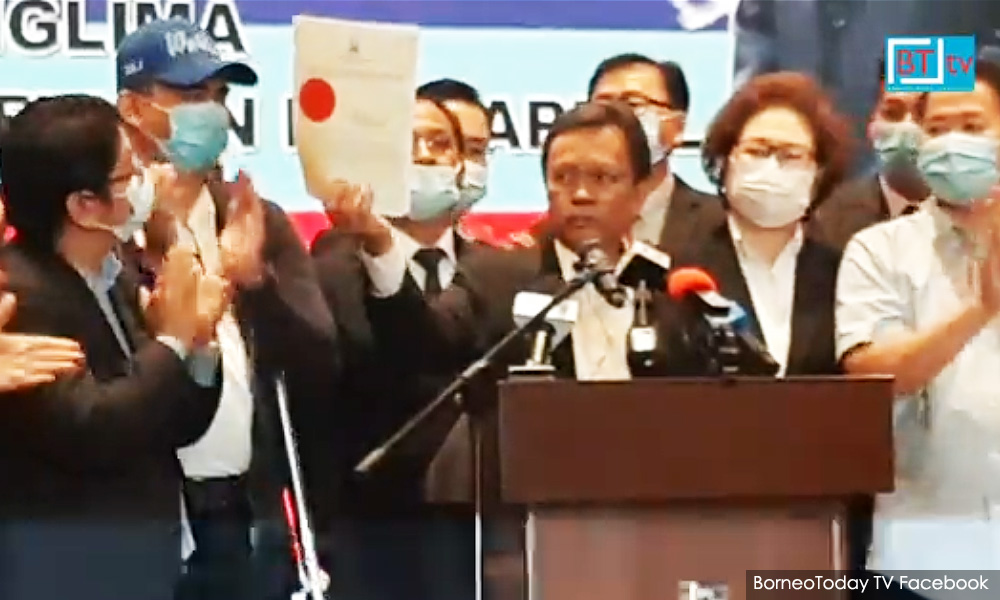
According to analyst James Chin (above), this was largely speculated to have been attempts to induce Dr Mahathir Mohamad, during his first tenure as premier, to declare an emergency ruling and indirectly deny PBS rule of the state.
According to Chin, then deputy prime minister Musa Hitam interceded as acting prime minister and Pairin was sworn in. Yet reports also indicated that Pairin had to wait at the Istana to stake his claim to the chief ministership.
Chin, in his 1999 paper Going East: Umno’s entry into Sabah’s Politics stated that the bombings were used to try to coerce PBS into accepting a PBS-Usno government. Unwilling, Pairin called for another election in 1986.
This he used to solidify his mandate, winning with a larger mandate of 34 seats. “Winning with such a strong showing, Mahathir accepted PBS into BN in 1986”, Chin said.
1994: Umno enters the stage
Under BN, PBS won 36 seats in the 1990 state election. Yet all was not right with the PBS-BN union due to unhappiness over perceived unequal treatment by the federal government.
And in October 1990, after nominations for the general election had closed, Pairin announced the party’s departure from BN in favour of Tengku Razaleigh Hamzah’s Gagasan Rakyat.
Those moves prevented Mahathir’s ruling coalition from changing strategy and appointing new candidates. This eventually led to Umno’s entry into the state to contest in the 1994 polls.
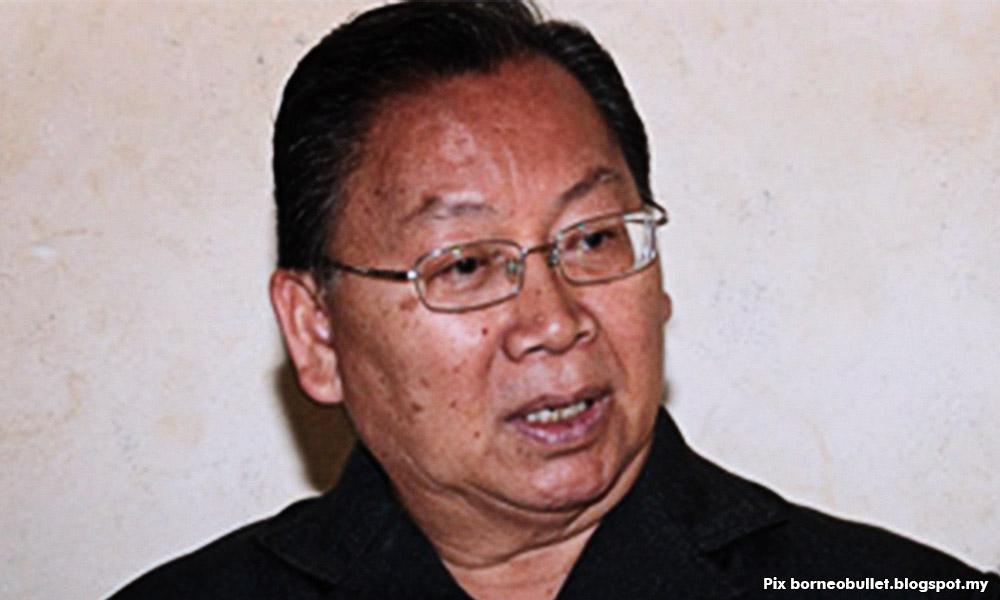
In the February 1994 state polls, however, Pairin (above) won with just a two-seat majority despite forming an alliance with Usno. Sabah Umno, meanwhile, claimed almost all Muslim-majority seats.
Among the victors was first-time candidate Mohamad Salleh, the son of the then state governor Mohammad Said Keruak, who had won the Usukan state seat for Umno.
Some accounts state it was at this juncture that Pairin immediately went to the palace to affirm his position and victory. However, he was supposedly made to wait 36 hours under the rain in his car.
According to analyst Mohammad Agus Yusoff, the Yang-di-Pertuan Negeri was ill. “Pairin waited at the Istana gates, saying he wanted to prevent a repeat of the embarrassing episode that had occurred in 1985,” Agus wrote in a 2001 paper on the topic.
However, Chin said that defections, which were allegedly orchestrated by then deputy prime minister Anwar Ibrahim, were this time successful in dethroning the Pairin government. This time, the governor refused Pairin’s request to dissolve the state assembly.
“It was the first time major defections led to the fall of a state government,” Chin told Malaysiakini. In two weeks, Pairin was replaced.
As previously promised by Umno, the state then practised a rotational system to determine the chief ministership, rotating every two years between a Muslim-bumiputera, non-Muslim-bumiputera, and Chinese Sabahan.
However, this practice was stopped after Musa came into power in 2003.
The tale of two chief ministers
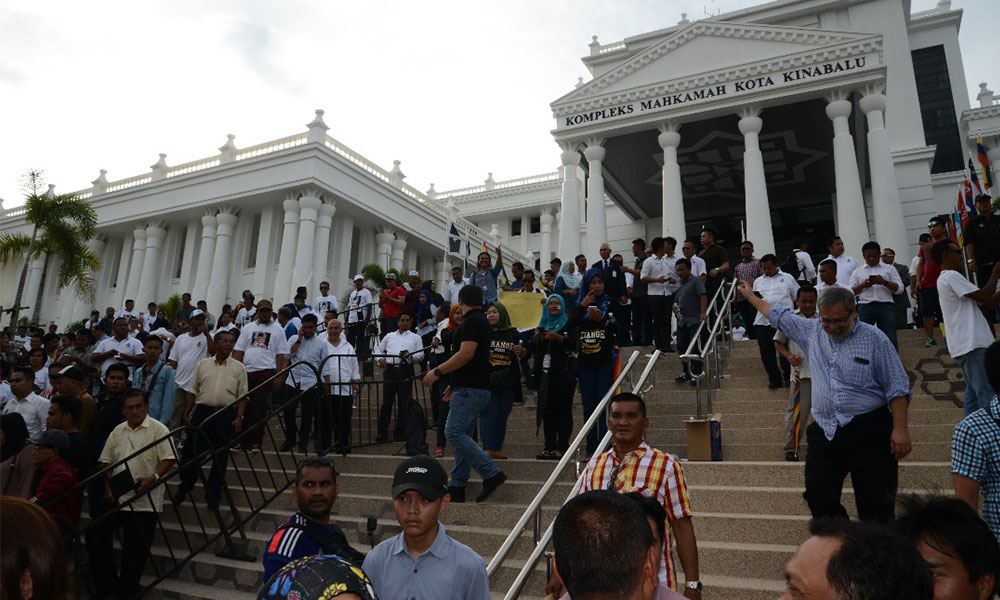
A similar situation played out in 2018 following the May general election, which saw Pakatan Harapan wrest federal power from Umno-BN after over six decades.
In Sabah, both Sabah BN and Harapan ally Warisan - led by former BN minister Mohd Shafie Apdal - each won 29 seats out of 60 state seats.
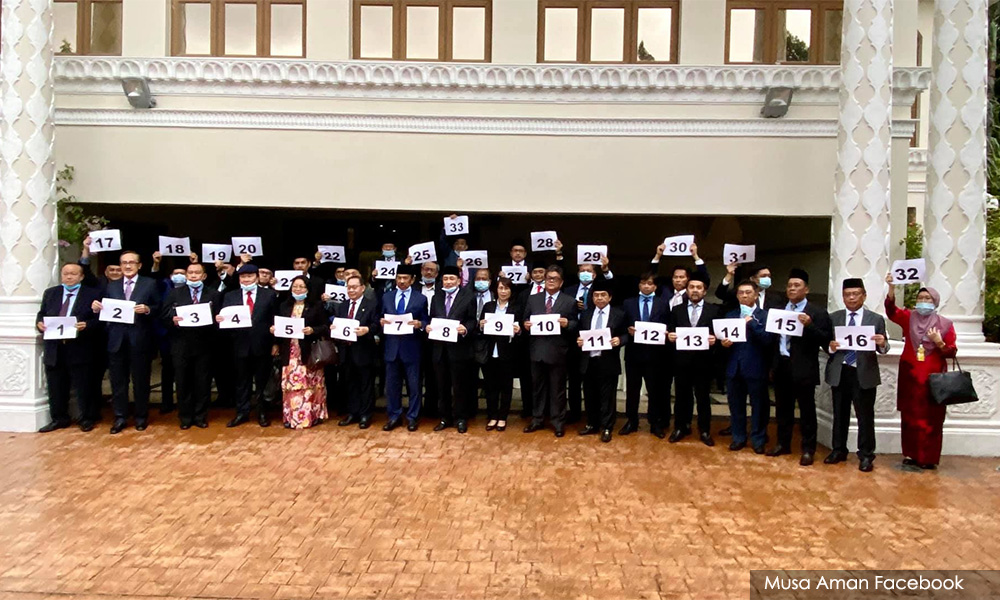
Parti Solidariti Tanah Airku (Star) - under president Jeffrey Kitinggan, who is Pairin’s brother - became kingmaker. Jeffrey pledged the support of the party’s two seats to Musa, leading to Musa being first sworn in as chief minister on May 10, 2018.
Yet, just a day later, the defections of six BN representatives who switched allegiance to Warisan resulted in Shafie also being sworn in. The complication of two serving chief ministers was laid to rest with Musa being asked to resign.
Even so, Musa applied to the High Court against both the governor and Shafie to have Shafie’s appointment thrown out. The court later ruled against Musa.
Adding to the twist, governor Juhar later lodged a police report against Musa alleging criminal intimidation, which Musa denied.
Perhaps in light of this, Chin told Malaysiakini Juhar made the “right call” today in consenting to the dissolution of the state assembly.
“We must credit the Yang di-Pertua Negeri. They are giving people a choice this time instead of just swearing in a new chief minister (as in 1994 and 2018).
“This is democracy at work. If they were to just swear in a new state government, there would even be a lawsuit like before.”
He added that snap polls would also allow the people to reflect on the current political situation, not just in Sabah but on the federal level, such as the change of the federal government in February.
“This time, they can vote on this issue.”


Are you sure you want to delete this comment?
This action cannot be undone.