




Harapan to work with PSB in Sarawak polls, no more PKR-DAP clashes
INTERVIEW | Pakatan Harapan once saw a glimmer of hope in capturing Sarawak during its 22-month tenure in Putrajaya, despite the state ruling coalition Gabungan Parti Sarawak (GPS) sweeping 72 seats out of the total 82 in the State Legislative Assembly in the 2016 state election.
However, the political momentum crashed with the Sheraton Move, the February political coup which led to the collapse of Harapan at the federal level. It is generally believed that GPS will easily retain power and perhaps even wrest back the seats controlled by the opposition at the next state election.
In an interview with Malaysiakini last week, Sarawak Harapan chief Chong Chieng Jen (above) spoke of how the underdog opposition will be going against all odds in the forthcoming state election, which must be held the latest by August next year.Harapan is eyeing to emerge as a stronger opposition to play a more effective role in keeping the state government in check. It plans to achieve this by working with other like-minded parties which share the same goals, said Chong.
He revealed that Sarawak Harapan has started ...
INTERVIEW | Pakatan Harapan once saw a glimmer of hope in capturing Sarawak during its 22-month tenure in Putrajaya, despite the state ruling coalition Gabungan Parti Sarawak (GPS) sweeping 72 seats out of the total 82 in the State Legislative Assembly in the 2016 state election.
However, the political momentum crashed with the Sheraton Move, the February political coup which led to the collapse of Harapan at the federal level. It is generally believed that GPS will easily retain power and perhaps even wrest back the seats controlled by the opposition at the next state election.
In an interview with Malaysiakini last week, Sarawak Harapan chief Chong Chieng Jen (above) spoke of how the underdog opposition will be going against all odds in the forthcoming state election, which must be held the latest by August next year.
Harapan is eyeing to emerge as a stronger opposition to play a more effective role in keeping the state government in check. It plans to achieve this by working with other like-minded parties that share the same goals, Chong said.
He revealed that Sarawak Harapan has started seat negotiations with Parti Sarawak Bersatu (PSB) led by six-term Bawang Assan assemblyperson Wong Soon Koh. The talks are to resolve their overlapping demands for a few state seats.
"Our goal is to strengthen the opposition in its role as a check and balance to the state government. It is important for us to have a stronger opposition now than before, following the increase in resources.
"Our state revenue increased to RM10 billion today, compared with RM4 billion 10 years ago, thus a sound check and balance mechanism must be in place," he said.
Citing the opposition MP-led parliamentary Public Accounts Committee (PAC), which is known for its effectiveness in probing questionable deals by government agencies and companies, Chong said he is confident that the opposition can play a better role in Sarawak after its 22-month experience in Putrajaya.

Chong did not rule out the possibility of Harapan and PSB winning the next state election.
"If the opposition parties can deliver good results and cross the 42-seat threshold (for a simple majority), then we will be in power," he said.
"It is impossible for a single party to rule the state," he added.
Chong, who is Sarawak DAP chief, expects his party - which contested 31 seats in the last polls - to concede some of its seats to its partners, particularly rural seats, this time around.
"I forget how many times we had our discussions. We discussed the issues formally and informally. We talked at the coffee table, via Zoom and over the telephone. We discussed on seat allocation, a cooperation model. We even discussed how can we still work with one another if we fail to resolve (seat clashes)," he said.
"We will settle it soon. But even if we can only resolve it on the eve of the nomination day for the state polls, it's still good," he said.
Both Harapan and PSB joined forces for several matters, including the state constitutional amendment, which sought to tighten the definition of "resident in the state" and lower the age at which a person can contest in a state election from 21 to 18, according to Chong.

The amendment was to ensure that only Sarawakians are eligible to contest in the state elections. It specifies two categories of persons who would be qualified as “resident in the state", the first of which is a citizen born in the state of Sarawak whose parents, or either of them, was also born in the state and he or she is normally a resident in the state.
The other is a citizen, though not born in the state, but whose parents or either of them was born in the state and he or she is normally a resident in the state.
Harapan and PSB both opposed to the definition of "resident in the state" due to the ambiguity in the amendment.
In June, Harapan had agreed that the coalition would work with any like-minded party for the next state election. But Sarawak PKR found itself having a problem accepting PSB, which took in defected PKR lawmakers as members and openly announced that it would contest the seats won by these lawmakers under PKR's ticket.
It took PKR two decades to work the grassroots before the party could even win a few seats in the Land of the Hornbill. PKR, which won three state seats in 2016, was left with no state lawmakers following the defections.
In July, Sarawak PKR chief Larry Sng slammed DAP for "privately conceding" five to six seats, including Bawang Assan, to PSB and threatened to contest in Bawang Assan saying PKR would not honour any "side agreements" on seat negotiations.
Bawang Assan, a 54 percent Chinese-majority seat in Sibu, has been held by PSB president Wong Soon Koh since its creation in 1991.
Sng, in an interview with Malaysiakini four months ago, said he expected his party to contest 44 state seats while DAP and Amanah would take 26 seats and 12 seats respectively, leaving no seat for PSB.
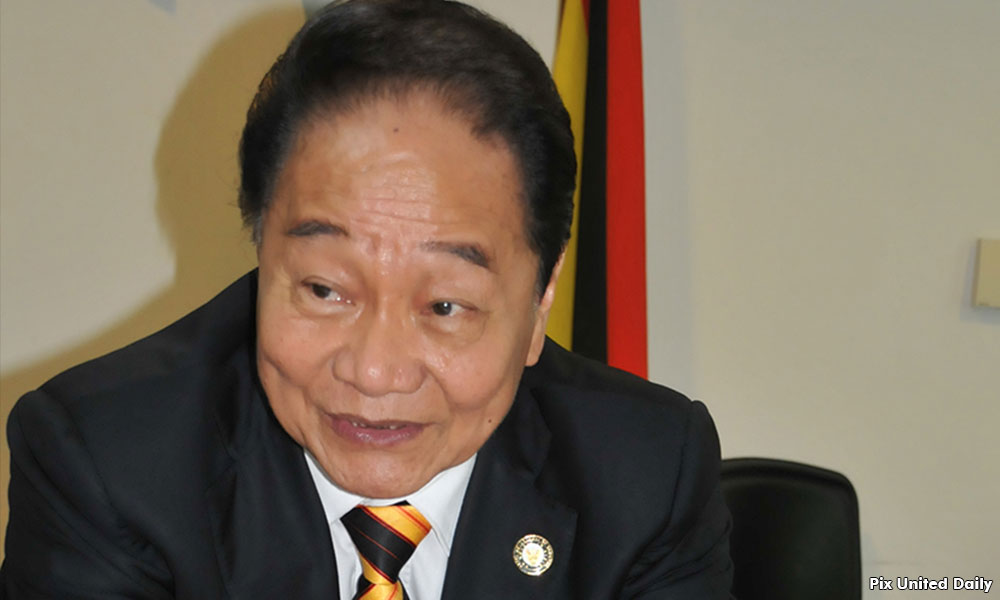
PKR has openly pledged to reclaim the seats won by its defector lawmakers who joined PSB, namely Selangau MP and Ba'kelalan assemblyperson Baru Bian and Batu Lintang assemblyperson See Chee How. Others who left for Bersatu are Saratok MP and Krian assemblyperson Ali Biju and Puncak Borneo MP Willie Mongin.
Both Baru and See have pledged to defend their seats at the upcoming state polls.
Besides clashing with PKR, PSB also needs to resolve with DAP overlapping seat claims, including Bawang Assan and Dudong, which have been traditionally contested by DAP and which defeated BN-SUPP in the Dudong seat in 2011.
PSB and its leader are not without controversy. Set up in 2014, PSB was formerly known as the United People's Party (UPP), a splinter party of GPS' ally Sarawak United People's Party (SUPP). The party had pledged full support for state Chief Minister Abang Johari Openg.
It was only five months ago that Wong quit the state cabinet as second finance minister and international trade and e-commerce minister after accusing GPS of turning hostile toward his party.
While Wong may have severed his ties with the state government, he is still seen as a strong figure close to the Sarawak Governor Abdul Taib Mahmud, who had roped the former school teacher into state cabinet in 2004, during his three-decade reign as chief minister.
Taib's tenure was riddled with allegations of corruption, deforestation and nepotism. DAP, together with PKR, had harped on these issues haunting Taib.
When asked how DAP is going to explain to its supporters its cooperation with the former lieutenant of Taib, Chong said DAP would not defend Wong.
"I will not 'whitewash' the past history about him... let him justify it himself," he said.
"But, if the people think that it is enough and it is time to change the 57-year-old state government, then Wong quitting GPS (and the state cabinet) will be favourable to us.
"(We are) in the same boat, but we will cooperate with each other, based on our needs in politics and policies," Chong said.

Chong also said that Harapan has agreed with its allies that they would not stand against each other in the same seat to prevent a repeat of the PKR-DAP clashes in six seats in the 2016 state election.
Revisiting the incident, Chong admitted that this was among the reasons that led to the defeat of the opposition. As such, he believes that the voters will reverse their negative impression if Harapan is able to resolve seat negotiations amicably this time.
PKR and DAP lost the six seats they contested against each other in the 2016 state election after negotiations broke down. The seats were Batu Kitang, Ngemah, Mulu, Murum, Mambong and Simanggang.
Then PKR deputy president Azmin Ali had authorised Baru to issue authorisation letters to its candidates to contest in five seats. This resulted in DAP retaliating by contesting in Batu Kitang.
However, Chong at that time saw a silver lining in the PKR-DAP clashes as a "healthy competition" that allowed both parties to gauge their support via the ballot box.
"As for the six overlapping seats, three seats in which we secured higher votes are given to us. PKR gets the balance three as they obtained higher votes there," he said.
"At least we had the experience of standing against each other in these seats. We experienced it. We no longer can claim orally that we have more support in this particular seat," he said.
"The relationship between PKR and DAP? The more we fight (each other), the more we love each other," Chong quipped.




Report this comment
Are you sure you want to delete this comment?
This action cannot be undone.