
Covid-19 weekly roundup: M'sia burdened by spike in clusters
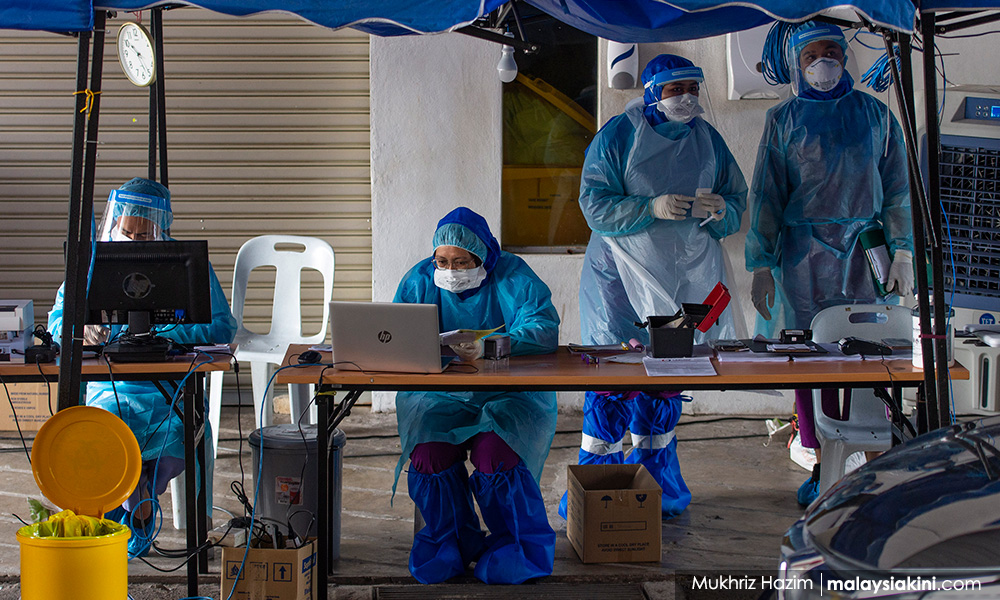
There has been no respite from the Covid-19 virus since the start of the third wave of infections in September last year as Malaysia’s cumulative cases look all set to surge past the 200,000 mark.
With 4,094 new cases reported yesterday (including eight imported cases), the nation’s total number of positive cases now stood at 198,208.
Malaysia is now bogged down with 43,192 active cases and, as of yesterday, 372 active clusters including nine new ones.
On Jan 23 – two days before the “first anniversary” of the detection of the novel coronavirus in Malaysia – 4,275 new cases were recorded. New daily infections...
There has been no respite from the Covid-19 virus since the start of the third wave of infections in September last year as Malaysia’s cumulative cases look all set to surge past the 200,000 mark.
With 4,094 new cases reported yesterday (including eight imported cases), the nation’s total number of positive cases now stood at 198,208.
Malaysia is now bogged down with 43,192 active cases and, as of yesterday, 372 active clusters including nine new ones.
On Jan 23 – two days before the “first anniversary” of the detection of the novel coronavirus in Malaysia – 4,275 new cases were recorded. New daily infections exceeding 4,000 were also reported on Jan 16 (4,029) and Jan 20 (4,008).
Yesterday’s new cases involved 3,328 Malaysians (81.4 percent) and 758 non-citizens.
The Ministry of Health (MOH) had earlier projected that for the Jan 4 to May 31 period this year, daily new cases would hover around 3,000 (second week of February), 5,000 (second week of April) and 8,000 (fourth week of May).
The projections were based on the R-naught (R0) value of 1.1. R0 refers to the infectivity rate of a virus at the start of an outbreak in a community.
On Sept 23, 2020, at the start of the third wave of infections, Malaysia recorded 147 new cases while its cumulative total stood at merely 10,505 and active cases 770. And, one month later its positive cases started to rise at an exponential rate.
Malaysia now stood at the 55th spot (from 58th spot last Friday) in the list of 216 countries affected by the Covid-19 pandemic, having overtaken Costa Rica (192,637 cases), Ireland (192,645) and Denmark (197,208). Immediately ahead of Malaysia is Tunisia with 204,352 cases.
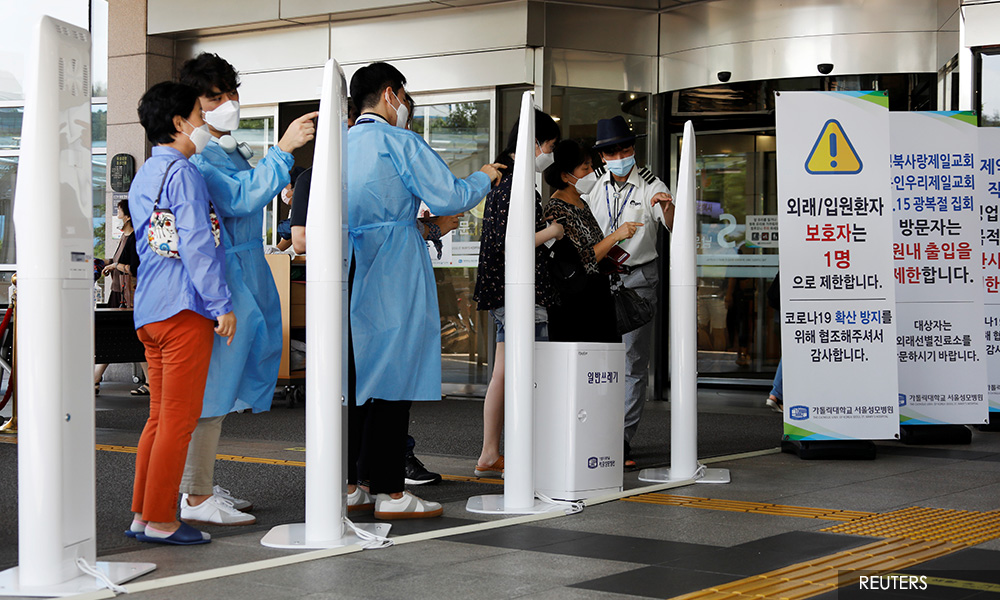
China, where the first case involving the deadly coronavirus was reported in December 2019, now stood at the 83rd spot with 89,378 cases, while Malaysia’s neighbour Singapore is at the 93rd spot with 59,425 cases.
For the record, new daily cases reported during the week under review (Jan 23-28) are as follows: 4,275 (Jan 23), 3,346 (Jan24), 3,048 (Jan 25), 3,585 (Jan 26), 3,680 (Jan 27) and 4,094 (yesterday).
Malaysia’s state of emergency, proclaimed on Jan 12, will remain until Aug 1. A movement control order has also been imposed nationwide, except Sarawak, up to Feb 4.
Health director-general Dr Noor Hisham Abdullah had said on Jan 14 that efforts to flatten the Covid-19 infection curve will show results by May or June, with new cases expected to be in the range of 500 to 1,000 a day.
As of yesterday, Malaysia has recorded a total of 779 Covid-19 clusters, including the nine new clusters announced yesterday. A total of 407 clusters have ended while 372 are still active and being monitored by the authorities.
Yesterday, 89 of the clusters recorded new cases, with clusters reporting the highest numbers being Hentian (88 cases), Pasai (73), Jalan Faizal (45) and Jalan Playar (45).
For the record, the number of new clusters reported daily from Jan 23-28 is as follows: 11 (Jan 23), nine (Jan 24), 13 (Jan 25), seven (Jan 26), 17 (Jan 27) and nine (yesterday).
Clusters linked to the workplace continued to dominate this week and contributed to the bulk of new cases reported daily following the screening of foreign workers, particularly at factories and construction sites, beginning Dec 1 last year.
The number of new workplace clusters reported over the week is as follows: Jan 23, eight (out of 11 new clusters); Jan 24 eight (nine); Jan 25 eight (13); Jan 26 three (seven); Jan 27 15 (17); and yesterday five (nine).
MOH, in a report, also said that between Dec 7, 2020, and Jan 27, a total of 30 clusters, involving 3,231 positive cases, had emerged due to movements across states. Kelantan accounted for the highest number of such clusters at eight, followed by Pahang seven and Terengganu five.

Workplace clusters that reported a high number of positive cases following the screening of workers include: Bina Bali Residence involving Melaka Tengah and Alor Gajah districts in Malacca (204 cases, Jan 23); Jalan Sebelas in Hulu Langat district, Selangor (83, Jan 24); Parit Lanjut in Muar district, Johor (547 out of 1,451 factory workers screened, Jan 27); and Industri Grisek involving Tangkak and Muar, Johor (145 out of 537 factory workers screened).
The Bukit Besi Tembok cluster involving detainees in Dungun, Terengganu, detected 99 positive cases as of Jan 26 among the 1,131 individuals screened.
According to MOH’s daily Covid-19 report yesterday, Selangor accounted for the highest number of new cases reported yesterday at 1,577. Out of this, 264 were from existing clusters including 12 from the Jalan Pakat cluster (community cluster) and 998 from the screening of close contacts of Covid-19 cases. Selangor now has a cumulative total of 59,063 cases.
Johor, which on Wednesday had the highest number of new cases (1,069), recorded 717 cases yesterday, 170 of which were from existing clusters including 99 from new clusters – Jalan Faizal, Jalan Satria and Jalan Dewani Satu, all three being workplace clusters.
Kuala Lumpur reported 57 cases from existing clusters, 256 cases from the screening of close contacts, four imported cases and 361 cases from other Covid-19 screenings.
Sabah, meanwhile, reported 282 new cases yesterday; Sarawak (171 including the new Indah Riang cluster community cluster) and one imported case; Penang (99); Perak (94); Kedah (92); Terengganu (80); Malacca (73), as well as the new Jalan Kejora cluster (high-risk group cluster).
Pahang (72 new cases and two new clusters - Industri Peramu Jaya (workplace cluster) and Kampung Kemansur (community cluster); Labuan (55) and the new Taman Mahkota Impian workplace cluster; Negeri Sembilan (48); Kelantan (37); Putrajaya (10); and Perlis (nine).
Meanwhile, yesterday 3,281 patients were discharged from hospitals, bringing the total number of recovered cases to 154,299. Currently, 303 patients are in the intensive care unit with 118 requiring respiratory aid.
On Wednesday, the number of patients requiring intensive care shot up to 314 with 122 needing ventilators, the highest number thus far.
Yesterday, 10 fatalities were reported, bringing Covid-19 death toll to 717.
The breakdown for the fatalities reported this week is as follows: seven (Jan 23), 11 (Jan 24), 11 (Jan 25), 11 (Jan 26), seven (Jan 27) and 10 (yesterday).
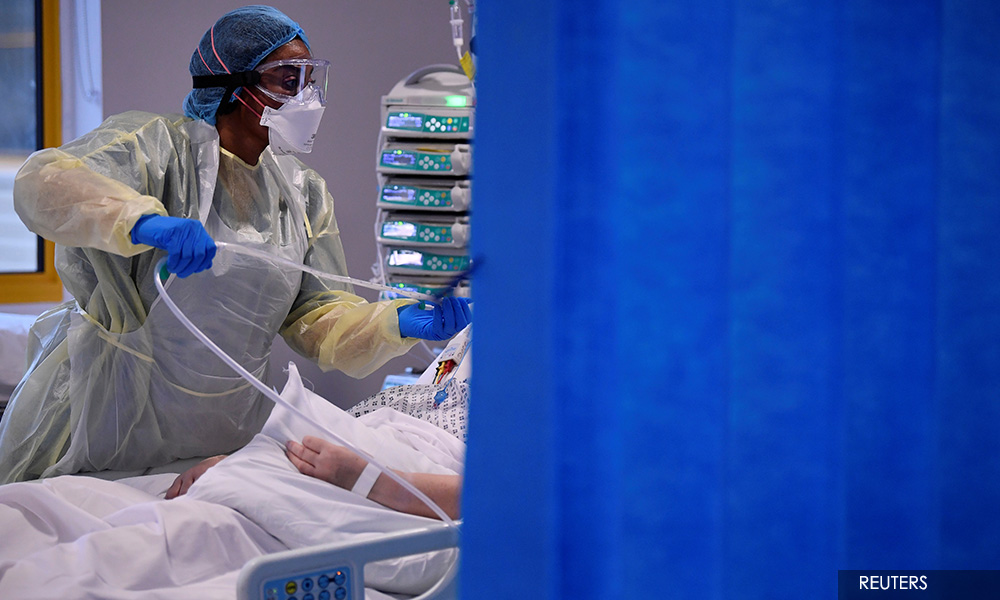
Total global Covid-19 cases reached 100 million on Jan 27, constituting about 1.3 percent of the world population. The worst-hit nations are the United States, India, Brazil, Russia and the United Kingdom.
The total number of Covid-19 cases worldwide at the time of writing this article stood at 101,529,722 (97,403,475 cases at the same time last Friday) and deaths 2,186,606 (2,102,588 last Friday). The total number of recoveries stood at 73,444,115.
Some 216 countries are affected by the Covid-19 pandemic and those in the top 10 of the list are the United States, India, Brazil, Russia, the United Kingdom, France, Spain, Italy, Turkey and Germany. The breakdown is as follows:
United States 26,338,607 cases (443,769 deaths), India 10,720,971 (154,047), Brazil 9,060,786 (221,676), Russia 3,793,810 (71,651), United Kingdom 3,743,734 (103,126), France 3,130,629 (74,800), Spain 2,792,360 (57,806), Italy 2,515,507 (87,381), Turkey 2,457,118 (25,605) and Germany 2,194,562 (56,220).
China, where the outbreak was first reported at end-December 2019, is now on the 83rd spot with 88,378 cases while its death toll stood at 4,636.
Besides Malaysia, the three other Southeast Asian nations that have joined the list of 81 countries with more than 100,000 cases are Indonesia (19th spot) with 1,037,993 cases and 29,331 deaths, the Philippines (32nd spot) with 519,575 cases and 10,552 deaths, and Myanmar (71st spot) with 139,152 cases.
Singapore has reported 59,235 cases and 29 deaths; Thailand 16,221 cases and a death toll of 76; Vietnam 1,651 cases and 35 deaths; and Cambodia 461 cases and zero death.
There are no changes to Brunei’s tally of 141 cases and two deaths, and Laos’ 41 cases and zero fatality.
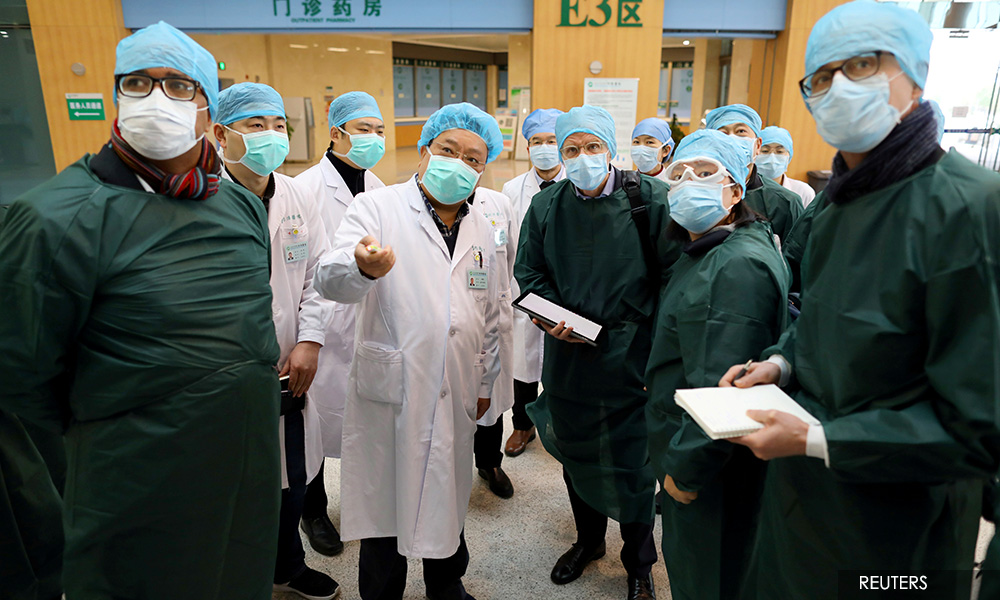
According to the World Health Organisation’s website, its China country office was informed of cases of pneumonia that were detected in Wuhan on Dec 31, 2019. On Jan 7, the Chinese authorities confirmed that the novel coronavirus can be transmitted from human to human.
Coronaviruses are a large family of viruses that cause illnesses ranging from the common cold to more severe diseases such as Severe Acute Respiratory Syndrome (SARS) and Middle East Respiratory Syndrome (MERS-COV).
A study of the virus’ genetic sequence suggested similarities to that seen in snakes and bats. China health officials identified the Huanan Seafood Market in Wuhan as the source of the transmission of the coronavirus.
On Feb 11, WHO announced the official name of the virus, Covid-19, which is an acronym for coronavirus 2019 – CO stands for corona, VI for virus and D for disease.
On Jan 30, WHO declared the coronavirus outbreak as a global emergency. By then, it had spread to 18 countries and caused 170 deaths. On March 11, Covid-19 was declared a pandemic by WHO.
WHO has described the Covid-19 outbreak as much more dangerous than the A H1N1 Influenza, also known as Swine Flu.
Swine Flu, which occurred between January 2009 and August 2010, infected more than 1.6 million people and caused 18,449 fatalities.
The International Monetary Fund has warned that the global economic recession caused by the Covid-19 pandemic will be worse than the Great Depression of the 1930s.
Covid-19 was first detected in Malaysia on Jan 25, 2020, when three Chinese nationals, who had entered Malaysia through Johor from Singapore, tested positive for the novel coronavirus.
- Bernama