




Indonesia told to ratify haze treaty urgently
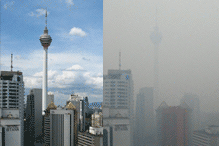
Southeast Asian environment ministers who met in Indonesia yesterday to grapple with ways of curbing land-clearing fires told their host to promptly ratify a regional treaty on preventing the choking haze the blazes cause.
Southeast Asian environment ministers who met in Indonesia yesterday to grapple with ways of curbing land-clearing fires told their host to promptly ratify a regional treaty on preventing the choking haze the blazes cause.
Ministers from Brunei, Indonesia, Malaysia, Singapore and Thailand gathered in Pekanbaru on the island of Sumatra, one of the areas worst hit by the smog which chokes the region each year.
 "The meeting respectfully urged Indonesia to urgently finalise the ratification of the Asean agreement on transboundary haze pollution in accordance with its national law," a statement released after the talks said.
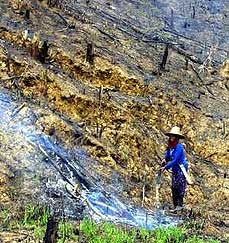
Palm oil and timber plantation companies, as well as local farmers employing traditional slash-and-burn methods, are largely blamed for lighting the fires ahead of the monsoon. The practice has been outlawed but enforcement remains weak.
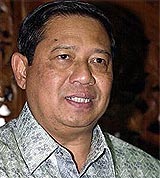
Indonesian President Susilo Bambang Yudhoyono, who has faced the ire of both Malaysia and Singapore over his government's failure to act on stopping the blazes, said earlier this week Jakarta would ratify the 2002 treaty.
But he gave no time frame and the process which could take months.
Access to haze fund
Indonesia and the Philippines are the only two of the 10 members of the Association of Southeast Asian Nations (Asean) not to have done so.
As a party to it, Indonesia would have to legislate to create a strict zero-burning policy, an official from the Asean secretariat told AFP, requesting anonymity.
She said, however, that signing on would allow Indonesia to access a haze fund provided under the agreement, which has yet to come into operation, to help it pay for firefighting and cloudseeding. The fund is to be comprised of voluntary contributions from members.
 The five nations also agreed to hold a regional workshop in Indonesia next month aimed at looking into new measures to tackle the problem.
Indonesian environment minister Rachmat Witoelar told the ministers during the meeting that the archipelago nation would do its best to fight the fires raging on Sumatra and Kalimantan but still urged assistance.
"We are open to suggestions that will increase our effectiveness in suppressing current and future fires, and we welcome assistance from within and outside the region to overcome this dreadful problem which affects millions of lives," he said.
"The force of nature and the poverty alleviation challenges on remote agricultural lands have severely limited the effectiveness of our fire suppression measures," Witoelar conceded.
He said the gradual decentralisation of government in Indonesia, which gave more autonomy to provincial officials, meant battling the fires was "not a simple task."
Presidential apology
Separately, Indonesia announced it had earmarked nearly US$11 million itself to spend on dousing the fires, which can smoulder for weeks if lit in peatland areas.
 "The president has asked that 100 billion rupiah (US$10.8 million) be made ready to fight the smoke," said Welfare Minister Aburizal Bakrie, who is responsible for dealing with the haze, according to
Kompas
newspaper.
"The president has asked that 100 billion rupiah (US$10.8 million) be made ready to fight the smoke," said Welfare Minister Aburizal Bakrie, who is responsible for dealing with the haze, according to
Kompas
newspaper.
He said that the money would be spent on planes dumping water on the fires and cloudseeding with chemicals to artificially create rain.
President Yudhoyono earlier this week apologised to nations affected by the acrid haze, which sees a spike in respiratory problems among people and disrupts travel and tourism.
The smog on Friday continued to hang over swathes of Indonesia, where people have resorted to holding mass prayers for rain to wash the pollution away.
The haze hit its worst level in 1997-98 and cost the Southeast Asian region an estimated US$9 billion by disrupting air travel and other business activities.
Meanwhile, Malaysia's Air Pollutant Index (API) has registered a worsening in the air quality today with three areas declared 'unhealthy' - Kuala Selangor (Selangor), Seri Manjung (Perak) and Nilai (Negri Sembilan).
No areas registered 'unhealthy' levels yesterday.


Are you sure you want to delete this comment?
This action cannot be undone.