


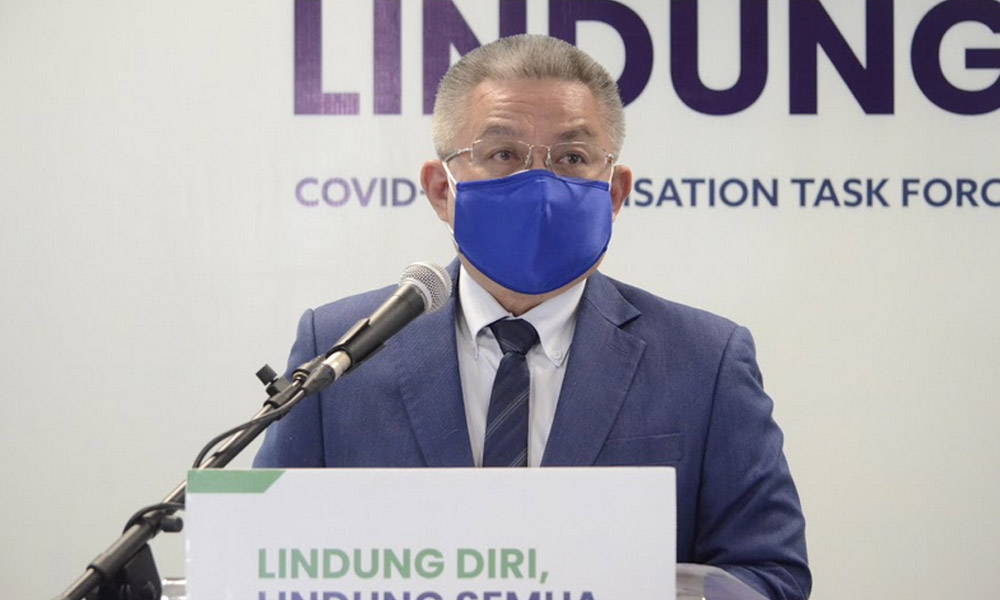

Adham: No reversion for Phase 2 states with increasing daily cases
States under Phase 2 of the National Recovery Plan (NRP) which have started seeing an increase in daily Covid-19 cases again – one of the indicators for transition to another phase – do not need to revert to Phase 1, said Health Minister Dr Adham Baba.
He said the (daily case) indicator is based on the average over seven days and not just a one-day thing...
States under Phase 2 of the National Recovery Plan (NRP) which have started seeing an increase in daily Covid-19 cases again – one of the indicators for transition to another phase – do not need to revert to Phase 1, said Health Minister Dr Adham Baba.
He said the (daily case) indicator is based on the average over seven days and not just a one-day thing.
“For those states that passed the Phase 2 indicators, we ask that they continue with their public health interventions in order to maintain Phase 2,” Adham said in a press conference held in Putrajaya and live-streamed online today.
Adham had previously stressed several times that the target daily cases threshold to transition to Phase 2 is a seven-day average below 4,000 cases.
The other two indicators are for 10 percent of the state’s population to be fully vaccinated and for an improved state of the healthcare system.
Adham also pointed out that the states currently in Phase 2 have already achieved the indicator for their healthcare response capacity as well as the 10 percent threshold for those who are fully vaccinated.
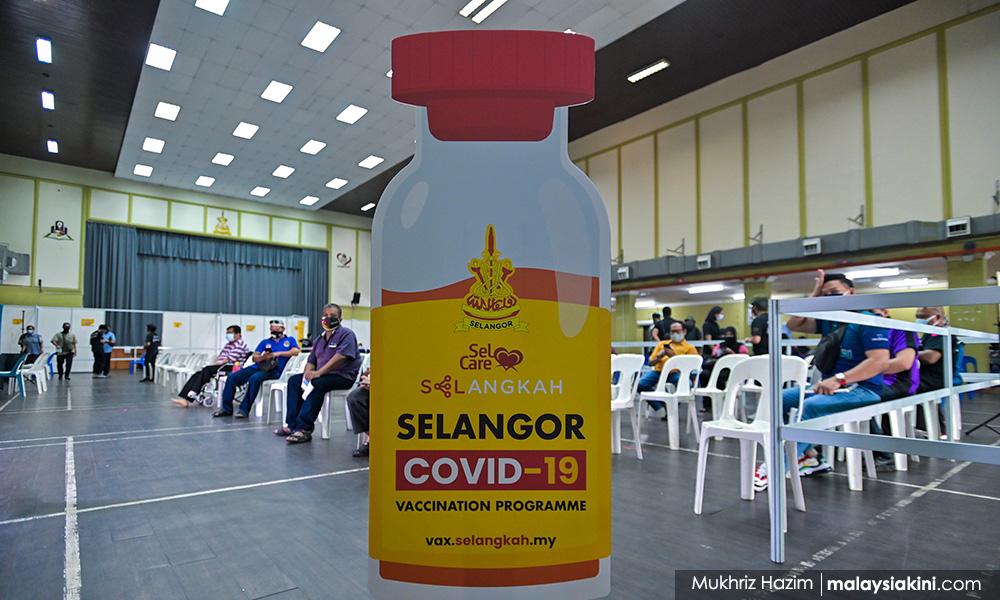
“Since their vaccinations have passed 10 percent, they will try to achieve 40 percent and then they can move on to Phase 3,” he said.
So far, eight states have successfully transitioned to Phase 2 of the NRP, namely Kelantan, Terengganu, Pahang, Perlis, Perak, Penang, Sabah and Sarawak.
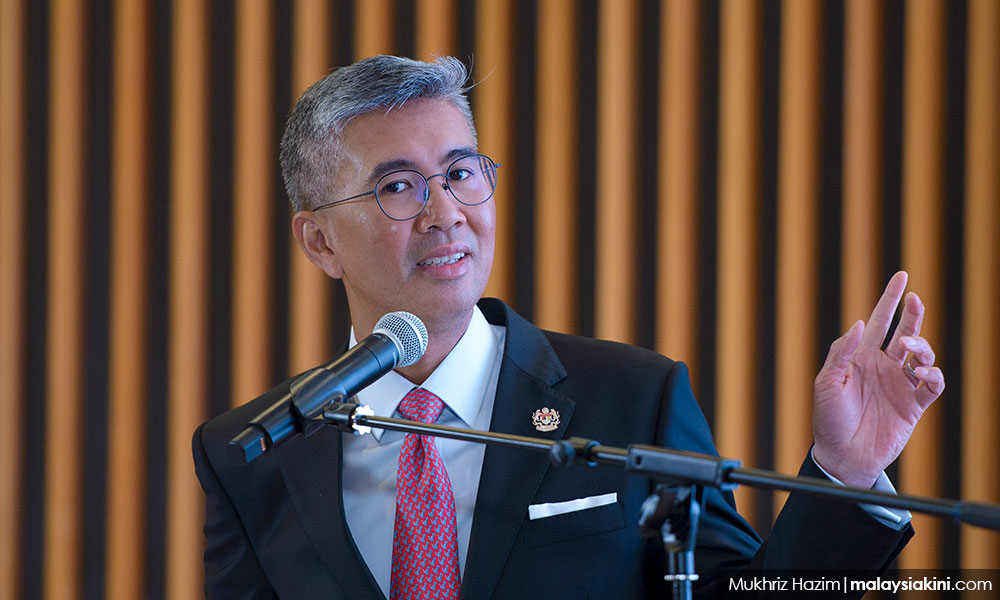
Previously, NRP Coordinating Minister Tengku Zafrul Abdul Aziz had also said states that have transitioned to Phase 2 will not revert to Phase 1 as it is not sustainable for the country to “open and close” a state.
'Virtual' CACs soon
On a separate issue, Health Ministry deputy director-general (public health) Dr Chong Chee Keong said they will create “virtual” Covid-19 Assessment Centres (CACs).
“The Health Ministry wants to announce that in the nearest time, virtual CACs will be created to handle Category 1 (asymptomatic) and 2 (mild symptoms) patients.
“Monitoring will be done virtually without having to come to the CAC,” he said.
Digital home surveillance orders (HSOs) will be issued through the MySejahtera application or other applications, and it is enforceable by law, he said.
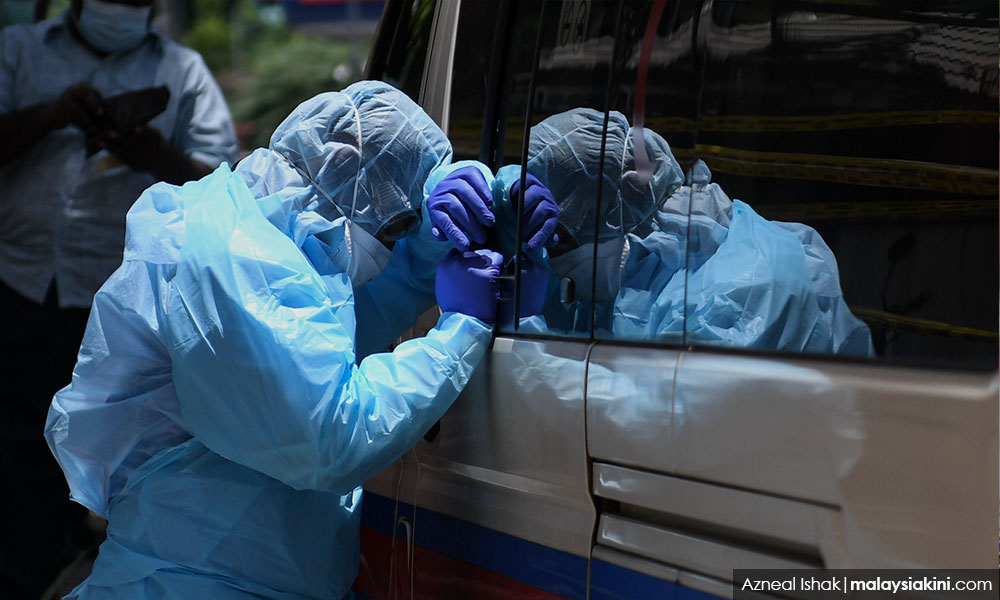
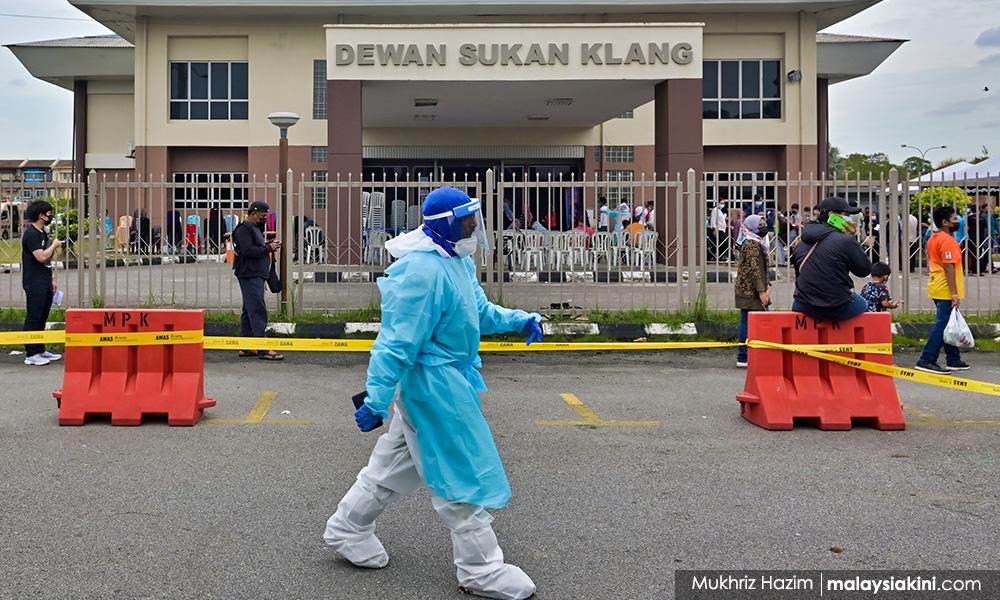
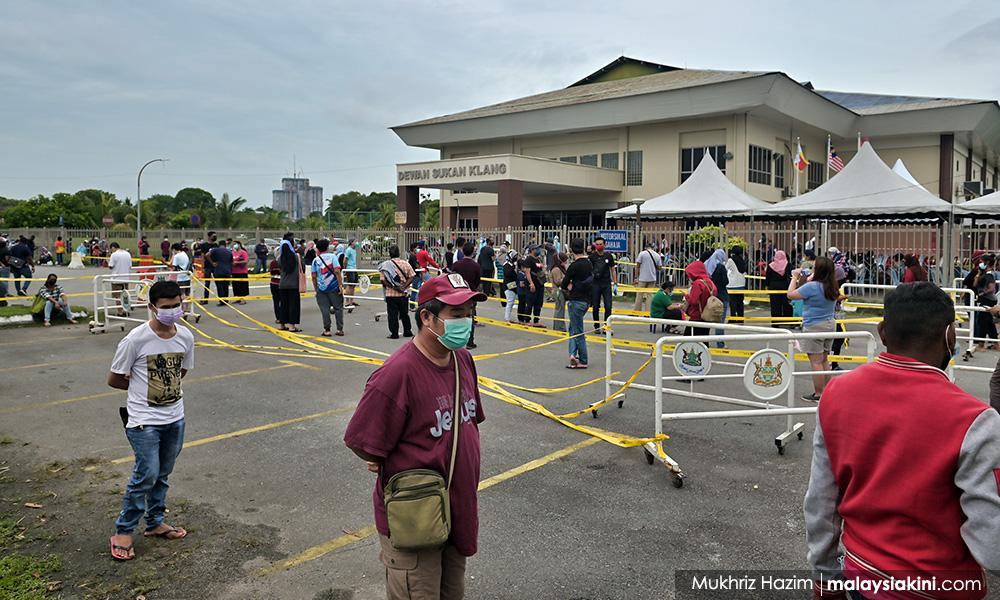
This comes after images and recordings of overcrowded CACs, especially in the Klang Valley, were widely circulated on social media, causing safety concerns.
Selangor health director Dr Sha’ari Ngadiman also said he had visited the Stadium Malawati CAC in Shah Alam and the Sri Andalas CAC in Klang earlier today and found the assessment process to be running smoothly now.
He said at the Stadium Malawati CAC, three lanes have been opened for those queuing to get in; one for those who recently tested positive for Covid-19, one for people with disabilities and children and another one for those who want their release orders.
Facilities have also been set up on-site to provide treatment to patients before they are transferred to the hospitals or the quarantine centres.
The Sri Andalas CAC has also been improved similarly, as well as the addition of 10 tents to provide shade to those lining up outside the hall, he said.


Are you sure you want to delete this comment?
This action cannot be undone.