


New death reporting method to reflect real-time Covid situation
The Health Ministry has overhauled how it reports Covid-19 deaths so that the numbers will reflect the situation in real-time.
Health Minister Khairy Jamaluddin explained this evening that the existing method caused up to “weeks” of delay between when a death happened and when it was reported to the public.
He displayed a series of graphs that...
The Health Ministry has overhauled how it reports Covid-19 deaths so that the numbers will reflect the situation in real-time.
Health Minister Khairy Jamaluddin explained this evening that the existing method caused up to “weeks” of delay between when a death happened and when it was reported to the public.
He displayed a series of graphs that showed a contrast between the two dates.
The biggest difference was seen in Selangor where, despite the fact that deaths were nosediving, the reporting mechanism reflected rising deaths.
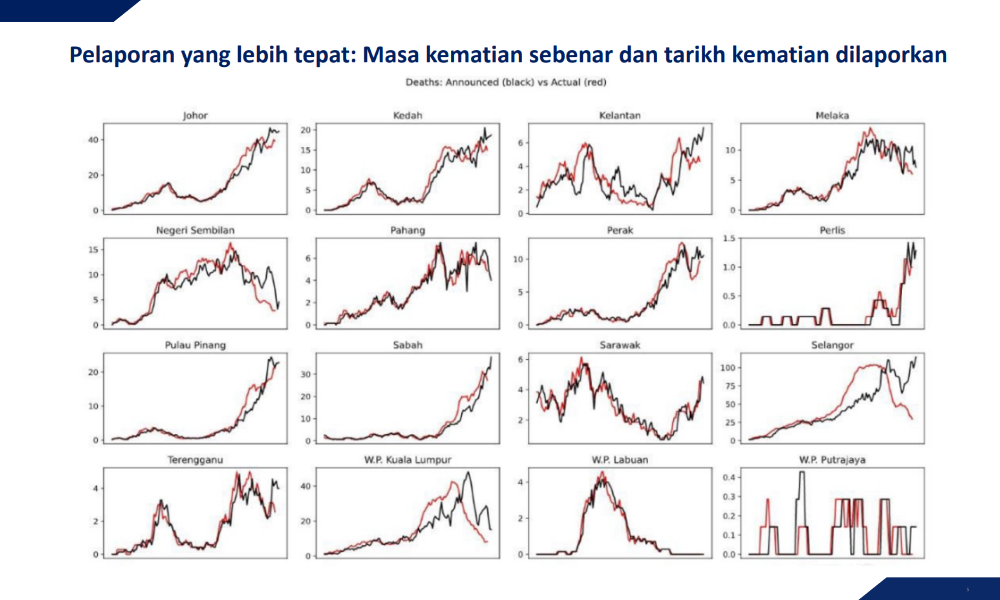
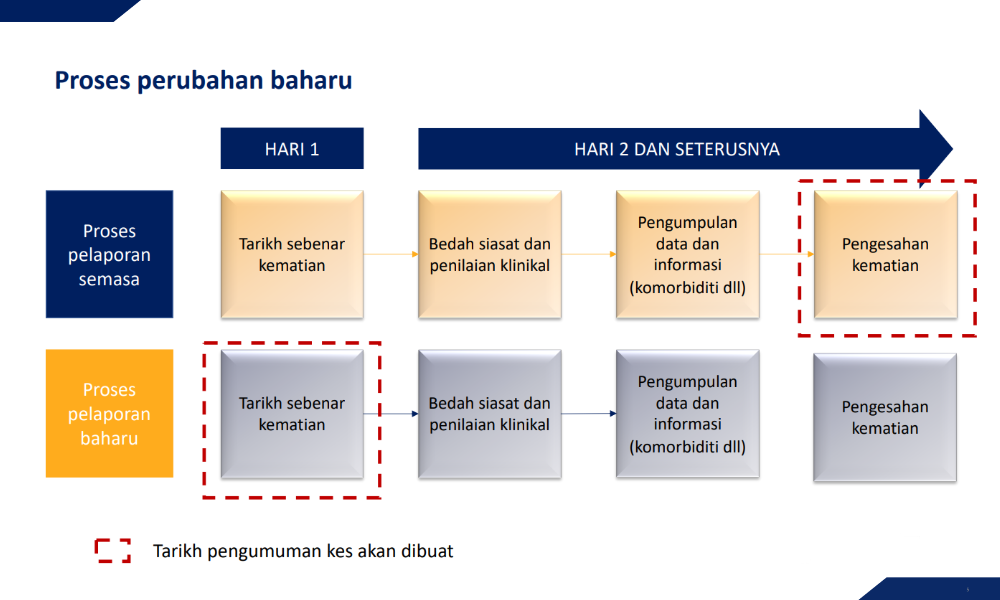
To remedy this, Khairy said the ministry will now report a Covid-19 death on the same day it happened before performing any analysis.
“You see in the past reporting process - we had to wait after the post-mortem (and clinical evaluation) plus data collection before we could declare a death as a Covid-19 death.
“Sometimes this took days and even weeks. So the backlog in cases, especially in the Klang Valley, was high. That is why we were not reflecting the actual deaths (on the date they died).
“Now, we will report the actual date of death, then we will perform the post mortem. If there is anything that needs to be clarified, then later we will clarify or amend the data. This is so we can announce deaths on the actual date of death,” he said during a press conference.
More granular raw data
Meanwhile, Khairy said the ministry will be uploading more granular raw data onto its Github data repository from today.
This included more data points for both Covid-19 cases and deaths, such as age, nationality, location, symptoms, and vaccination status.
Data on adverse reaction following immunisation (AEFI) cases, including the type of vaccines involved, will be shared as well.
This increased data transparency through Github is also reflected by the ministry's launching of a new data analysis website, CovidNow.
“When we release a lot of this data, there will be a lot of interpretation and analysis.
“The ministry will continue to provide insights and try to interpret the data. But of course, we especially welcome experts, universities, and data scientists to also try to interpret the trends and share with us.
“So that the whole of society can have access to this data and have better insight on how to live with Covid-19,” he said.
Breakthrough death data
Based on the latest data, the minister observed that two states - Sarawak and Terengganu - were experiencing worsening Covid-19 situations.
Situations were “less stable” in Johor, Sabah, Pahang, Kedah, Perak, Perlis, and Kelantan.
Khairy said more attention will be given to bring down the rate of infection in these states, including mobilising more resources.
Meanwhile, the data showed that the rate of fully vaccinated individuals in Malaysia who died of Covid-19 was 0.009 percent.
This represented 90 “breakthrough deaths” per one million fully vaccinated people.
“Of course there will be breakthrough deaths and this has happened all over the world.
“But we are better off with the vaccine than without the vaccine,” Khairy said.
Brought-in-dead data
As of Aug 2021, the minister shared that the total number of brought-in-dead (BID) Covid-19 cases was 2,417.
Of this amount, the ministry found that 86 percent (2,200 BID cases) were not under any medical supervision.
The other 217 had died at a healthcare facility despite being monitored by either public or private healthcare personnel.
“Among the ways to reduce BID cases is to ensure that those who are not under medical observation by the ministry, Covid-19 assessment centres, district health departments, or local general practitioners (will get medical care),” Khairy said.
He added that the ministry’s family health division (DPKK) had been tasked with coming up with a response.
New quarantine rules
Meanwhile, Khairy also announced that all Category 3 Covid-19 cases will now be admitted to low-risk treatment and quarantine centres (PKRCs).
High-risk Category 2 cases will also be admitted to PKRCs.
“I have asked states to free up capacity so that Category 3 (patients) will be admitted to PKRCs.
“And also high-risk Category 2 patients. After we do a risk assessment, (they) will be admitted to PKRCs.
“I have also instructed states... to provide pulse oximeters to people who are under home quarantine if they are also categorised as at-risk patients,” he said.



Report this comment
Are you sure you want to delete this comment?
This action cannot be undone.