


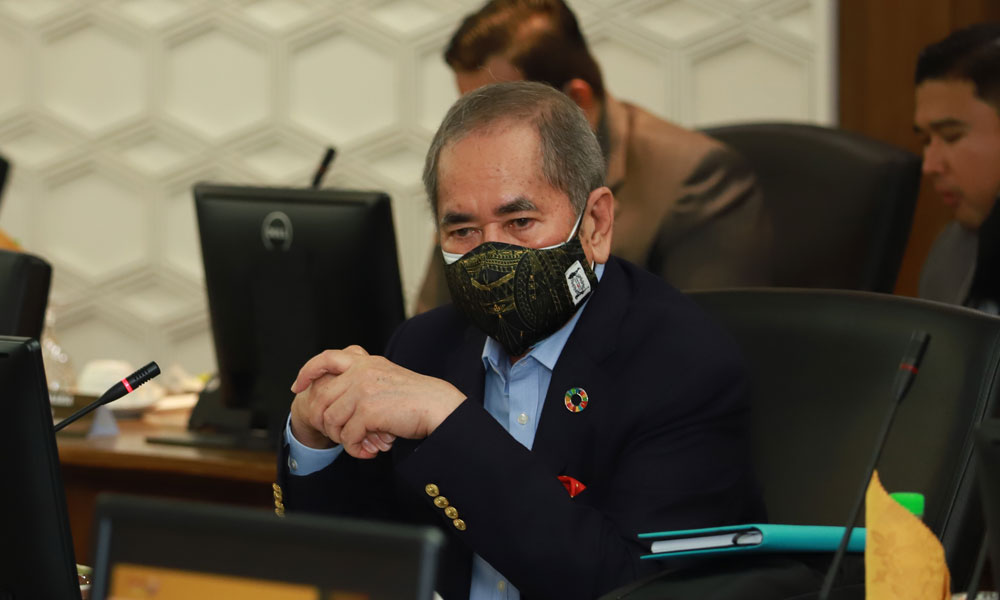

Wan Junaidi seeks low-hanging fruits first for swift reforms
De facto Law Minister Wan Junaidi Tuanku Jaafar has said he is first looking at “low-hanging fruits” that can be implemented swiftly when it comes to government reforms.
This is because many reforms require constitutional amendments, he said, which will be difficult to push through if MPs do not cooperate from across the divide.
“So we looked into some areas we can do fast. For instance...
De facto Law Minister Wan Junaidi Tuanku Jaafar has said he is first looking at “low-hanging fruits” that can be implemented swiftly when it comes to government reforms.
This is because many reforms require constitutional amendments, he said, which will be difficult to push through if MPs do not cooperate from across the divide.
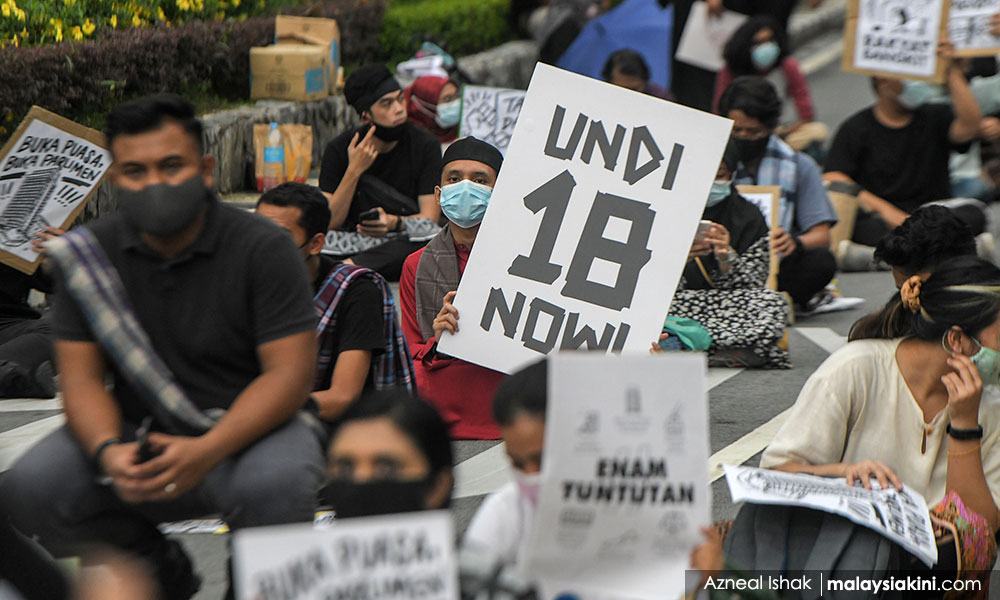
“So we looked into some areas we can do fast. For instance, the idea of the anti-hopping law, the terms of office for the prime minister and Undi18,” Wan Junaidi said.
He was speaking at a webinar today titled “Memorandum of Understanding (MOU) – A Pathway to Transformation and Stability?” which also featured Pengerang MP Azalina Othman Said, Seremban MP Anthony Loke and Sunway University professor Wong Chin Huat.
In order to pass a constitutional amendment, it requires the support of at least two-thirds of the Dewan Rakyat. The last constitutional amendment was in 2019 to lower the voting age to 18, which required bipartisan support.
Wan Junaidi said Malaysians have become used to thinking that stability of the government can only be achieved when the government has a supermajority, or the support of more than two-thirds of the Dewan Rakyat.
It first started in 1974, when the government at the time gained a two-thirds majority in Parliament and this continued on until 2008, Wan Junaidi added.
“During that period of time, the MPs and the government were thinking that stability will always come with that two-thirds majority, but I have, over the years, not held that as my principle.
“I always believe negotiation and dialogue between the government and opposition must continue, as that is the only way to show how mature we are as politicians,” he said.
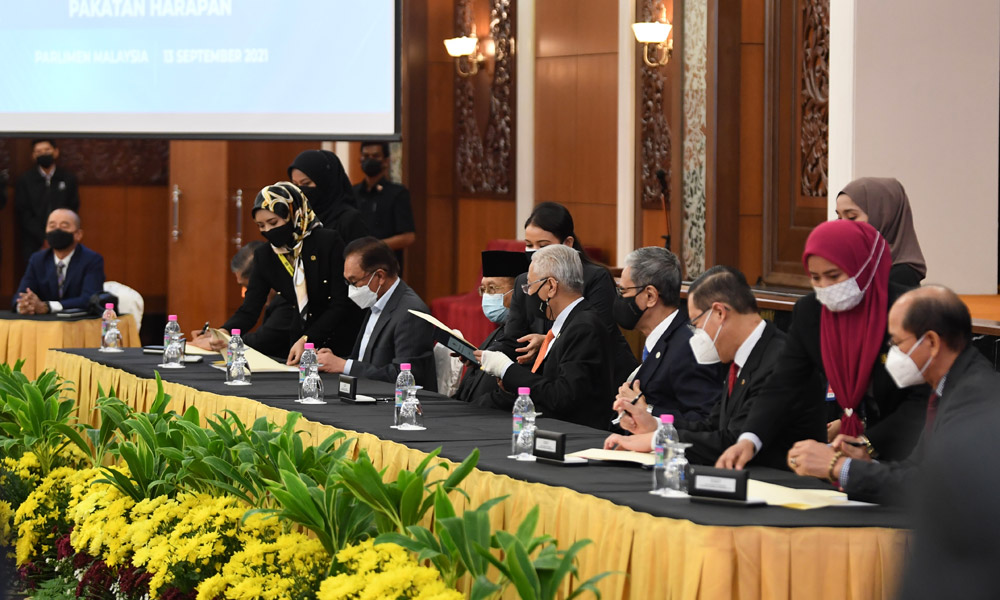
On Monday, the government led by Prime Minister Ismail Sabri Yaakob and opposition Pakatan Harapan signed an MOU.
As part of the agreement, the government promised a slew of reforms and a time frame, and in return, Harapan promised not to oust Ismail Sabri or block Budget 2022, as long as the reforms are on schedule and they are consulted on the Budget Bill.
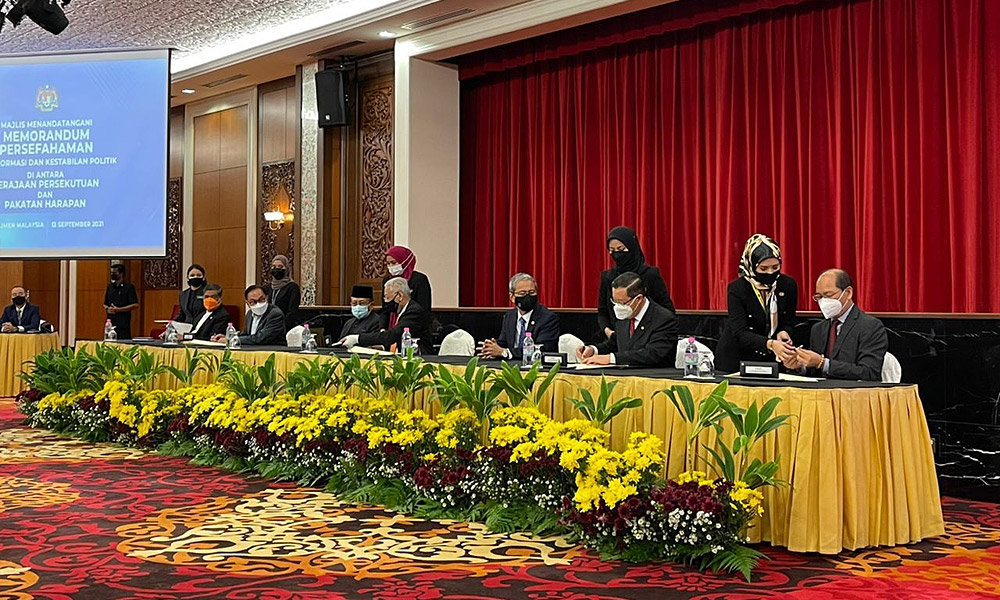
Wan Junaidi pointed out that the MOU is not about stopping the opposition from playing their role, but more about what the government has to do to gain some form of support from the opposition.
“Parliament is to monitor what the government is doing and the opposition must continue to play that part well,” the Santubong MP said.
Independent Parliament
Parliamentary reforms are something Wan Junaidi described as “very close to his heart”, and among the reforms he is looking into is the revival of the Parliamentary Services Act.
“It has been my sole intention since (the removal of the Parliamentary Services Act in 1963) to introduce back the law to get independence in Parliament, so that our actions in Parliament will be consistent with what’s practised elsewhere in the Commonwealth, and also in line with our Federal Constitution,” he said.
He pointed out that Article 62 of the Constitution provides independence for the internal affairs of Parliament.
“We have not been following the Constitution since 1963 in the context of Parliament, and nobody is talking about it,” he added.
Wan Junaidi said since his appointment as the new law minister, he has spoken to both the Dewan Rakyat and Dewan Negara speakers about the parliamentary reforms he has in mind.
He explained that he wanted the reforms to be spearheaded by parliamentarians themselves, and not come from him as a minister who is part of the executive.
“Both the speakers took my suggestions very seriously and they are committed to it,” he added.
MOU - a 'Malaysia Day present'
Wong said the MOU is “the best present for Malaysia Day”, as many of these reforms have been overdue for decades.

The MOU will allow for stability under what he described as a “de facto hung Parliament” as well as avoid frequent changes of the government, which will, in turn, lead to continuity in policies.
The MOU is also an indication of a significant paradigm shift, he said, with its first implication being a departure from permanent coalitions to fluid coalitions, whether in full or in part.
Permanent coalitions, he said, refers to parties who come together to contest elections as a bloc and continue in government or opposition as a bloc.
“So from 1957 to 2008, we basically had one coalition pre-dominance under the Alliance and then BN,” Wong said, adding that the period between 2008 and 2020 was characterised by competition between two coalitions.
Then the Sheraton Move happened in early 2020, and what Malaysia has faced since then is a “de facto hung Parliament”, he added.
“The (current) government is what people call a backdoor government. But if you want to put it in comparative terms, it is simply a mid-term change of government.
“It is nothing illegitimate, principally, because if you have a hung Parliament, then parties can actually re-negotiate their positions but many Malaysians feel cheated because we were locked into this two-coalition narrative,” Wong said.
He said the second paradigm shift indicated by the MOU is that we no longer define the majority as a number the government owns by itself.
“Now it is a working majority, not necessarily your own, it depends on how you get it,” he added.



Are you sure you want to delete this comment?
This action cannot be undone.