


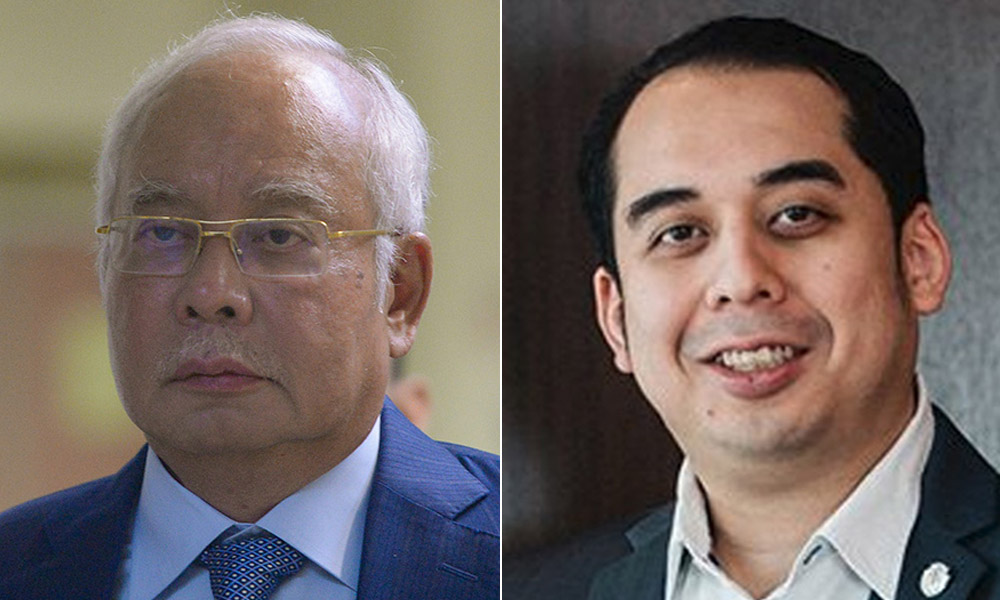

Oct 21 hearing for bid to stay court ruling against Najib, son
The Court of Appeal has fixed Oct 21 to hear an application to stay a court summary judgment in tax suits against former prime minister Najib Abdul Razak and his son Mohd Nazifuddin.
The father-son duo seeks to stay the High Court summary judgment ruling, pending disposal of their appeal to the Federal Court.
They are appealing against the Court of Appeal ruling on Thursday last week, which upheld the summary judgment...
The Court of Appeal has fixed Oct 21 to hear an application to stay a court summary judgment in tax suits against former prime minister Najib Abdul Razak and his son Mohd Nazifuddin.
The father-son duo seeks to stay the High Court summary judgment ruling, pending disposal of their appeal to the Federal Court.
They are appealing against the Court of Appeal ruling on Thursday last week, which upheld the summary judgment rulings in the RM1.69 billion and RM37.6 million tax suits against Najib and Nazifuddin respectively.
Last year, two separate Kuala Lumpur High Courts allowed the Inland Revenue Board’s (IRB) application for summary judgment in the tax suits.
In effect, this allowed the lower courts to rule in favour of the IRB in the tax suits against Najib and Nazifuddin, without needing full trial.

Relying on the summary judgment rulings, the IRB has since commenced bankruptcy proceedings against Najib and Nazifuddin at the Kuala Lumpur High Court to recover the tax arrears.
The father-son’s lawyer Muhammad Farhan Muhammad Shafee this afternoon confirmed that the Court of Appeal fixed Oct 21 to hear the application to stay the summary judgment ruling.
“The Court of Appeal held a case management today to fix the (hearing) date (of the application to stay the summary judgment ruling), which is Oct 21,” Farhan said when contacted.
At the Kuala Lumpur High Court, Najib is seeking to strike out the IRB’s bankruptcy notice against him.
He also has a pending tax-reassessment appeal with the IRB’s Special Commissioners of Income Tax (SCIT), which is set to be heard in January next year.
Under Malaysia’s “pay first, talk later” tax regime, a dissatisfied taxpayer is still required to first pay the tax amount as assessed by the IRB, and then only file an appeal with SCIT for a reassessment of the tax amount.




Are you sure you want to delete this comment?
This action cannot be undone.