



Corruption case: Nov 7 decision on calling former Johor exco to enter defence
The High Court in Johor Bahru has fixed Nov 7 to decide whether to call former Johor executive councillor Abd Latif Bandi, his son and a real estate consultant to enter their defence or acquit them on 37 counts of corruption and money laundering charges amounting to over RM35 million four years ago.
Judge Abu Bakar Katar made the decision after hearing arguments from both the prosecution, led by MACC deputy director Wan Shahruddin Wan Ladin, and the defence, led by lawyer Salehuddin Saidin, during the appeal proceedings, which lasted two days.
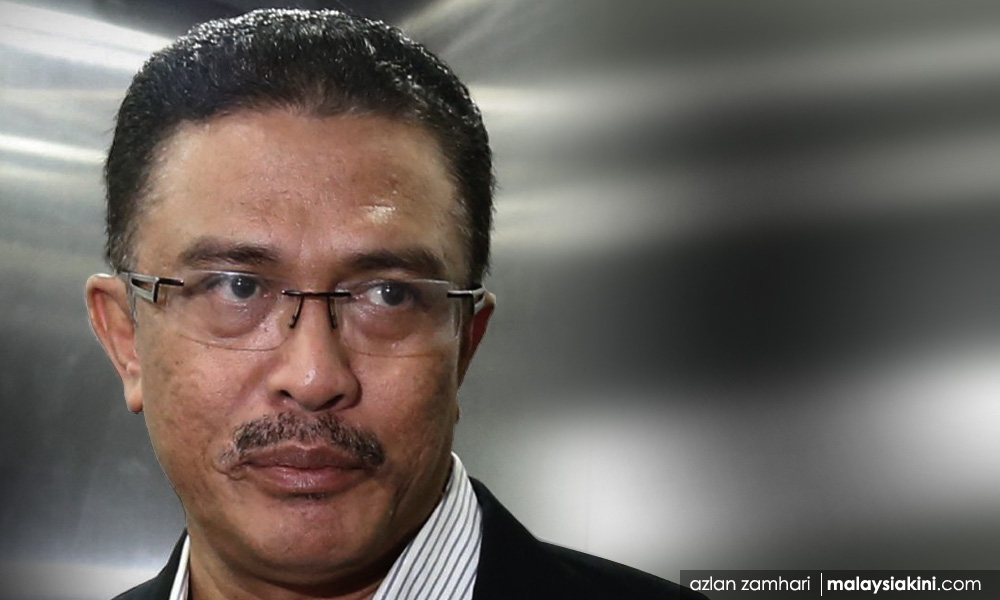
On June 14, 2017, Latif (above), 55, who is also a former state housing...
The High Court in Johor Bahru has fixed Nov 7 to decide whether to call former Johor executive councillor Abd Latif Bandi, his son and a real estate consultant to enter their defence or acquit them on 37 counts of corruption and money laundering charges amounting to over RM35 million four years ago.
Judge Abu Bakar Katar made the decision after hearing arguments from both the prosecution, led by MACC deputy director Wan Shahruddin Wan Ladin, and the defence, led by lawyer Salehuddin Saidin, during the appeal proceedings, which lasted two days.
On June 14, 2017, Latif (above), 55, who is also a former state housing and local government chairperson, his son, Ahmad Fauzan Hatim, 29, and real estate consultant Amir Shariffuddin Abd Raub, 48, were charged with 33 counts of corruption and four counts of money laundering totalling RM35.7 million.
On April 21, 2019, Sessions Court judge Kamarudin Kamsun ordered Latif, who is also a former Endau assemblyperson, Fauzan and Amir to be acquitted and released after finding that the prosecution failed to establish a prima facie case.
Of the charges, 33 were under Section 28(1)(C) of the MACC Act 2009, and four under Section 32(8)(c) and Section 89 of the Anti-Money Laundering, Anti-Terrorism Financing and Proceeds of Unlawful Activities Act 2001.
Earlier, in his argument, Wan Shaharuddin said the Sessions Court judge had erred in his decision to free and acquit Latif and the two other respondents in 2019.
“The judge (Sessions Court) did not examine crucial evidence in his judgment, including the defence’s explanation in which they conceded that the second respondent (Latif) had received the money.
“What counts is whether or not the money is a bribe. Even, the second respondent did not dispute receiving the funds.
“The second respondent stated that the money was a loan from the first respondent (Amir), while the money came from a housing developer in the state who wanted to lift the bumiputera status on their property, where the second respondent, as state housing committee chairperson at the time, had the power to approve the status removal,” he argued.
He added that if the circumstances of the cases were taken into account, Latif was in cahoots with Amir, and the prosecution did not have to prove that Latif received the money.
“However, what we need to prove is the existence of a criminal conspiracy whereby the first respondent has received help from the second respondent to commit the offence,” he said.
- Bernama



Are you sure you want to delete this comment?
This action cannot be undone.