




Calling for end to death penalty, Suhakam wants committee findings released
The Malaysian Human Rights Commission (Suhakam) has urged Putrajaya to release the official report by a special committee to review alternative sentences for the mandatory death penalty.
It said the committee, which was appointed by former de facto law minister Liew Vui Keong, had completed a study on the matter and submitted the report to the previous government in February 2020.
“In view of the weight and urgency of...
The Malaysian Human Rights Commission (Suhakam) has urged Putrajaya to release the official report by a special committee to review alternative sentences for the mandatory death penalty.
It said the committee, which was appointed by former de facto law minister Liew Vui Keong, had completed a study on the matter and submitted the report to the previous government in February 2020.
“In view of the weight and urgency of issues related to the death penalty, Suhakam felt that the report should be made public, allowing legislators, policymakers and society to undertake the needful to expedite the abolishment of the death penalty in Malaysia,” the commission said in a statement today.
Suhakam encouraged the government's initiative to set up a Law Reform Commission as proposed in 2020 to study existing laws as well as sentencing procedures and for it to recommend the necessary amendments or repeals.
This will enable Malaysia to be in line with international human rights standards, it added.
Suhakam renewed its call for the total abolition of the death penalty in conjunction with the World Day Against the Death Penalty, commemorated on Oct 10 annually.
“Suhakam supports the continued moratorium on the death penalty since its adoption in 2018 and encourages the government to initiate processes to implement its commitment to abolish the mandatory death penalty, as announced in 2019, which is a positive step towards total abolition of the death penalty in Malaysia.
“In 2020, the government was among 120 UN member states which voted in support of the UN General Assembly’s (UNGA) resolution regarding the moratorium on the use of the death penalty during the 75th session of the UNGA.
“It is important to highlight that the resolution recommended that states should guarantee the right to a fair trial, and to limit the imposition of the death penalty to the most serious crimes, pending the abolition of the death penalty,” it said.
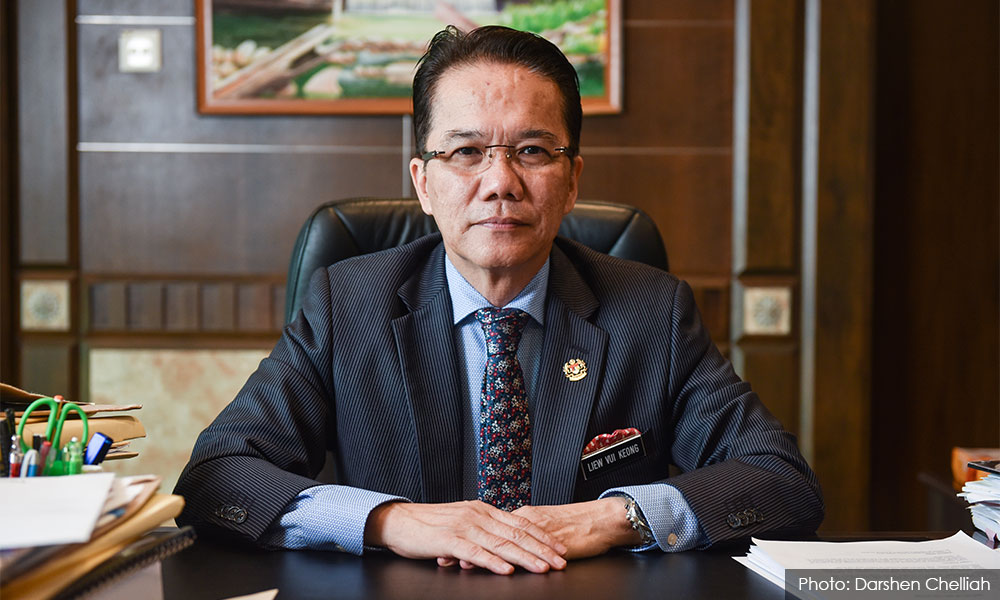
On Oct 10, 2018, Liew said the Pakatan Harapan government had imposed a moratorium on the death penalty as they sought to review capital punishment.
In February 2020, the special committee to review alternative sentences to the mandatory death penalty submitted a 128-page report to the government.
At that time, Liew said his office was studying the report and a cabinet paper on the findings and recommendations would be tabled before the cabinet for deliberation.
However, at the end of February 2020, the Harapan government fell and was replaced by the Perikatan Nasional (PN) government.
In November 2020, the then de facto law minister Takiyuddin Hassan said the proposal to abolish mandatory death sentences needs to be scrutinised in detail by the government before any decisions are made.
Death penalty not an effective deterrence
In a separate statement, Malaysians Against Death Penalty and Torture (Madpet) said it was disturbing to see the government’s position and promises easily changed simply because of a questionable worry of possible loss of political support that may affect future elections.
“The change in position from total abolition to just abolishing the mandatory death penalty may have sadly been because of a knee-jerk response to political actions initiated by the then opposition,” said Madpet spokesperson Charles Hector.

He called for Prime Minister Ismail Sabri Yaakob's government to continue the previous administration's effort to abolish the death penalty and continue to maintain a moratorium on executions.
“Madpet reiterates its call for the abolition of the death penalty, including extrajudicial killings, and that Malaysia continues to impose a moratorium on execution pending abolition.
“The abolition of the death penalty have many often stated reasons, including the risk of a miscarriage of justice and the negative impact of the family and children of the executed or persons on death row.
"The death penalty has been shown not to be a deterrent to crime," Hector said.
He pointed out that Malaysia has a very large number of people on death row, citing an Amnesty International report which disclosed that in early 2019, there were 1,281 people on death row, including 141 women.
"Today, the number is even higher.
"Madpet calls on federal and state governments to move to get persons on death row pardoned, and their sentences commuted.
"Malaysia must be against the taking of lives, for repentance and rehabilitation, and for second chances and reintegration into society for the reformed criminal,” he added.





Are you sure you want to delete this comment?
This action cannot be undone.