


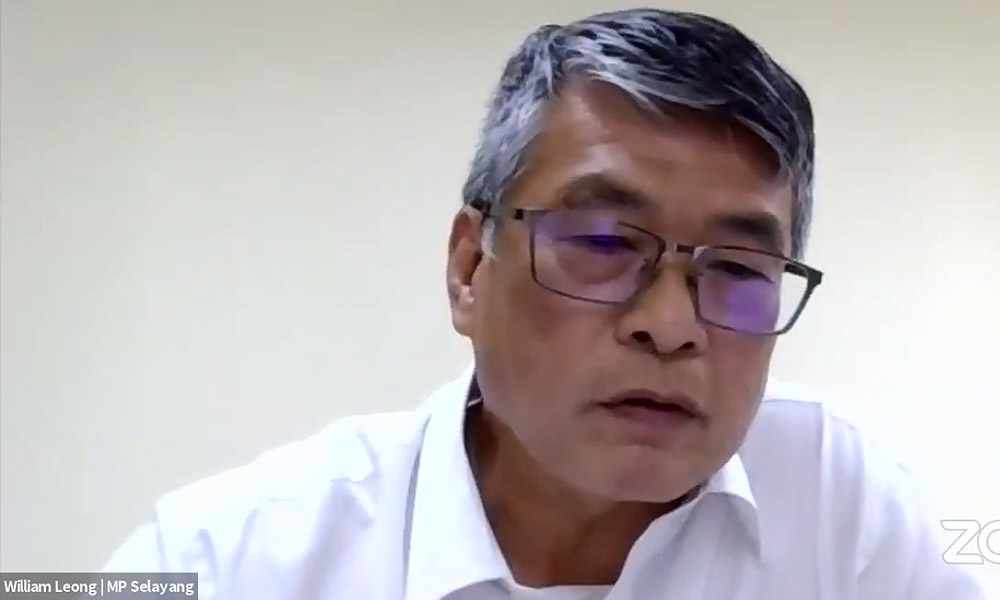

Pandora Papers: Selayang MP says he invested offshore as M'sian market unsafe
UPDATED 4.40PM | PKR’s Selayang MP William Leong has denied he was trying to avoid taxation by stashing funds offshore as highlighted in the Pandora Papers.
Instead, he said, he chose to invest in offshore centres as the option was safer than the Malaysian market during the 1990s.
“Back in 1994, I had to ask myself...
UPDATED 4.40PM | PKR’s Selayang MP William Leong has denied he was trying to avoid taxation by stashing funds offshore as highlighted in the Pandora Papers.
Instead, he said, he chose to invest in offshore centres as the option was safer than the Malaysian market during the 1990s.
“Back in 1994, I had to ask myself, where am I going to put my money after I’ve paid my Malaysian tax and the Philippines tax?
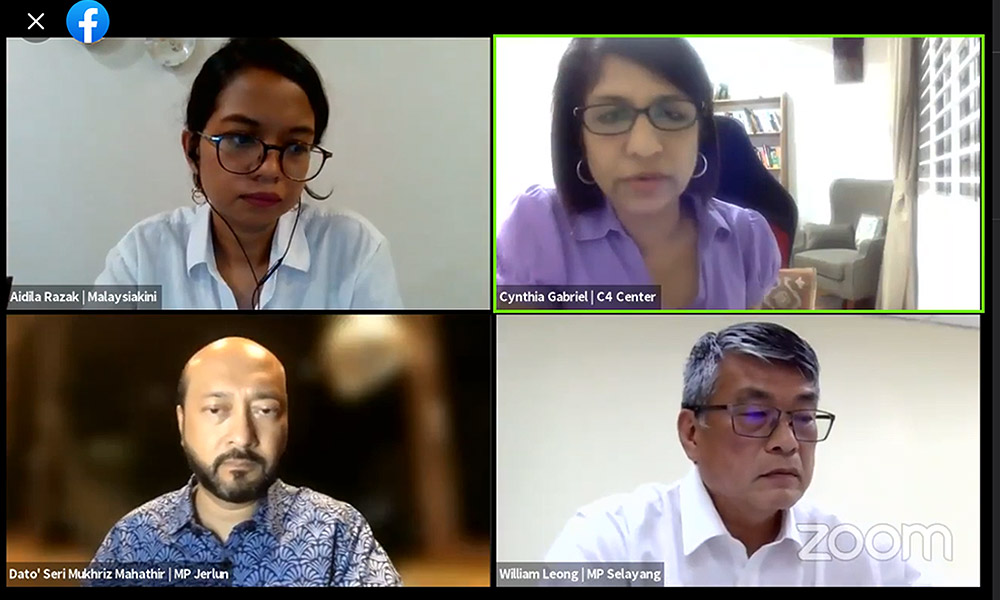
“My son was four years old, entering kindergarten, the first step in a long journey to university. I was aware that my son wasn’t stupid, but he would not be able to enter Malaysian public universities,” he said during a virtual forum on the Pandora Papers hosted by the Center to Combat Corruption and Cronyism (C4 Center) last night.
Leong was working as the chief operating officer for the Philippines National Steel Corporation from 1994 to 1997.
Malaysian public universities previously practised a racial quota for intakes, but it was eventually abolished as the government became increasingly concerned about the brain drain among the non-bumiputera.
“I had to protect my nest and egg, to ensure I have enough money to provide him with an education in private universities.
“Would I put my money in the Kuala Lumpur Stock Exchange (KLSE) in 1994? The first board was more speculative than a casino,” he said.
Leong claimed the fundamentals of the market were thrown off back in those days, saying many counters were extremely volatile with no proper regulations from authorities, and so he needed a safer option.
He added that other investment options in the country were not safe as well, as there was a property bubble during the time and many banks eventually fell.
Leong also said the authorities in Malaysia failed to uphold standards and regulations.
“Can I put my money and hope the government will bail me out when these banks fall? So where would you keep the money?
“That’s the reason why I put my money in offshore centres,” he said.
The three-term Selayang MP said the problem with tax avoidance is not the law, as legislation and regulations are already in place.
'Pandora Papers part of move to pressure countries to sign OECD deal'
Leong opined that the Paper Papers is a push back from Western forces, namely the US, towards globalisation.
He argued that the tax overhaul will badly affect other countries without rich natural resources and leverage lower taxes to attract foreign investment.
Leong believed that the Pandora Papers is part of a move by powerful nations to pressure other countries to sign an OECD deal on taxation.
To prove that, he said that Pandora Papers was published on Oct 3, just five days before the tax deal was signed on Oct 8.
“Do you see the connection between the two?
“We have to understand that no one is doing us a favour, quite obviously they are doing favours for themselves,” Leong said.
The deal, signed by 136 countries and jurisdictions, ensures that multinational enterprises (MNEs) will be subjected to a minimum 15 percent tax rate from 2023.
Leong then shifted the attention to former prime minister Najib Abdul Razak and his conviction on tax evasion and said people need to change their mindset towards corruption.
Citing other prominent corruption cases in Malaysia where the charged individuals were eventually released, he said nothing will change as long as there is no political will and change in people’s mindset to tackle corruption.
“The problem is the political will and human failure. What is the point of having a Royal Commission of Inquiry or investigations where you charge the person, and in the middle of the trial you release and discharge him?” Leong said.
Previously, former deputy finance minister Ahmad Maslan was acquitted of money laundering charges after paying RM 1.1 million in fines.
Former Sabah chief minister Musa Aman was also acquitted of his corruption charges after the prosecution applied to withdraw the charges.


Are you sure you want to delete this comment?
This action cannot be undone.