
Law of science: From entomologist to environmental journalist
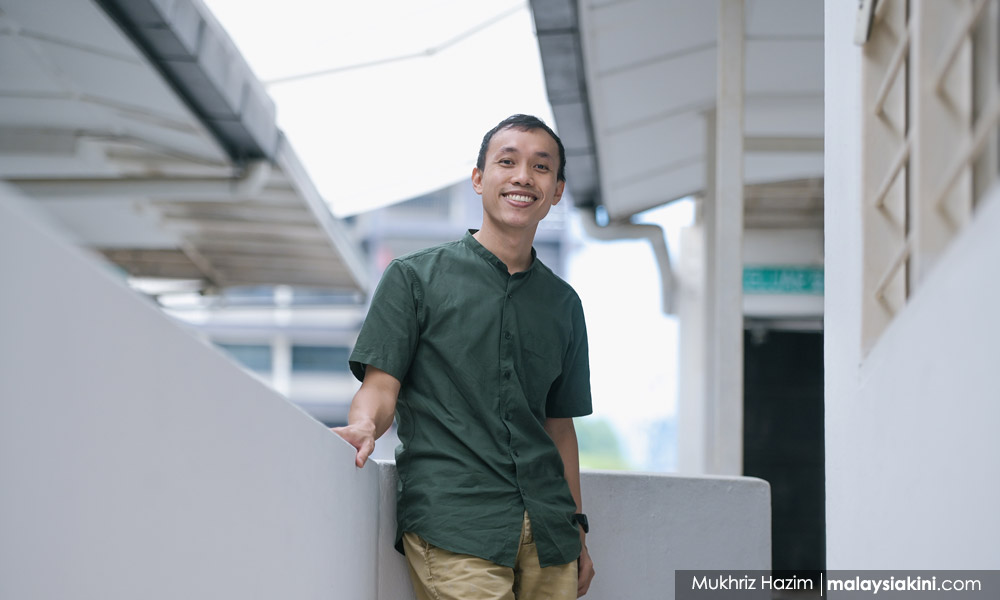
MALAYSIANSKINI | Macaranga co-founder Law Yao Hua was a city boy who grew up in urban centres but is glad that his parents brought him camping in Taman Negara and Kenyir Lake during his childhood.
Not deterred by being bitten by leeches at a young age, his interests in the environment and ecology grew.
When he was six years old, his family moved to a terraced house located in Damansara Utama, Selangor, which came with a backyard with fruit trees, flowers and plants.
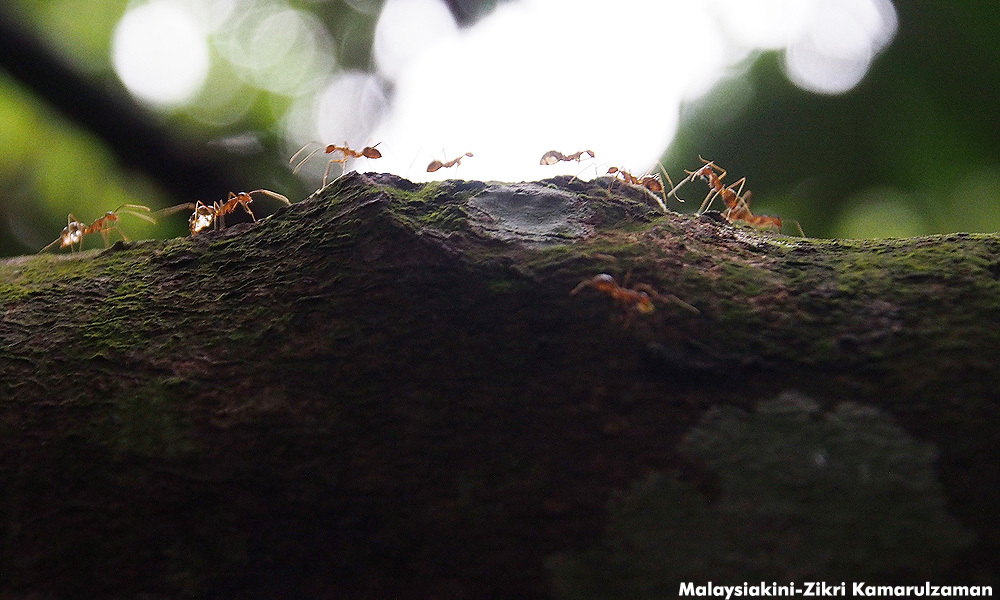
Law and his younger sister spent a lot of time playing in the backyard, and he began to pay attention to ants.
He would stare at how ants moved out from their nest, carried sands and built mounds surrounding their nests. This phenomenon fascinated Law.
"When I was young, I was really curious about what they were building? I remember guessing they were defending themselves from enemies because there were different groups of ants."
"A war between ants can be a fascinating topic, and I was totally fascinated by it...
MALAYSIANSKINI | Macaranga co-founder Law Yao Hua was a city boy who grew up in urban centres but is glad that his parents brought him camping in Taman Negara and Kenyir Lake during his childhood.
Not deterred by being bitten by leeches at a young age, his interests in the environment and ecology grew.
When he was six years old, his family moved to a terraced house located in Damansara Utama, Selangor, which came with a backyard with fruit trees, flowers and plants.
Law and his younger sister spent a lot of time playing in the backyard, and he began to pay attention to ants.
He would stare at how ants moved out from their nest, carried sands and built mounds surrounding their nests. This phenomenon fascinated Law.
"When I was young, I was really curious about what they were building? I remember guessing they were defending themselves from enemies because there were different groups of ants."
"A war between ants can be a fascinating topic, and I was totally fascinated by it," he said.
Law then found that ants build mounds whenever it is going to rain. Through watching animal documentaries and reading books from the library, he found the answer: ants predicted it would rain and tried to prevent their nests from flooding.
Observing the insect world under a microscope
After graduating from Kuala Lumpur Chong Hwa Independent High School, Law moved to Canada to study ecology at McGill University.
He didn't have much interest in entomology, to begin with. Strongly affected by "National Geographic" documentaries, he was more interested in going to Africa to study leopards or lions, "large mammals which will make direct eye contact with humans".
One day, when he used a microscope to observe an ant in the university laboratory, his perspective changed entirely.
"We enlarged and observed the ant, and I saw many details on the ant's body, which we can't observe using our bare eyes. There are many thorns around its waist, and there are three smaller eyes between a pair of big eyes."
Law described the experience as "discovering a new world", which prompted him to study for a PhD in entomology at the University of California, Davis.
In the US, big-eyed bugs (Geocoris) were used as pest management in the cotton field. However, the practice of releasing big-eyed bugs in the field didn't have the expected results - the population of pests didn't decrease.
When Law began to research this issue, he collected big-eyed bugs from cotton fields and observed them in the laboratory.
He was puzzled when he found that the bugs ate their own eggs - an act which he described as insect cannibalism - despite being given sufficient food.
After observing and experimenting repeatedly, Law had a breakthrough. When another female bug of the same species entered its territory, the first female bug would eat 30 percent of its eggs.
His assumption is that while a big-eyed bug is unable to recognise its own eggs, the existence of another female in neighbouring areas might imply that some eggs aren't its offspring.
As a result, the female bug would rather destroy some eggs to maximise the chance of survival of its offspring.
Law stressed that this is just an unproven assumption in scientific academia.
He explained that the scientific method is for a scientist to develop a hypothesis, then they will observe and collect data to support or rebut the initial theory.
"The whole process is very detailed and rational, there is a procedure, and anyone who follows the steps can get similar results."
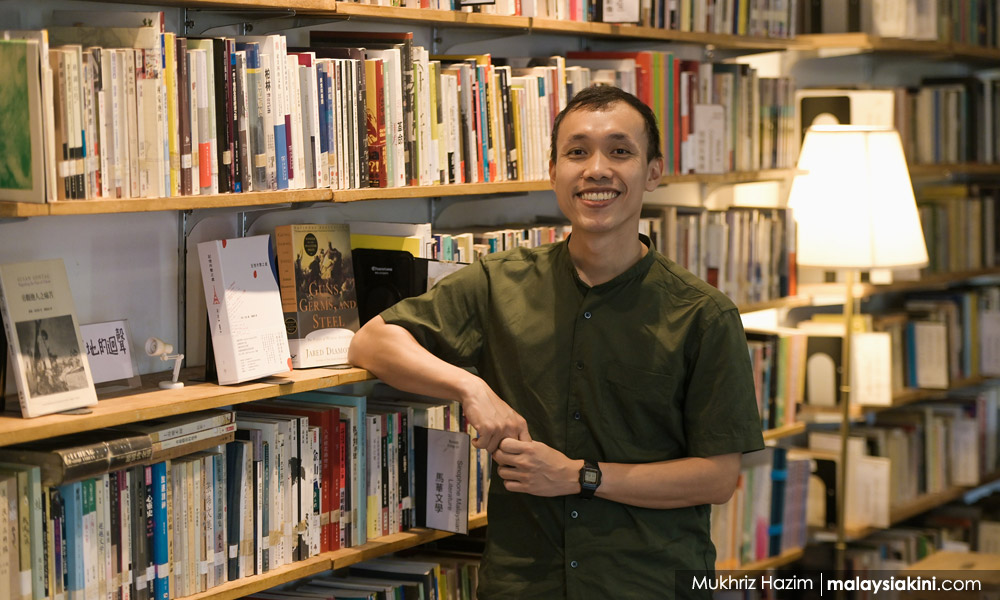
From scientist to science journalist
After getting his PhD, Law taught insect behavioural ecology at Universiti Putra Malaysia (UPM). But soon, his research projects faced various obstacles and a lack of academic atmosphere on the campus.
He said he was "very lonely" in academia and unable to find companions in the university.
Eventually, Law decided on a career switch - he started to submit articles to science magazines, believing that education should not be confined to university.
"Our government always says they aspire to have many science PhDs per year, and they are very proud. I thought there might not be a shortage of scientists in Malaysia but what is missing is a bridge between scientists and the general public.
"I think I can be the bridge as a science communicator," he said.
Law resigned from his job at UPM to become a science journalist.
In 2019, Law and Wong Siew Lyn co-founded an environmental media "Macaranga".
For Law, both scientist and science journalism carry similar methods - observing and gathering evidence that support or refute initial theories.
"For journalists, it is important to examine the assumptions that we have made.
"In the end, we still need to follow the data and evidence," he said.
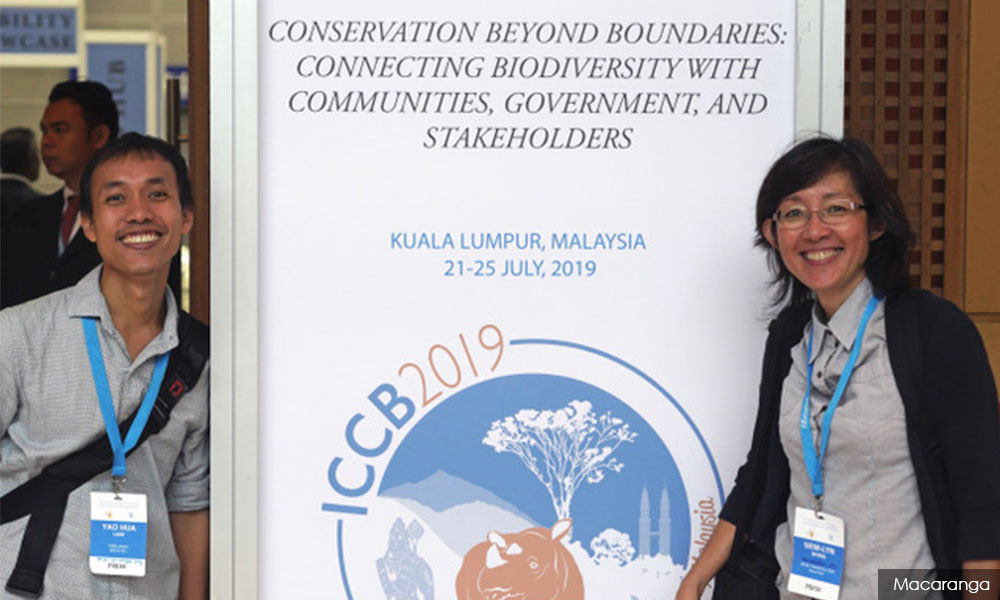
He has carried out careful observation and rigorous research methods when reporting on environmental issues.
In order to investigate the economic impacts of development in Jemaluang and Tenggaloh forest reserve lands in Mersing, Johor, Law decided to interview local loggers and sawmill operators.
However, due to the Covid-19 pandemic, the government implemented the movement control order, which restricted interstate travel and prevented him from travelling to Mersing for fieldwork.
Law decided to look for the loggers virtually - he utilised the Google street view feature and "walked" along a 20km road from Jemaluang to Kota Tinggi.
"I used Google street view, and I walked and walked. I did two things, I looked at names written on sawmills' signboards and looked for their contacts.
"Secondly, I counted numbers of wildlife crossing signboards," Law said in an online sharing of his journalism experience.
The resulting article won the 2022 Said Zahari Youth Journalist Award, which is given to a story that "highlights the principles of social justice, stimulates civil discourse, and has the potential to bring about positive change in society.
Eventually, Law managed to talk to several loggers who have been logging for more than 20 years.
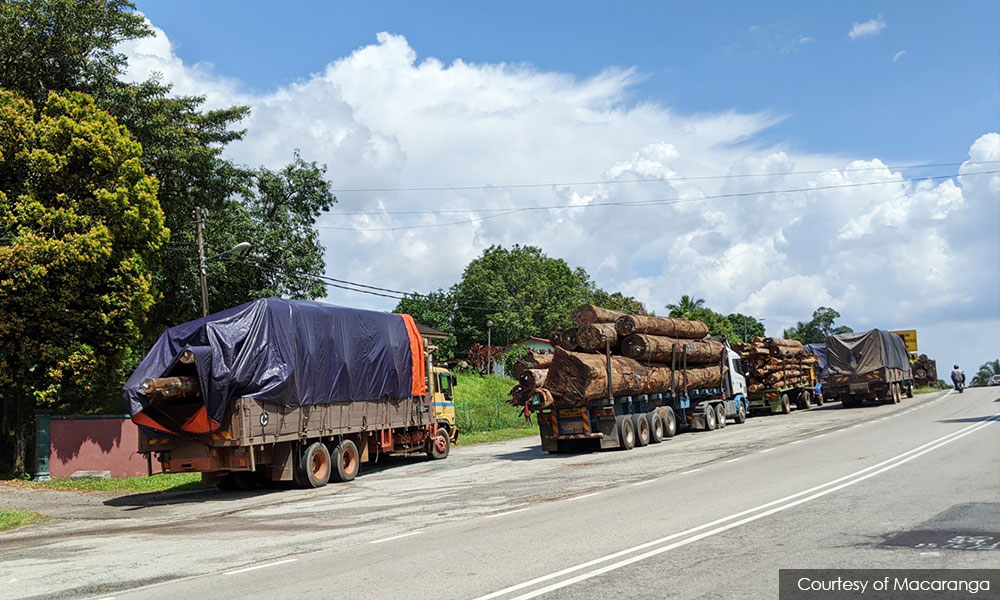
They complained that the Johor Forestry Department cancelled their logging licenses in 2020, and they were forced to buy logs from two companies, one of them being a royalty-linked firm.
The loggers also complained that the reduction in logs supply has made the logs in Johor become more expensive.
Continuation of the laboratory spirit
When Law was observing the behaviour of insects in the laboratory, he would make sure that the environment was highly controlled and the insects would not be disturbed by the external world.
Furthermore, he would write down the details of his research methods for others to examine.
After leaving the laboratory, Law did not abandon such methods.
He is always cautious over whether interviewees have their own agenda, trying to manipulate journalists or get an advantage from a news report.
Law did the same things he did for research papers in university when writing news stories. He wrote his observations and conclusions and provided readers with background information on how the interviews were conducted.
"As a scientist or journalist, what we have to consider is the same."
"As a journalist, we need to write down honestly. At least to let the readers know how the interviews were conducted, where they took place, whether you accepted the interviewees' lunch offer, and what are interviewees' backgrounds.
"We need to write down and let the readers decide whether they want to trust you."
When reporting on forest plantation issues in Kelantan, Law went to visit the state Forestry Department and local loggers.
During the trip, the loggers offered him "a plate of fried noodles" while the Forestry Department invited him for lunch.
Law was unable to reject the offers as they insisted that he sit down and eat together. He then grudgingly told them: "Normally, I won't accept, but under such circumstances, I will accept. But even so, I won't be in your favour."
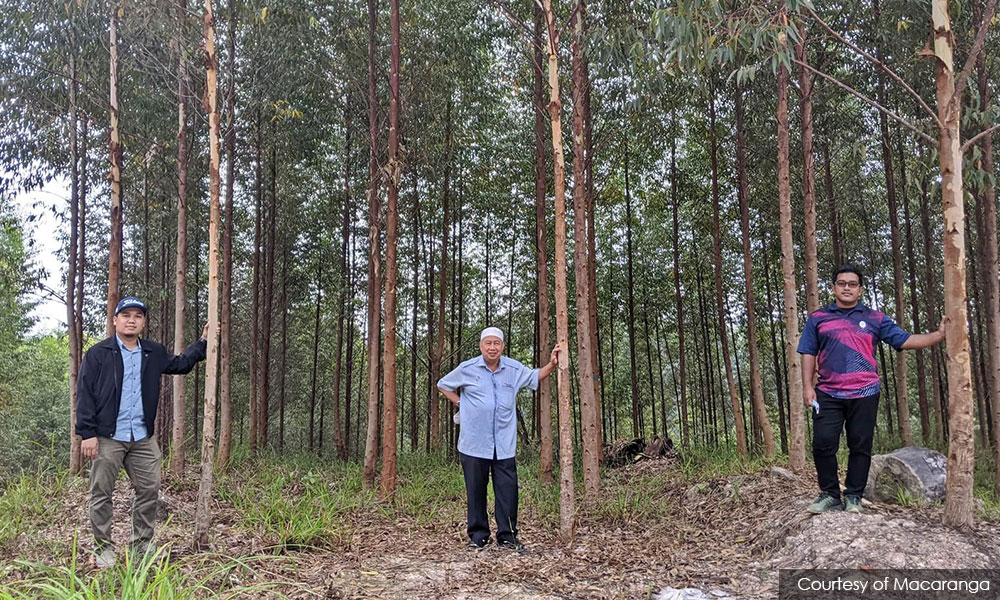
After the article was published, he wrote at the bottom: "In his field reporting, the reporter was treated to lunches separately by local logger Sia Beng Hock and state Forestry Department director Abdul Khalim Abu Samah; the reporter's requests to pay for his own meals were declined."
Even his editor Wong Siew Lyn said that this was "too trivial and unnecessary to mention in the article".
However, for Law, it can be considered as receiving gratifications to a certain extent. Therefore, he had to explain to his readers.
Even when he was visiting an Orang Asli village, he would prepare supplements prior to the field trip.
"For me, every interviewee has their own agenda. I think, as a journalist, this is quite tricky.
"I can't be their friend. I can't be on the same side as them.
"But at least when I interviewed some government departments when they questioned me, 'who are you working for? Your reportage is for an NGO or for the government?'
"I can be very confident and tell them I am not with any side, I am writing an objective story, I will report whatever you tell me. If you don't tell me, then I can't report it," he said.
Some journalists believe in being aware of the power dynamics behind certain issues, consciously leveraging between different stakeholders.
But for Law, only when a media is totally objective and independent from any outer influences can it gain trust from the public, just like a scientific finding which has excluded factors that might affect the results.
Previously featured:
Special needs mom brings adaptive apparel to forefront of M’sian fashion
The photographer who took the path less travelled
Howzat - Winifred Duraisingam bowls them over in women's cricket
The teacher who brings tech into rural Tamil classrooms and beyond
/file/publisher-c1a3f893382d2b2f8a9aa22a654d9c97/2022/04/2dd884c8ff2ba870a254b9e4a3de2636.jpg)