


Dealing with a loved one's death by suicide
On Apr 16, 2020, Hadi Azmi discovered the death of a friend whom he had met through filmmaking.
“One thing I thought was peculiar was him posting an advertisement on a Facebook forum, seeking to sell all his camera equipment. All of it. Those were his livelihood, and he was particularly attached to them. So to see him looking to pawn it off felt off,” he said.
It was the start of the movement control order (MCO) at the time, an anti-Covid-19 measure that resulted in many people struggling to make ends meet.
Hadi thought it was merely his friend’s way of sustaining from the harsh impacts of the lockdown, but that was not the case.
“I thought it was him feeling the pinch and...
On Apr 16, 2020, Hadi Azmi discovered the death of a friend whom he had met through filmmaking.
“One thing I thought was peculiar was him posting an advertisement on a Facebook forum, seeking to sell all his camera equipment. All of it. Those were his livelihood, and he was particularly attached to them. So to see him looking to pawn it off felt off,” he said.
It was the start of the movement control order (MCO) at the time, an anti-Covid-19 measure that resulted in many people struggling to make ends meet.
Hadi thought it was merely his friend’s way of sustaining from the harsh impacts of the lockdown, but that was not the case.
“I thought it was him feeling the pinch and trying to get some money for his family. I remember commenting on the post, helping to hype it up by telling prospective buyers that he loved his equipment and took good care of it. He responded with a thumbs up. That was the last interaction we had,” he said.
His friend’s passing drove Hadi into a spiral of self-doubt, wondering if he had checked up on the friend enough and leading to questions about his old future.
“I often go back to his Facebook page, like a pilgrimage. Listen to the songs he posted. It’s a reminder of the person and of what happened to him,” he said.
Several reports in the past few years have highlighted the pandemic’s many effects on a person’s mental health, leading to a rise in suicide cases.

According to recent data from Befrienders Kuala Lumpur, 33 percent of 44,453 calls and emails received in 2021 expressed having suicidal thoughts or having attempted to kill themselves.
Police also recorded 638 suicide cases from Jan to July 2021, compared to 262 cases for the corresponding period last year - a staggering 143 percent increase.
For Taylor (not their real name), Dee’s death came as a total shock.
“The few months before lockdown happened, Dee was doing really well. We had a small pact to keep each other in check when depression makes us want to isolate ourselves. So we were frequently meeting just to be in the same space together as a way to ground each other.
“The lockdown affected this momentum and things were rocky again, which was apparent from the lack of response to messages and general lack of social media presence. Dee is usually quite active online,” she said.
Taylor said that Dee seemed to be very positive when it was announced that the MCO was about to be lifted.
“Dee was noticeably excited, even making plans for what to do immediately after. Things seemed very positive, and we were messaging casually mere hours before the incident, though Dee viewed my last message without replying. There were no immediate signs anywhere that would have made me concerned.
“There was no note left behind. No behaviour out of the ordinary. No public posts. They were home alone at the time of the incident,” she told Malaysiakini.
“We carry the pain with us every day as a reminder of the loss, but it is also a reminder of the beautiful relationship we had with our loved one.
“That helps put a small smile on my face. I know I am lucky to have had the time I had with Dee,” she reminisced.
Early symptoms
Befrienders KL publicity director Ardy Ayadali said that the first step of supporting someone you love is through noticing changes in their behaviour.
“One day, you notice your child is acting weird. They barely touch their food, not talking much to you or any other family members, and sleep all the time.
“Initially, you think it is just hormones. They are a teen, so they are going through those growing up phases. But it gets worse over the days as you catch them crying silently in their room, withdrawing themselves from the world and refusing to talk to their friends.
“Something is definitely wrong here - so how do you help them?” he asked.
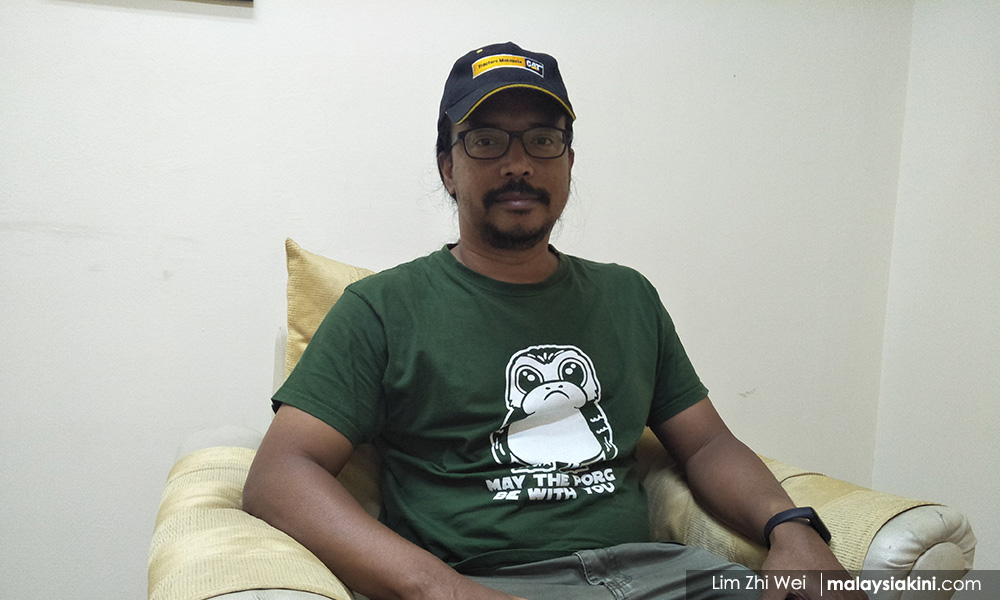
Ardy said the first step is to talk to the person.
He said questions such as “what’s wrong with you?” should be refrained from being asked.
Instead, Ardy said their feelings should be acknowledged by asking, “you seem a little upset today. Would you like to talk about it?”
“Encourage them to talk, give them a safe space and most importantly, time to open up and talk to you. And once they start talking - listen. Listen to them non-judgmentally, and give them your full attention. Don’t be afraid if they start talking about their pain.
“Then validate their emotions. As a parent, you probably feel pressured to seek a solution or take the pain away, but that won’t make things better. Support doesn’t require you to fully understand a problem or provide a solution. Sometimes, being there to listen actively is just enough. When you validate them, you’re letting them know you see and understand her perspective and pain.
“So, in a nutshell, ask, listen, and validate. Be non-judgemental and avoid giving advice or providing solutions. Just being there for that person can make a huge difference in supporting them emotionally in their time of distress,” he advised.
Ardy added that early interventions were critical when it came to suicide prevention. When someone is feeling suicidal, they need to be able to openly discuss matters without the fear of judgement.
“By allowing them to talk about their pain, which leads to them feeling suicidal, they can get the proper help and support and this decrease the chances of them acting on those thoughts.
“We need to continue to raise awareness and educate the masses. The message has to be clear - you don’t have to suffer alone, and help is available,” he said.
Decriminalising suicide
Back in June, the cabinet decided there was no need for a moratorium on criminalising suicide.
Health Minister Khairy Jamaluddin said that the cabinet would await the views of the Attorney-General’s Chambers (AGC) on whether attempted suicide can be repealed as a crime before making a decision.
However, Mental Health Aid Association (Nyawa) co-founder and advocacy lead Jernell Tan Chia Ee stressed the importance of a moratorium on criminalising suicide.
“We recognise the painstaking and time-consuming processes that need to be undertaken in consultations with the cabinet and also the AGC before the amendments can be brought to Parliament.
“Nevertheless, suicide is a very raw and real reality for the rakyat, especially in light of financial stress as a result of unemployment and rising costs of living, as well as political and public health uncertainties,” she told Malaysiakini.

Tan said that it was only right that the government instils confidence in the rakyat on their commitment to decriminalise suicide.
She said this could be done by first passing the moratorium in the cabinet as soon as possible whilst consultations are ongoing, as well as to provide a clear timeframe when Parliament would be expected to pass amendments to Section 309 of the Penal Code.
“How many Parliamentary sittings will it take before one at risk of suicide will feel safe seeking help instead of fearing being charged in court?” she asked.
Under Section 309 of the Penal Code, attempting suicide is punishable by up to one-year imprisonment, a fine, or both.
Trapped in fear
Ardy, on the other hand, opined that the criminalisation of attempted suicide continues to mask the real issue behind why these attempts exist in the first place.
“The lawmakers and the authorities may be worried that repealing the law might cause an increase in suicide cases, but the fact of the matter is suicide is preventable if we have the right approach and measures in place.
“Just look at the statistics recently provided by the police. It was shown that there are more deaths now from suicide, and the majority of these were females aged 15-18,” he said.
Ardy opined that decriminalising suicide is one of the first steps to helping those who are suicidal or intend to commit suicide.
“This allows people to be more willing to step forward and seek help, instead of feeling trapped in fear – knowing that a failed attempt might land them in jail or being fined.
“These people deserve the dignity of treatment,” he said.
Ardy added that alternative resources such as help, guidance and emotional support should be used in lieu of criminalisation.
Criminalisation, according to Tan, focuses on assigning fault or responsibility and detracts from the focus of addressing the complex underlying causes of suicidal behaviour.
She said these causes include the presence of mental health conditions and psychosocial stressors such as financial difficulties, bereavement or relationship difficulties - which further increase the risk of suicide.
“Criminalisation can also contribute to suicide underreporting, not just through reduced help-seeking behaviour by those in crisis, but also through the reinforcement of public stigma towards suicide,” she said.
Tan pointed out that underreporting is recognised as one of the key barriers to suicide prevention efforts.
“This is especially dire for Malaysia, as we do not have comprehensive quality data on suicide prevalence – official statistics are currently limited to the data published by the National Suicide Registry Malaysia (NSRM), which was only active from 2007 to 2009.
“Without such comprehensive quality data, it will thus be very challenging to develop evidence-based suicide prevention strategies that are responsive to protective and risk factors across different communities,” she added.
Factors for suicide are complex, and it is difficult to attribute a single motivating cause.
The World Health Organisation considered it a serious health issue but said it is preventable with proper intervention.
If you are feeling depressed or suicidal, or know someone who is, please call the following hotlines:
Talian Kasih: 15999
The Befrienders: 03-76272929
Agape Counselling Centre Malaysia: 03-77855955 or 03-77810800
Life Line Association Malaysia: 03-42657995




Report this comment
Are you sure you want to delete this comment?
This action cannot be undone.