


/file/publisher-c1a3f893382d2b2f8a9aa22a654d9c97/2019/12/51a38f46fb70746e289f6e00f9a1c120.jpg)

Umno's history of preventing open contests for top two posts
Umno has a history of preventing open contests for its top two positions during leadership elections.
This was despite the fact that Article 9.3 of its constitution required the two positions, among 30 others, to be elected every three years.
Unlike the most recent party decision to block such contests...
Umno has a history of preventing open contests for its top two positions during leadership elections.
This was despite the fact that Article 9.3 of its constitution required the two positions, among 30 others, to be elected every three years.
Unlike the most recent party decision to block such contests, previous instances had an Umno figure acting as home minister - the minister with the power to exempt any association from any stipulation in the Societies Act 1966.
Under the Societies Act, the Registrar of Societies was to ensure that associations, including political parties, stick to their own rules.
This article will review instances where Umno skirted Article 9.3 of its constitution.
2017 - but it didn’t matter
The second-most recent incident occurred in 2017 when Najib Abdul Razak and Ahmad Zahid Hamidi were the top two respectively.
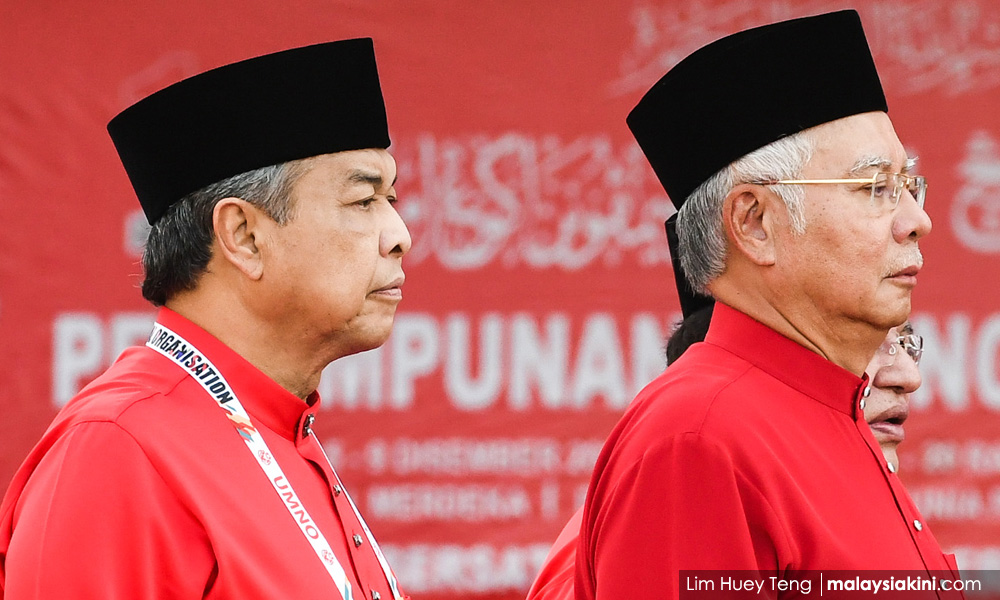
At the time, the duo were gearing BN up for a general election at a time when the party was ravaged by the 1MDB scandal and the sacking of several top party leaders.
During the Umno general assembly that year, delegate Mohamad Sahfri Ab Aziz, representing Umno Youth, filed an additional motion to prevent the top two positions from being contested when the party leadership election would be held in 2018.
Sahfri argued that this was necessary as a symbol of loyalty to the position of the party president and the party.
The motion was debated and passed by the delegates.
At the time, Zahid was the home minister while Khairy Jamaluddin was the Umno Youth chief.
Khairy is now a huge critic of the party’s decision to pull off a similar move to prevent the top two positions - now filled by Zahid and Mohamad Hasan - from being contested.
Eventually, Sahfri’s motion was irrelevant because Najib did not defend his position as Umno president following BN’s historic defeat at the 14th general election, paving the way for a three-way contest between Zahid, Khairy, and Tengku Razaleigh Hamzah in September 2018.
Najib-Muhyiddin pact
In June 2013, BN had just walked out of the 13th general election in a worse position compared to the previous election in 2008, putting pressure on the party leadership.
As Umno leadership elections had to be held in October, there was an intense campaign to ensure that their top two leaders - Najib and Muhyiddin Yassin - would not be challenged.
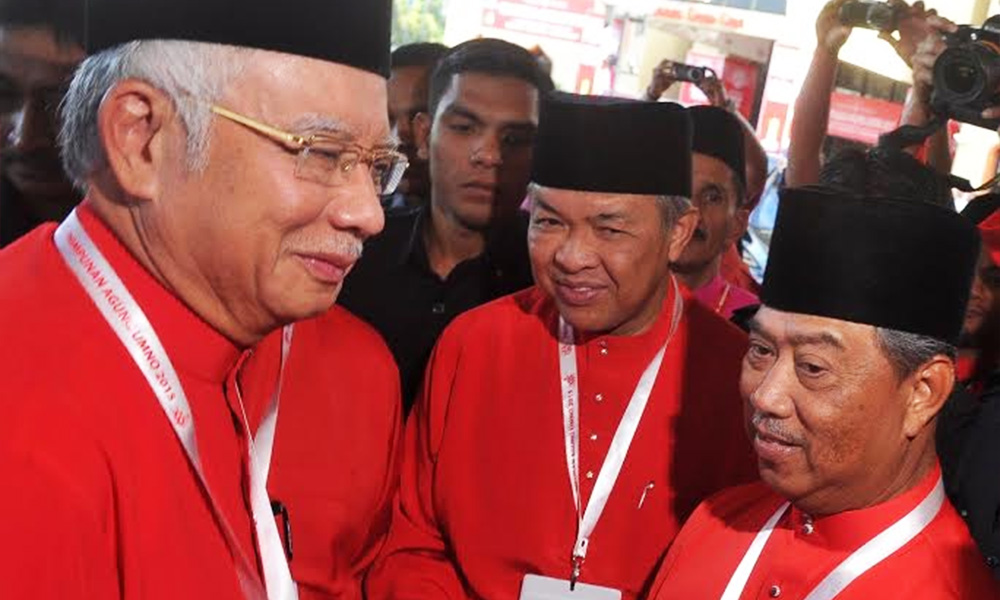
Among others, those who backed a “no contest” scenario were former Umno president Dr Mahathir Mohamad, who believed that a contest would only weaken the party by causing a split.
Throughout June 2013, there were numerous party leaders who supported the “no contest” scenario.
However, party delegates were not asked to vote on the matter, unlike in January this year.
Eventually, Najib and Muhyiddin retained their positions uncontested when nominations were held in September 2013.
Dr Mahathir-Anwar
In 1996, Malaysia was witnessing double-digit GDP growth under the helm of Mahathir and his deputy Anwar Ibrahim, who was also finance minister.
The duo were also the top two Umno office bearers. At the time, a motion was passed by the Umno annual delegates assembly to prevent them from being challenged.
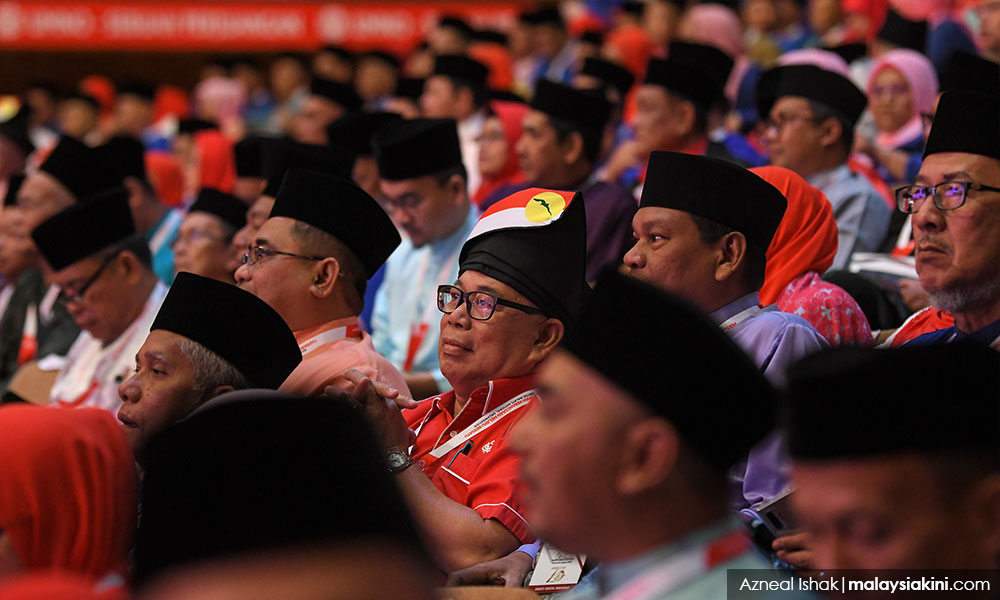
According to Johor Umno deputy chief Nur Jazlan Mohamed, the motion was submitted by the Pulai Umno division, then helmed by his father, the late Mohamed Rahmat.
At the time, Anwar was a rising star in Umno, having won the deputy presidency in 1993 uncontested after the incumbent, Ghafar Baba, declined to defend his seat after securing only a few nominations unlike Anwar.
Notably, Mahathir was also the home minister at the time.
“The purpose of the motion was to retain the two leaders and avoid a contest that would split the party. But a split did happen when Mahathir sacked Anwar as deputy prime minister in 1998.
“This caused fissures in Umno and urban Malays began supporting PKR,” wrote Nur Jazlan on his Facebook page in January, when the newest “no contest” suggestion was being floated.
/file/1331/bbd3a0b43d41c9d3273a3de7aa7f80cc.jpeg)
/file/publisher-c1a3f893382d2b2f8a9aa22a654d9c97/2022/12/1167dc030dd60dafaf9998e5ed18ec1f.jpg)
/file/publisher-c1a3f893382d2b2f8a9aa22a654d9c97/2023/02/a3de6331f06626a3f1564a7d494d8276.jpg)
/file/publisher-c1a3f893382d2b2f8a9aa22a654d9c97/2022/03/3880acb2e1661d3fcbe8687df12cac7a.jpg)
/file/publisher-c1a3f893382d2b2f8a9aa22a654d9c97/2019/03/8766fb50ec24eb091fcd085c82be2e29.jpg)
/file/publisher-c1a3f893382d2b2f8a9aa22a654d9c97/2022/03/0855934dc0c771f43b0c3855f4faeb31.jpg)


Are you sure you want to delete this comment?
This action cannot be undone.