


/file/publisher-c1a3f893382d2b2f8a9aa22a654d9c97/2023/03/11cd20a695ec4780461b0fd2b751e1bf.jpg)

'Be patient, don't teach': Father of autistic children shares his journey
Terence Ho is a strong believer that children, especially those with Autism Spectrum Disorder (ASD), deserve every opportunity to learn, however, they should do it at their own pace.
As a father of autistic children, Ho understands the patience and attention it takes to navigate raising and educating those with special needs.
“I have three children and two of them are autistic. The eldest, Pao Yee, is just like you and me, the second and third are autistic,” Ho told Malaysiakini during a recent interview in conjunction with World Autism Day, which falls today (April 2).
When Ho and his wife noticed that...
Terence Ho is a strong believer that children, especially those with Autism Spectrum Disorder (ASD), deserve every opportunity to learn, however, they should do it at their own pace.
As a father of autistic children, Ho understands the patience and attention it takes to navigate raising and educating those with special needs.
“I have three children and two of them are autistic. The eldest, Pao Yee, is just like you and me, the second and third are autistic,” Ho told Malaysiakini during a recent interview in conjunction with World Autism Day, which falls today (April 2).
When Ho and his wife noticed that their second child, Hao Yee was not picking things up as quickly as their eldest, they went to a doctor who confirmed she had ASD.
Hao Yee was five years old at that time, she is now 11. Their youngest, nine-year-old Xem Wui, was similarly diagnosed with ASD around the same age.
The news naturally surprised both parents as they did not have a history of ASD in their family.
ASD is a diverse group of conditions characterised by some degree of difficulty with social interaction and communication.
According to the United Nations, it is estimated that one in 100 children across the world has autism. However, the prevalence of autism in many low- and middle-income countries is unknown.
Scientific evidence suggests environmental and genetic factors may play a part.
“Looking back, we were shocked. Of course, we tried to find out what we could do. We sent them to the doctor, therapist, and psychologist as well,” said Ho, who works in an investment bank.
Going to school
Ho is lucky that he has a lot of family support and everyone pitches in to help them take care of these special children.
The 50-year-old recalled how when Hao Yee was sent to a regular kindergarten, she was not able to adapt at all. However, things got better when she started attending SJK (C) Salak South, which caters to special needs children. Xem Wui studies there as well.
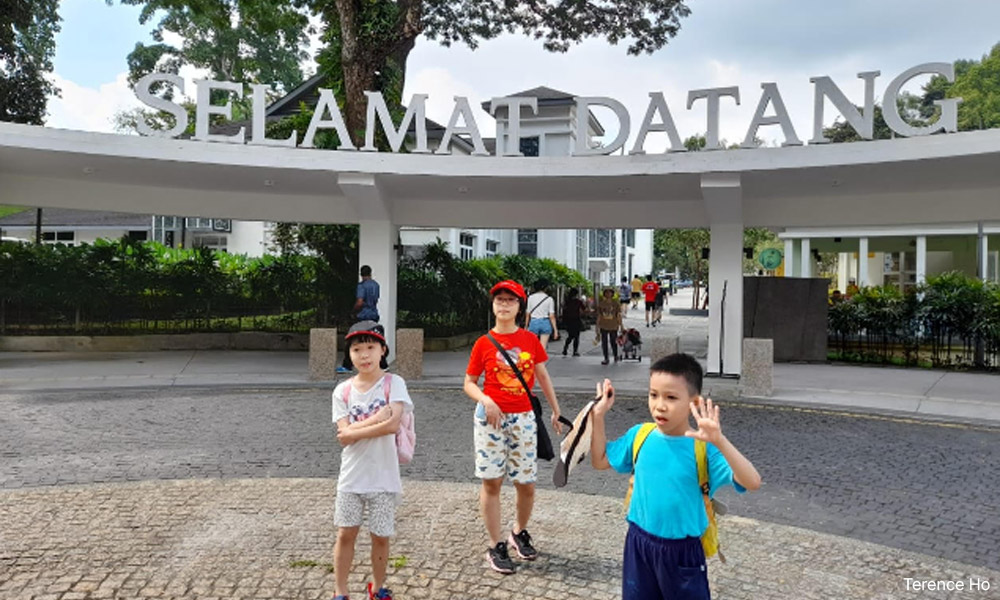
The children also go to the Hua Ming Autism Centre in PJ where they learn speech and occupational therapy.
Speech therapy helps them with their speaking skills - both children can communicate in Bahasa Malaysia, English, and Mandarin. In occupational therapy classes, they learn everyday skills such as wearing a shirt or fastening a button.
Motor coordination is one thing they don’t do so well compared to other children, hence patience and constant practice are needed.
“Their five senses are heightened compared to the rest of us. When you’re talking to me, you can focus on me. But for them, they can hear sounds everywhere around them. It is more amplified for autistic children,” Ho said.
Last weekend, while attending a relative’s wedding, Xem Wui could not bear the cacophony.
“He was screaming and shouting. So, I went down to the Bangsar Shopping Centre to get him headphones to cover his ears,” his father said.
Ho was willing to pay exorbitant prices so Xem Wui could cover his ears for a while, but the salesgirls at the electronics store did not seem to understand his urgency.
However, another lady working there - called Lily - whipped out her own headphones and gave them to Ho. He wanted to pay her but she declined.
“She said, just cover your child’s ears,” Ho shared, adding that the experience showed that there are many good people out there stepping up to help when needed.
Intelligent but can’t verbalise
Ho said like all human beings, there are those with ASD who display great intelligence and those who do not.
“From what I see, they are intelligent, it’s just they can’t verbalise. For my daughter, her artistic style began with scribbles and nonsensical drawings. She now produces some very good drawings.
“My son is very good with computers, especially using Microsoft Word and PowerPoint. He can create up to 300 PowerPoints in one go. Whatever he has undergone, he can type it in Microsoft Word,” said the proud father.
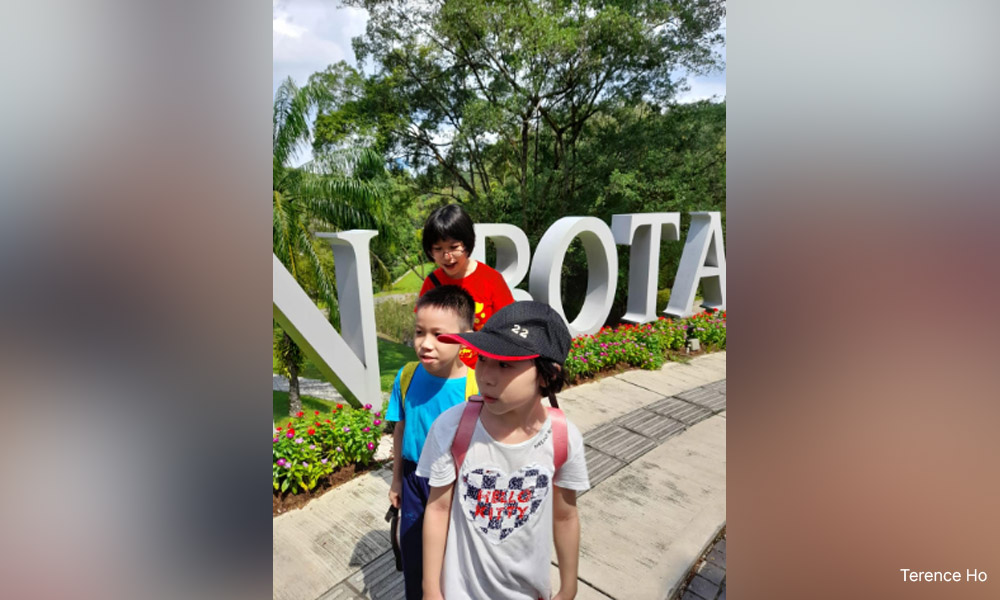
In terms of personality, Hao Yee is more of an introvert while Xem Wui is an extrovert.
“They are my children. I love them. It is only when they go outside, people do not understand them, or maybe they (the people) are afraid because what they (the children) do is out of the ordinary.
“My son would suddenly go towards someone and say, ‘Hello auntie, what are you doing? Today, I'm going to the cinema.’ Some people are taken aback, and so I tell them that they are autistic.
“I don’t want people to get freaked out,” said Ho, adding that his children enjoy MRT rides.
Follow their pace
Ho’s advice to parents of children with ASD is to be patient with them and let them grow at their own pace.
“Don’t teach, because their development might be slower compared to other children. The key is that they love to learn.
“So, you must have a lot of patience. Besides IQ, EQ is also key to their development,” said Ho, adding that it is important for them to acquire living skills as they grow.

During the movement control order (MCO), Ho and his family used it as a “reset” button for their children’s education and development.
“Because we were spending more time with them, we can see their development.
“My daughter was in kindergarten before the MCO. I remember a teacher who told me that she never taught my daughter anything and my daughter could not follow the class,” he said.
“Then, one day, she took a whiteboard marker and started drawing. This is what she does. She draws cartoon characters. She can write the words too.
“After that, I gave her lots of paper and coloured pencils. She colours and she draws all over the house,” he added.
Best of times
Ho pointed out that autism awareness in society is much better now.
“We are living in the best of times. If they were born 20-30 years ago, people would say that we send them to Tanjung Rambutan (psychiatric hospital).
“With the technology now, they don’t even have to talk. They can just type in the message box.
“So, that’s why I say to parents, never give up. Just give your best. People might look at you differently but the key is not to be indifferent yourself.”
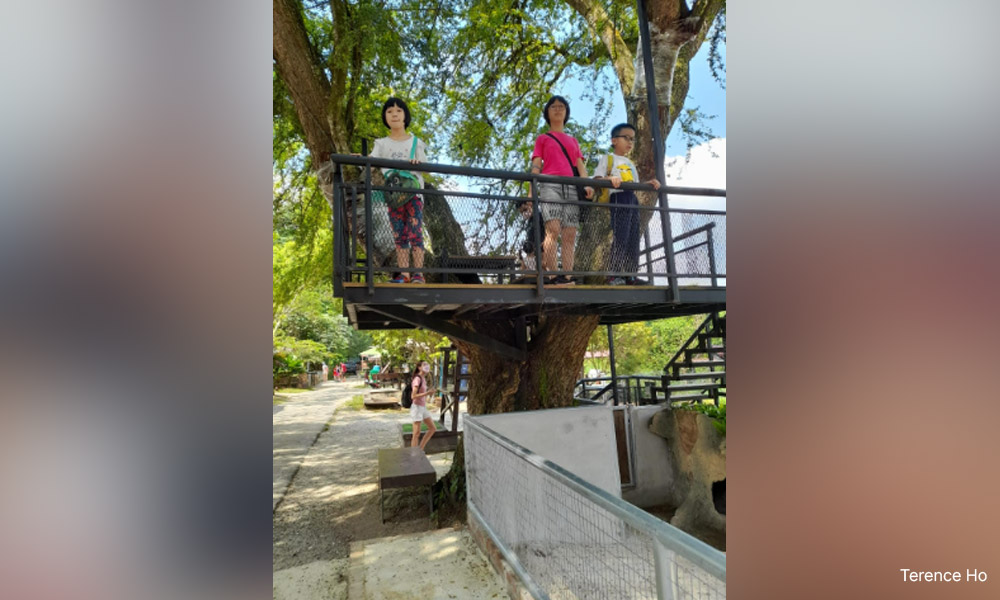
On education, Ho believes all schools should have a special education class as special needs children should be accorded the opportunity to go to school and learn.
He points out that Tesla boss Elon Musk and Microsoft founder Bill Gates have ASD.
Ho said when we see or hear a person with ASD shouting and screaming it does not mean they can’t speak, the words just don’t come out.
“So we have to encourage them to verbalise. It’s just like teaching a baby many small steps.
“My daughter is now 11, but she doesn't behave like one. She sometimes behaves like a four or five-year-old. My son behaves that way too but they are catching up,” he added.
Ho explained that there are three levels of autism. Level 1 autistic people can live independently. Level 2 means they need some guidance. As for Level 3, they cannot live on their own.
“Both of my children are at Level 3 and are heading to Level 2.”
He reiterated his advice for parents of ASD children to remain strong and be there for their God-given children.
“We are the strongest, only we can handle them. No one else can take care of them.”
Hao Yee and Xem Wui’s artwork is being showcased at a group exhibition as part of GMBB’s “It's Okay to be Different” programme (April 1 to 9) in conjunction with Autism Awareness Month.
/file/publisher-c1a3f893382d2b2f8a9aa22a654d9c97/2023/02/53c3fc2fef12a816e95ec4c43d3c8a15.jpg)
/file/publisher-c1a3f893382d2b2f8a9aa22a654d9c97/2023/02/f3954ec8e4d50ad5351dcd05b2809ccb.jpg)
/file/publisher-c1a3f893382d2b2f8a9aa22a654d9c97/2020/10/016b4d66fbad74d3ce60b7e86846eb9d.jpg)
/file/1307/58b0d24926e6ea4feac0d10c1c84b4ad.jpeg)
/file/publisher-c1a3f893382d2b2f8a9aa22a654d9c97/2023/02/b6045525bac4d9b8a5ce2e6b069e3480.jpg)
/file/publisher-c1a3f893382d2b2f8a9aa22a654d9c97/2022/08/a51eae612a7998f47eec472788e0d623.jpg)


Are you sure you want to delete this comment?
This action cannot be undone.