


/file/publisher-c1a3f893382d2b2f8a9aa22a654d9c97/2023/04/009da7e11bf01e771574a8edef38c1bb.jpg)

Palm oil mission concludes on high note with UK set to recognise MSPO
Deputy Prime Minister Fadillah Yusof’s official visit to the United Kingdom (UK) ended on a high note.
This follows the UK policymaker’s commitment to recognising the Malaysian Sustainable Palm Oil (MSPO) certification in the due diligence guidelines ensuring sustainable commodities entering the country.
He said this transpired in Thursday's meetings with Minister of State for International Trade Nigel Huddleston and Minister of State for International Development Andrew Mitchell...
Deputy Prime Minister Fadillah Yusof’s official visit to the United Kingdom (UK) ended on a high note.
This follows the UK policymaker’s commitment to recognising the Malaysian Sustainable Palm Oil (MSPO) certification in the due diligence guidelines ensuring sustainable commodities entering the country.
He said this transpired in Thursday's meetings with Minister of State for International Trade Nigel Huddleston and Minister of State for International Development Andrew Mitchell.
“They were very positive, as they gave their commitment that MSPO would be among the documents recognised in the due diligence process,” he told the Malaysian media at the end of his official visit to the UK on Friday.
“In fact, they also said what they plan in terms of guidelines is that products originating from a different country that are not covered by UK laws will be bound by the producing countries’ laws,” he said.
Their statement is good news for Malaysia, said Fadillah, the plantation and commodities minister.
“Obviously, we would like to see this put down in black and white, but that is their initial statement and we look forward to working closely with the UK,” he said, adding that it would open up more business opportunities between Malaysia and the UK.
The UK’s accession to the CPTPP, which Malaysia is a member, is expected in a few months. This will be Malaysia’s first trade deal with the UK.
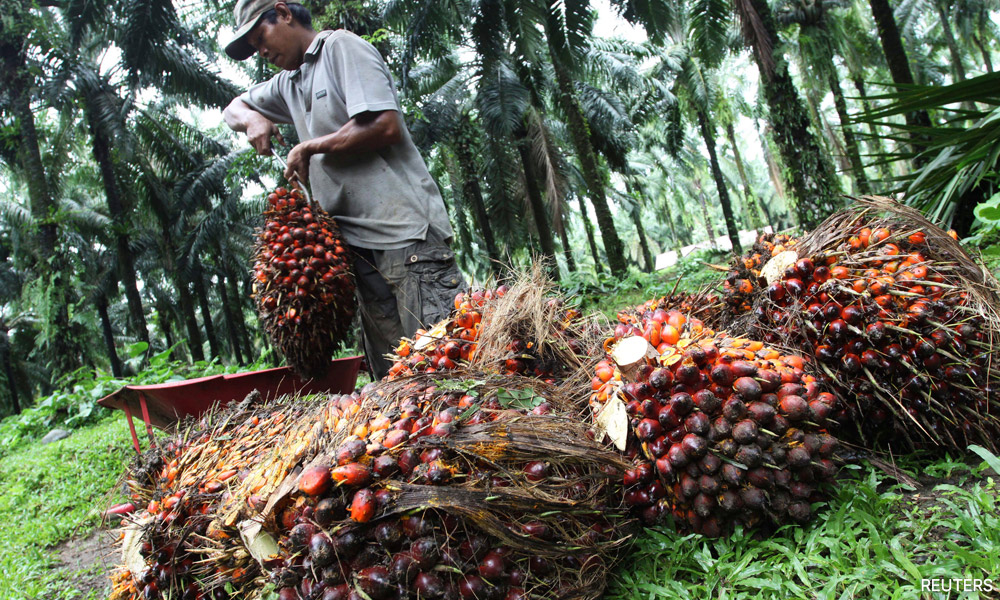
Malaysia has negotiated with the UK to eliminate tariffs on Malaysian palm oil from 12 percent to zero upon entry into the trade pact.
Bilateral trade between the two countries exceeded US$7.3 billion (RM33.42 billion) in 2022, with the UK recording a trade surplus of some US$786 million.
For 2023, the Malaysian Palm Oil Board anticipates palm oil exports to increase by 3.7 percent to 16.3 million tonnes due to continuous demand from importing countries.
Fadillah said Malaysia will also need to work with the UK government to introduce a law to prevent negative labelling of products from Malaysia.
As part of his official visit to the UK, the deputy prime minister also had a first-hand briefing at the Tun Abdul Razak Research Centre (TARRC), the UK-based research and development centre of the Malaysian Rubber Board.
He also took time to interact with Malaysian students here.
Challenges remain
As for the European Union (EU), he said although Malaysia and Indonesia’s joint mission to convey concerns over and objections to the newly legislated EU Deforestation Regulation (EUDR) is a success, challenges with the bloc remain.
Before coming to the UK, Fadillah was in Brussels, Belgium, for a joint mission under the Council of Palm Oil Producing Countries (CPOPC).
Indonesia was represented by its Economic Affairs Coordinating Minister, Dr Airlangga Hartarto.
They met with Frans Timmermans, European Commission executive vice-president for European Green Deal and Commissioner for Climate Action Policy, and Josep Borrell-Fontelles, High Representative of EU for Foreign Affairs and Security Policy.
They also met with Virginijus Sinkevičius, Commissioner for the Environment, Oceans and Fisheries; Heidi Hautala, European Parliament vice-president and a Greens/European Free Alliance European Parliament (MEP).
In addition, they also met with Bernd Lange, the International Trade Committee chairperson.
During the meetings, Jakarta and Putrajaya highlighted the impacts of the EU’s supply chain law. They consistently emphasised the need for the EU to engage with the producing countries at the working and technical levels.
According to the CPOPC, the meetings were conducted in a cordial, frank and open manner.
The feedback has been positive, as the EU is open to engagement, while the CPOPC has proposed a task force involving all stakeholders.
“What needs to be done now is more engagements. Most importantly, there is a need to follow up in ensuring the points raised and discussed are being addressed and reciprocated,” he said.
Malaysia and Indonesia contribute more than 80 percent to global palm oil exports.
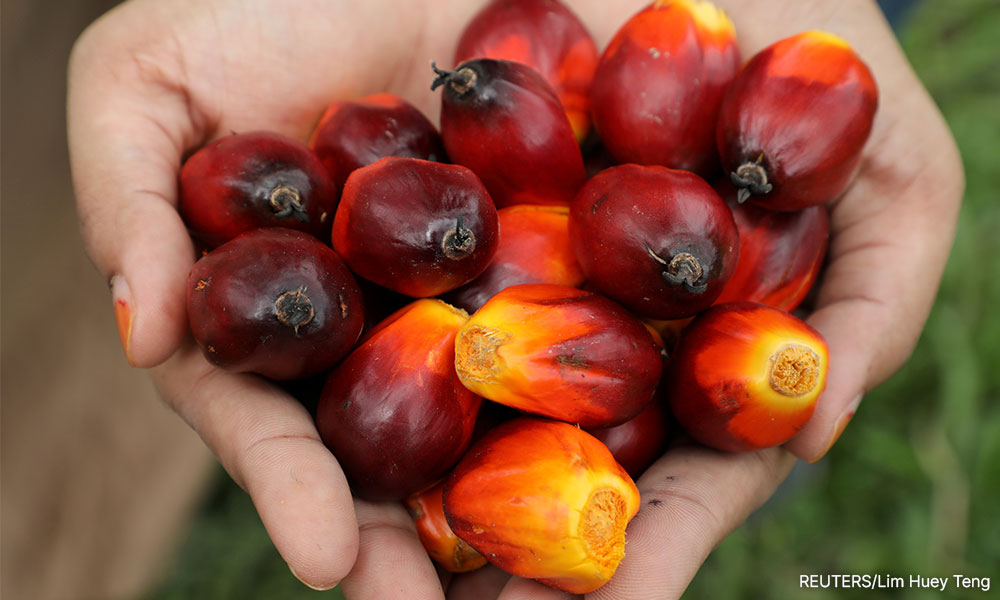
At the same time, Fadillah said Malaysia needs to be prepared for more laws and regulations to be introduced by the EU.
For instance, under the EU Renewable Energy Directive III (EU RED III), the EU regulators still single out palm oil as the only biofuel feedstock having a high indirect land-use change (ILUC) risk, and therefore it will be phased out to be counted towards the EU’s renewable energy target by 2030.
In addition, the proposed Corporate Sustainability Due Diligence Directive and the Regulation Prohibiting Products Made with Forced Labour are also potential trade barriers and burdens to operators along the supply chain, especially smallholders.
In addition, the proposed Green Claims Directive compels companies to provide scientific evidence for their green labels.
“However, this regulation on generic and unsubstantiated environmental claims could be an important ground to challenge ‘palm oil-free’ and ‘no palm oil’ claims made by products placed in the EU market that imply that the ingredient used as a palm oil replacement has less of a negative impact on the environment,” he said.
“Overall, this mission to Brussels, Belgium, has been a success, especially as this was the first joint mission to the EU, and I believe the EU has heard us.”
- Bernama
/file/publisher-c1a3f893382d2b2f8a9aa22a654d9c97/2023/06/f84675a79c8aa7f97af24936841db531.jpg)
/file/publisher-c1a3f893382d2b2f8a9aa22a654d9c97/2019/10/e074c73f2c620cac965e307a0747d7a5.jpg)
/file/publisher-c1a3f893382d2b2f8a9aa22a654d9c97/2023/05/f4b2f07a5cf81e45593354e456b35834.jpg)
/file/publisher-c1a3f893382d2b2f8a9aa22a654d9c97/2022/07/444f50c6b03355ea1a4260a6132d606f.jpg)
/file/publisher-c1a3f893382d2b2f8a9aa22a654d9c97/2020/08/75c0186ed5a2d6be4a7282e406180b2e.jpg)
/file/publisher-c1a3f893382d2b2f8a9aa22a654d9c97/2022/07/117ef4c478ea70d9ee4e17be1439e41b.jpg)


Are you sure you want to delete this comment?
This action cannot be undone.