


/file/publisher-c1a3f893382d2b2f8a9aa22a654d9c97/2023/08/6f60b8ea00592e5aadfd8de8d40bcd86.jpg)

BNM: Ringgit slide not reflective of positive economic prospects
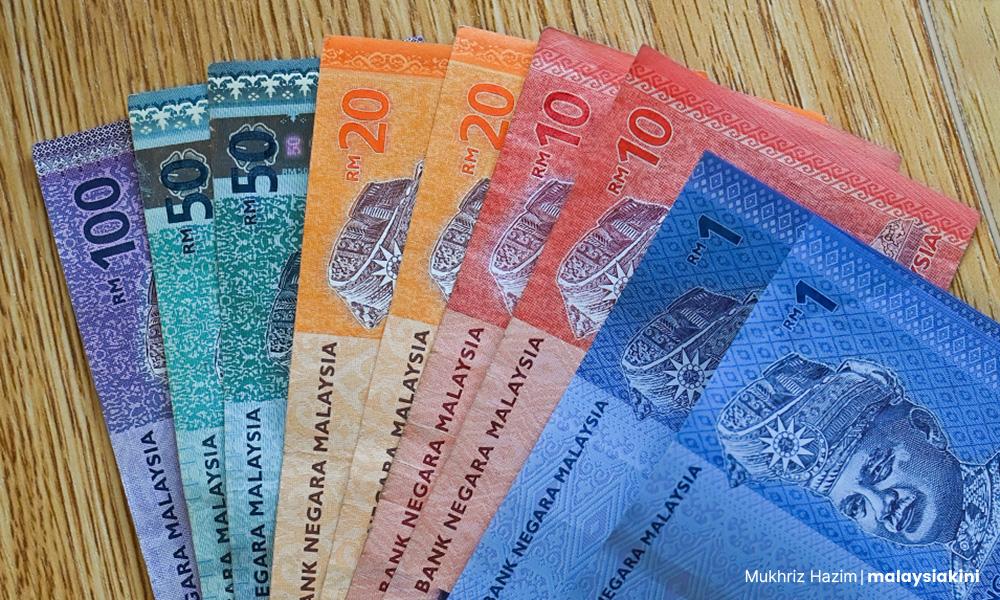
Bank Negara Malaysia believes the ringgit’s level does not reflect the positive prospects of the economy going forward, said its governor Abdul Rasheed Ghaffour.
He said the recent performance of the ringgit, similar to other regional currencies, has been influenced by external factors...
Bank Negara Malaysia believes the ringgit’s level does not reflect the positive prospects of the economy going forward, said its governor Abdul Rasheed Ghaffour.
He said the recent performance of the ringgit, similar to other regional currencies, has been influenced by external factors.
“Some of these factors include market adjustment to changing US interest rate expectations, geopolitical concerns and uncertainty surrounding China’s economic prospects,” he said in a statement this afternoon.
Earlier, Prime Minister Anwar Ibrahim, who is also the finance minister, when quizzed on the ringgit’s performance, said Rasheed would respond to the queries.
At 5.15pm, the ringgit stood at 4.7970/8015 against the greenback.
Meanwhile, the governor stressed that growth in 2024 will be driven by the improvement in external demand and strong domestic spending, and the latest International Monetary Fund forecast is for global trade to improve from 0.4 percent in 2023 to 3.3 percent in 2024.
“For Malaysia, exports have shown steady improvements since the fourth quarter of 2023. In fact, the recently released January 2024 exports have turned positive (+8.7 percent),” he was quoted as saying by Bernama.Rasheed said the tourism sector had recovered strongly, with tourist arrivals in 2024 expected to exceed the pre-pandemic levels of 26 million.
“Investment momentum has picked up with the implementation of approved projects both in the private and public sectors.
“Reflecting these positive developments and the government’s commitment to implement structural reforms and the expected lowering of interest rates in advanced economies, most analysts are forecasting for the ringgit to appreciate this year,” he added.
Ringgit could drop below record low
Earlier, it was reported that the ringgit recorded a new all-time low of 3.56 against the Singapore dollar.
The South China Morning Post said the continued weakness in Malaysia’s exports and the dollar’s strength could see the ringgit drop below its record low of 4.8850 per US dollar, which was last seen in 1998 during the Asian financial crisis.
Anwar was the finance minister at the time.
On Feb 8, SCMP reported how Singaporeans are flocking across the border to capitalise on the weakening ringgit.
Carman Lee, who is originally from Ipoh but working in Singapore, said: It’s (the exchange rate) really going crazy.”
“It’s like a bonus – during Chinese New Year we buy soft drinks, beer and invite friends over, and this really helps. You can buy more,” she added.
/file/publisher-c1a3f893382d2b2f8a9aa22a654d9c97/2024/02/aa8be303390cb712377b2b09fac1c425.jpg)
/file/publisher-c1a3f893382d2b2f8a9aa22a654d9c97/2023/10/02a4cb00617b85939c2ba9e56b354ac2.jpg)
/file/publisher-c1a3f893382d2b2f8a9aa22a654d9c97/2024/02/fff8adae944810dab37cfc052fcc6d6f.jpg)
/file/publisher-c1a3f893382d2b2f8a9aa22a654d9c97/2021/07/93f84ddd4d33e950d069dd829dfb8857.png)
/file/publisher-c1a3f893382d2b2f8a9aa22a654d9c97/2023/11/2446e17cc1f906f3e5cf9b885efdb53c.jpg)


Are you sure you want to delete this comment?
This action cannot be undone.