


/file/publisher-c1a3f893382d2b2f8a9aa22a654d9c97/2024/07/381bd2ce3bdbb3243ce614fc946585d8.jpg)

Jamaliah: Quotas, timeline needed to grow female leaders
In an exclusive interview, the Selangor state executive councillor said she backed quotas for female leaders, but they must have a specific timeline.
“As a woman leader, when we look at candidates, the old-fashioned approach would mostly...
INTERVIEW | Holding the powerful environment and health portfolios in Malaysia’s wealthiest state, Jamaliah Jamaluddin is aware that at the age of 35, she is a role model for young female leaders in the country.
In an exclusive interview, the Selangor state executive councillor said she backed quotas for female leaders, but they must have a specific timeline.
“As a woman leader, when we look at candidates, the old-fashioned approach would mostly select Malay men. Personally, I agree with quotas but with a timeline.
“Each quota needs a comprehensive plan. Otherwise, it becomes inefficient, and merit is overlooked. So when setting quotas, we should be practical and it should be coupled with programmes that supply qualified candidates,” she told Malaysiakini.
In June, DAP’s Women’s wing launched the HerLead initiative as a platform for the party to select potential women candidates for the 16th general election.
“The hope is that this will systematically create a talent pool that helps ensure we have capable women leaders ready for election or any leadership position.

“Recently, the party selected 32 women out of 60 applicants for training, aiming to develop future leaders systematically, and we are committed to developing women leaders genuinely with the intention of real empowerment, not just for show.
“This ensures we achieve the quota without sacrificing quality. For example, DAP’s central committee has a 30 percent women’s quota, which we have met. This includes young leaders like myself,” said Jamaliah who was first elected as the Bandar Utama assemblyperson in 2018, when she was just 29.
“Growing up, I didn’t see a difference between men and women, and now, as a leader, I realise the importance of empowering others. I’ve been training mentees for several years, providing platforms for women to become leaders in various sectors,” she said.
Jamaliah may have a softspoken style but she counts one of Malaysia’s most prominent women politicians among her ancestors.
Born in Hunan, China as the only child of radio DJ and political columnist Jamaluddin Ibrahim, she is also the granddaughter of independence fighter Shamsiah Fakeh, a prominent member of the Communist Party of Malaya.
Time is needed for reforms
Jamaliah runs an energetic and youthful service centre that sees party workers and volunteers contribute to grassroots initiatives, particularly concerning her health and environmental responsibilities.
However, she is not one to shy away from the fact that Pakatan Harapan voters are sorely disappointed with the government’s failure to deliver meaningful reforms. Indeed she admits that she herself feels the frustration, but has learnt to do what she can.
“I understand that people want quick changes. The Harapan and unity government were voted in with the expectation to deliver these changes, and that’s an understandable expectation.
“What we must also call to mind is that change also needs a practical and realistic timeline.
“While many Malaysians, including some of us politicians, hope for rapid change, we must acknowledge that in a complex society, meaningful change takes time and decisions have to navigate a complicated and diverse society,” she said.
Jamaliah said her party and coalition leaders are trying to be cautious and consider the right timing for policy implementation.
“There are efforts to push forward certain policies. However, backlash and differing opinions complicate matters.
“Some policies, such as those related to the death penalty, face resistance due to differing public perceptions and a complex political landscape. However, this doesn’t mean that nothing has been done, as the Abolition of Mandatory Death Penalty Bill 2023 and the moratorium in place are both steps towards the change.”
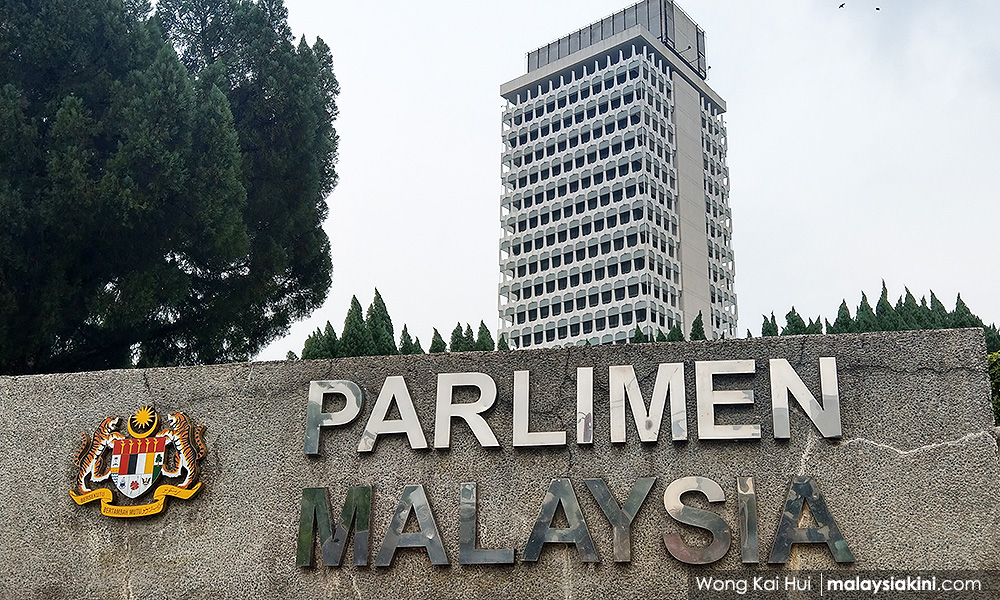
She also pointed to the Audit (Amendment) Bill 2024, giving greater authority to the auditor-general to enhance governance and accountability in the public sector, which has not been amended since 1991.
“The amendments enhance the role of the auditor-general in ensuring checks and balances through three main types of audits: financial statement audits, performance audits, and management audits of government companies.
“This framework is essential for Malaysia’s standing and attracting foreign investors, showing that the country has a comprehensive legal framework promoting transparency in corporate governance,” she added.
Jamaliah also pointed to amendments to the Medical Act, providing a parallel pathway for specialists.
“Last year, we passed bills to decriminalise suicide attempts. Similarly, the Dewan Rakyat passed the Sexual Offences Against Children (Amendment) Bill 2023 to ensure laws keep up with technological developments and better protect children against online sexual exploitation and abuse,” she said.
She insisted that despite internal disagreements and slow progress, leaders remain committed to their reform agendas.
“While I’m not a federal minister, my interactions with leaders suggest they are keen to progress but must balance timing and political stability. Harapan’s coalition prioritises stability to ensure a gradual and deliberate approach to reform.
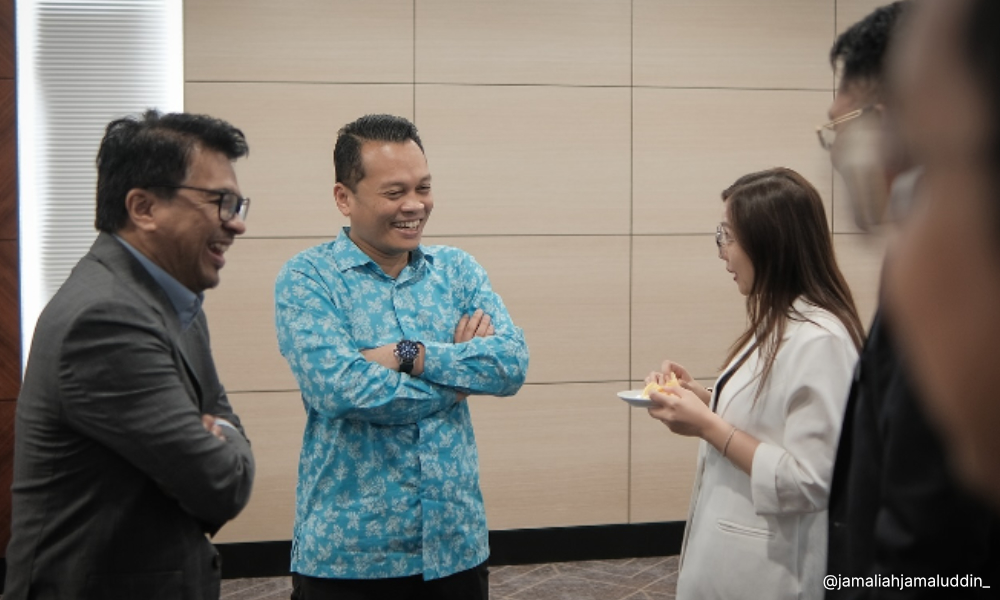
“At the same time, the government must address public concerns and educate people about the nuances of these issues.
“Public perception can be swayed by opposition narratives and media coverage, which leads to frustrations when expectations are unmet.
“Personally, I believe that our core principles remain focused on reform, but the process is complex,” she said.
“As the saying goes, Rome wasn’t built in a day, explaining great achievements require hard work and time. It’s only been 18 months since the Madani government started. I hope we can be more patient - not for the government’s sake, but to give our country a real chance to change. It will take time,” Jamaliah added.
DAP’s multiracial dilemma
While a multiracial party, DAP’s leadership and support have often been skewed in favour of the Chinese community.
The party currently has 40 parliamentary seats, the Penang chief minister position, as well as five cabinet ministers. However, a large majority of its wins were in Chinese-majority seats, and there is an argument that the party is maximising the potential of its natural demographic.
At the same time, over the last 15 years, it has been in coalitions with “enemies” such as PAS, Bersatu, and now Umno.

Does Jamiliah believe in rebranding or even a merger to move beyond the stigma of the past?
“Politics is unpredictable, changing within weeks or days. I believe that DAP is open to merging one day if it can bring the nation to a better future.
“However, our decisions are based on optimising situations without compromising our core principles. Collaborations and discussions can be made as we see through coalitions, and merging is one potential path in the future.
“I do feel that right now, a lot of the younger generation leaders, even the middle generation, like (secretary-general) Anthony Loke are making efforts to insert more talent of all races within DAP,” she said.
“But at the same time, they balance it with internal politics, and they don’t want to be seen as just filling quotas with those who have never served, while there are veteran members who have been serving for 10 or 20 years and hope for an opportunity.
“So right now, in certain areas where they feel there aren’t many objections, they will place different races, younger people, or females to slowly change the approach. We saw this in Kuala Kubu Baharu where it was a tough decision because we managed to field Pang Sock Tao, even though there were pressures from different quarters,” said Jamaliah.
This is part 2 of a three-part interview.
Part 1: Jamaliah gets to grips with S'gor environment challenges
Part 3: S'gor's heart treatment scheme among key health initiatives, says exco
/file/publisher-c1a3f893382d2b2f8a9aa22a654d9c97/2023/03/8007847ed5d8e50fc16cc39ccf15a62e.jpg)
/file/publisher-c1a3f893382d2b2f8a9aa22a654d9c97/2022/11/c0b713f4d5a6f966230d37ffe622de63.jpg)
/file/publisher-c1a3f893382d2b2f8a9aa22a654d9c97/2022/11/eb3ab0f978bebc07772d9d5fc9d70941.jpg)
/file/publisher-c1a3f893382d2b2f8a9aa22a654d9c97/2024/07/088ec808bda2cc98b08ce26e4b3d5843.jpg)


Are you sure you want to delete this comment?
This action cannot be undone.