


/file/publisher-c1a3f893382d2b2f8a9aa22a654d9c97/2024/09/638901b8331a954594fcf59ba5160a3a.jpg)

Boost manpower before making halal cert mandatory: Ex-rep to Jakim
He said instead of considering mandatory halal certification, Jakim should first focus on improving its capabilities.
Lai (above), a former Kota Laksamana assemblyperson, is...
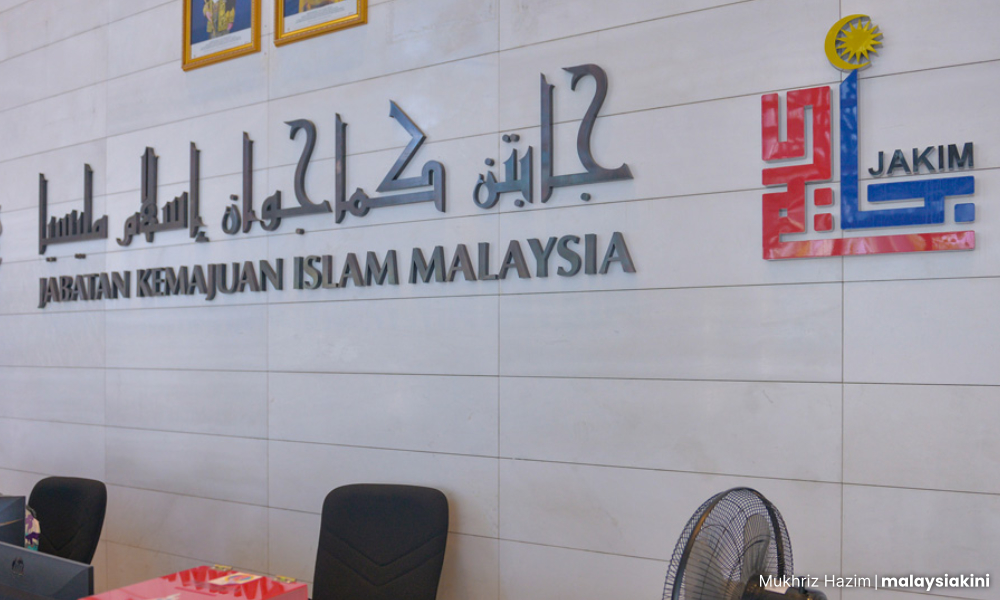
Vegetarian restaurant manager Lai Kuen Ban has opposed a proposal being mulled by the Islamic Development Department (Jakim) to make it compulsory for restaurants that do not serve pork or alcohol to obtain halal certification.
He said instead of considering mandatory halal certification, Jakim should first focus on improving its capabilities.
Lai (above), a former Kota Laksamana assemblyperson, is now the manager of a well-known vegetarian restaurant chain in Selangor and Kuala Lumpur.
Citing his own experience of applying for halal certification, he said the process is difficult, time-consuming, and costly. The restaurant chain eventually abandoned its plan to get certified due to the numerous challenges.
In a phone interview with Malaysiakini this morning, Lai pointed out that Prime Minister Anwar Ibrahim’s political secretary Azman Abidin made a fair statement in acknowledging that the halal certification application process is cumbersome.
“The prime minister’s political secretary voiced out exactly how we feel and it’s quite fair, because even Malay restaurant owners themselves don’t go through with it (applying for halal certification),” he said.

Azman, a former restaurateur, said the process of obtaining the certification is far from simple.
Jakim short-staffed
Lai conceded that halal certification is a plus point for restaurants and has its advantages. It not only helps in doing business with Muslims but is also a sign of excellent hygiene management in central kitchens and outlets.
However, a major issue with the halal certification process is the lack of officers to review applications, leading to prolonged application times, he said.
“Jakim is too short-staffed to handle our (applicants’) needs. Often, we have to wait one to two years for our application to be reviewed.
“My earlier applications took about six months, but when I tried to apply last year, it was delayed for a long time, so I decided to give up,” he said.
Lai added that aside from the long wait, restaurants also face financial pressure when applying for halal certification.
He explained that although the cost of halal certification itself is not high, the application process incurs additional expenses for intermediaries and consultations.
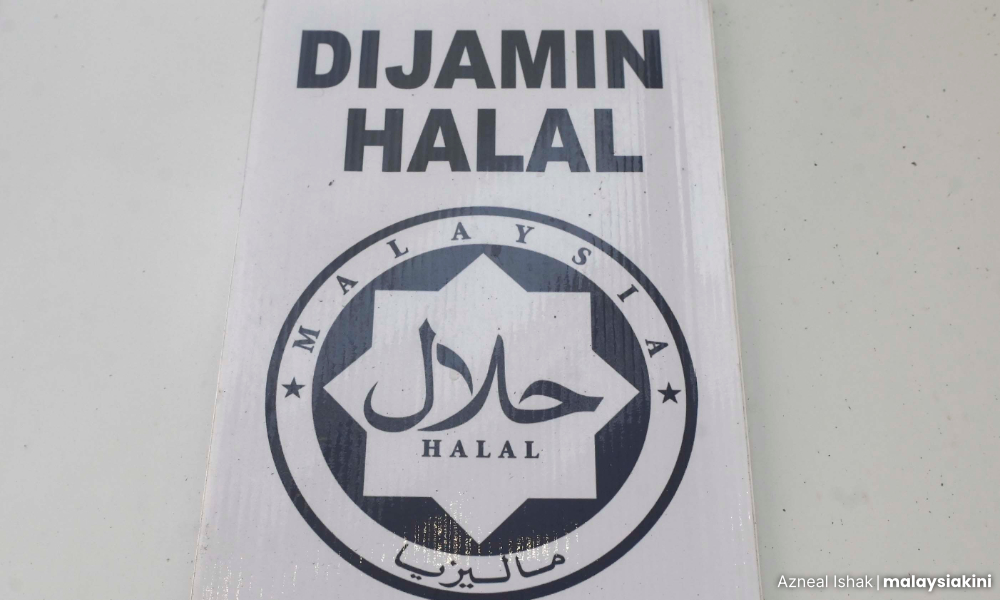
According to the myehalal website, certification is valid for two years, and the fees are categorised into three levels based on the restaurant’s annual turnover: (1) less than RM500,000 - an annual fee of RM100; (2) between RM500,000 and RM5,000,000 - RM400; and (3) exceeding RM5,000,000 - RM700.
Lai explained that before Jakim’s officers visit an eatery, the restaurateurs need to hire consultants to conduct a preliminary check to ensure all requirements are met to facilitate a smoother approval process.
“We are just a small restaurant. Unlike large companies, we don’t employ an executive to manage halal certification procedures. So, every two years, when officers come to check the restaurant, we have to rely on runners to handle the process,” he said.
Lai is concerned that once the government enforces mandatory halal certification, the process will become even more difficult due to high demand and limited resources.
In such a competitive environment, restaurants will also need to spend more money to hire consultants and couriers, he added.
In defence of Seputeh MP
The former Malacca DAP lawmaker defended Seputeh MP Teresa Kok for speaking out on the proposed mandatory halal certification.
He believes that Kok is merely fulfilling her role as an elected representative by conveying the concerns of the people.

“Kok has done nothing wrong. As an MP, she is voicing out the concerns of the people and small businesses.”
The police questioned Kok over the matter at Bukit Aman yesterday, while supporters and DAP leaders gathered outside in a show of support.
Kok is being investigated under Sections 298 and 505(b) of the Penal Code for allegedly causing religious offences and statements conducive to public mischief.
She is also being probed under Section 233 of the Communications and Multimedia Act 1998 related to misuse of network facilities.
/file/publisher-c1a3f893382d2b2f8a9aa22a654d9c97/2024/09/e95d1b65d7e8612117d446f1aa459c4a.jpg)
/file/publisher-c1a3f893382d2b2f8a9aa22a654d9c97/2024/05/75d4952cc49dbb27c101a2f01fd8a9da.jpg)
/file/publisher-c1a3f893382d2b2f8a9aa22a654d9c97/2024/09/ffc63af36f046bcac84463af1e2f46fd.jpg)
/file/publisher-c1a3f893382d2b2f8a9aa22a654d9c97/2024/09/69d573cda15eb188a7ecbae4b8593a2c.jpg)
/file/publisher-c1a3f893382d2b2f8a9aa22a654d9c97/2021/02/b1541b26ce15ea70f1632cd1d9236ba7.jpg)


Report this comment
Are you sure you want to delete this comment?
This action cannot be undone.