




Rights body wants free and fair polls
Suhakam celebrated Malaysian Human Rights Day yesterday with a call on the people to continue pressing for free and fair elections in the country.
Suhakam celebrated Malaysian Human Rights Day yesterday with a call on the people to continue pressing for free and fair elections in the country.
At a conference held in a Kuala Lumpur hotel to mark the occasion, Suhakam chairperson Abu Talib Othman said the unanimous voice of Malaysians on the matter was vital as free and fair elections are crucial points on the continuum of democratisation and that right is enshrined in Article 21 of the Universal Declaration of Human Rights.
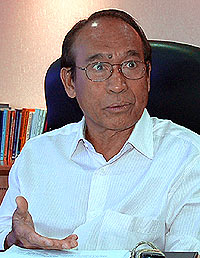 He also said that the right to vote and choose leaders is enshrined in the country's own constitution.
Malaysia, he added, has been free from colonial rule for 50 years and the country has been able to direct its own political destiny through elections.
Abu Talib said that Suhakam recognises the problems facing this country during elections and notes that various initiatives had been introduced by the Election Commission (EC).
The availability of checking one's status of registration online, registration through computerised system, availability of electoral roll in a CD-ROM and the use of indelible ink in the next general election are some of the new initiatives.
However, Suhakam also wants other issues to be addressed like media accessibility for opposition parties, laws curbing the rights to express opinions, universal suffrage, equal suffrage traditionally known as "one person, one vote" and unfair use of public funds for campaigns.
'Free elections yes, fair no'
Abu Talib told a press conference later he felt that recent elections were "free" but the question is whether it is "fair".
He was hopeful that unfair election practices will be addressed by the government, citing the prime minister's speech during the Merdeka celebration which promises that injustice will not be inflicted on citizens.
Asked on Suhakam's legal jurisdiction, Abu Talib said the organisation would lobby for an increase in legal capacity to handle human rights' violations given the wariness of civil society groups of the rights body's inability to implement recommendations made to the government.
"We do acknowledge the complaints from civil society groups." he said.
"But the power given to us is by Parliament and Parliament is constituted by elected representatives of the people. We are doing what the people want us to do," he reasoned.
Attending the one-day conference were members of local and international NGOs, government bodies, academics and activists in the country.


Are you sure you want to delete this comment?
This action cannot be undone.