


/file/publisher-c1a3f893382d2b2f8a9aa22a654d9c97/2024/10/e968b16445555e0819a7291bd510eb8e.jpg)

Authorised officers under Act 342 not empowered to detain patients - Dzulkefly
Authorised officers under the Prevention and Control of Infectious Diseases Act 1988 (Act 342) are not empowered to arrest or detain individuals with infectious diseases, contrary to claims by some parties, said Health Minister Dzulkefly Ahmad.
He clarified that the role and duties of the authorised officers are limited to the prevention and control of infectious diseases, including investigating and obtaining accurate information about specific illnesses.
“This is a misunderstanding...
Authorised officers under the Prevention and Control of Infectious Diseases Act 1988 (Act 342) are not empowered to arrest or detain individuals with infectious diseases, contrary to claims by some parties, said Health Minister Dzulkefly Ahmad.
He clarified that the role and duties of the authorised officers are limited to the prevention and control of infectious diseases, including investigating and obtaining accurate information about specific illnesses.
“This is a misunderstanding and misconception that has been circulated, with some alleging that authorised officers and the Health Ministry have powers of detention.
“There is no detention involved at all. It is isolation to break the chain of disease transmission, ensuring public health and the well-being of the patient,” he emphasised at a special press conference on Act 342 today.
Also present were Health deputy director-general (Public Health) Dr Norhayati Rusli and Health Ministry legal adviser Ilham Abd Kader.
Dzulkefly further explained that the officers do not have full powers under the Criminal Procedure Code but may request assistance from the Royal Malaysia Police, Immigration Department, or other security personnel when necessary, particularly in cases where they face threats or aggression.
An authorised officer refers to any health officer, environmental health officer, or officer appointed by the minister under Section 3 of Act 342.
There has been a misunderstanding among some quarters interpreting the term "detained" by an authorised officer as referring to police custody or detention under the Security Offences (Special Measures) Act 2012, leading to public concern.
Dzulkefly explained that these officers are empowered to investigate and obtain information regarding diseases, travel history, and close contacts, as well as issue directives for individuals suspected of being infected to undergo isolation and monitoring at locations deemed appropriate, which are not limited to quarantine stations or hospitals.
Amendments passed
On Oct 14, the Parliament passed amendments to Act 342 to enhance the nation's preparedness in addressing infectious disease threats.
The amendments were unanimously passed by the Dewan Negara on Dec 2 and are expected to be gazetted by the first quarter of next year.
"For now, what I can confirm is that after passing in the Dewan Negara, the bill will be presented for the king’s consent.
"Then, under the first phase of the bill, the Act can be enforced on a date set by the minister through a notification in the gazette. Therefore, implementation will not be immediate," he said.
Dzulkefly further clarified that the powers of the health director-general under the Act are solely focused on measures required to prevent and control infectious diseases.
“However, any actions or directives issued by the DG are entirely subject to the discretion of the health minister. The minister holds the authority to cancel, amend, or adjust the DG's directives to align with national public health policies and strategies,” he said.
He also refuted claims that the amendments to Act 342 were rushed, emphasising that discussions began as early as 2021.
He added that 13 engagement sessions were conducted from Feb 6 to November this year, involving 113 government and non-government agencies.
“These amendments were also thoroughly debated by 23 members of parliament in the Dewan Rakyat and 13 Senators in the Dewan Negara,” he stressed.
Device usage
In another matter, Dzulkefly said the use of devices for detection and monitoring under the Prevention and Control of Infectious Diseases (Amendment) Bill 2024 will not apply to all types of infectious diseases.
He said the application and duration of device usage were temporary and determined based on thorough risk assessments, evidence-based practices, and best practices considering specific factors.
"Factors include the mode of transmission - airborne diseases differ from vector-borne diseases, such as those involving zoonotic vectors like mosquitoes.
"The infection rate, such as high transmissibility indicated by the R-naught (R0), and the incubation period of a disease are critical in deciding the need for device usage," he added.
Dzulkefly explained that the application of monitoring or detection devices was limited to ensuring compliance with isolation, observation, and monitoring orders to prevent and control the spread of infections.
Diseases that do not require such devices include measles, dengue, mpox, and Ebola.
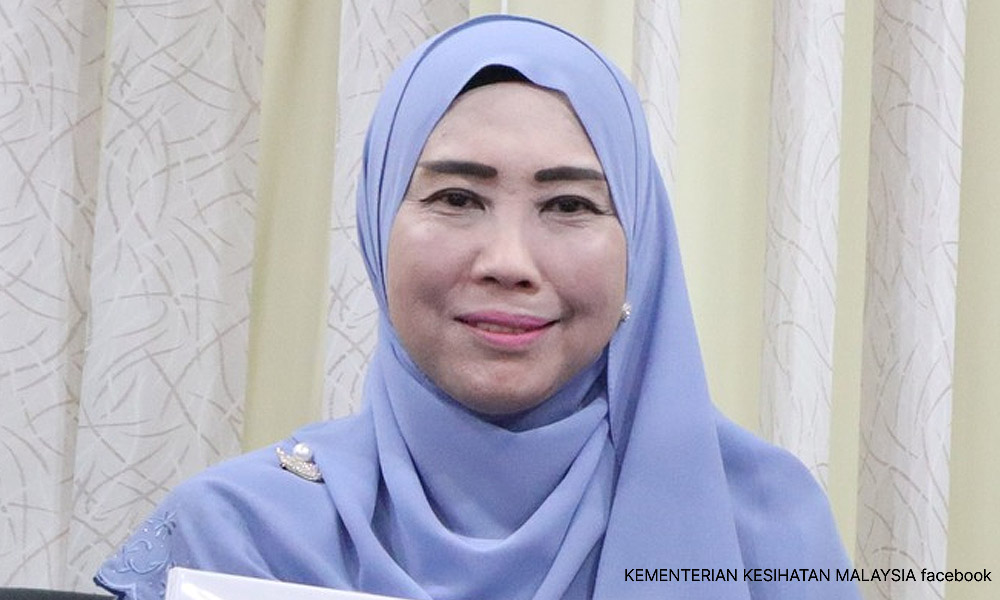
Norhayati said the devices would be used for serious cases with rapid and dangerous transmission rates.
"The devices are applied for a specific period, depending on the incubation period of particular diseases. Severe and highly contagious diseases, especially those that are airborne, may require such measures to facilitate patient identification," she said.
A guideline on the order to wear or use detection devices under Section 15A will be issued soon, with details on the type of devices to be decided later.
- Bernama
/file/publisher-c1a3f893382d2b2f8a9aa22a654d9c97/2020/11/4c8982a72b1788dcf27903cce3856fee.jpg)
/file/publisher-c1a3f893382d2b2f8a9aa22a654d9c97/2024/10/cfc133bcaff57f8b811a1579872c15c4.jpg)
/file/publisher-c1a3f893382d2b2f8a9aa22a654d9c97/2024/08/395894dfbe4831819042f7451b83c63a.jpg)
/file/publisher-c1a3f893382d2b2f8a9aa22a654d9c97/2021/07/6dc88843afc8617ff248b0bbce72811c.jpg)
/file/publisher-c1a3f893382d2b2f8a9aa22a654d9c97/2024/10/ceb00787c671e069cb35280ddab8bfb6.jpg)


Are you sure you want to delete this comment?
This action cannot be undone.