


/file/publisher-c1a3f893382d2b2f8a9aa22a654d9c97/2024/03/216cf12fb156cd4848f0820b994d0619.jpg)

Press group lists Mkini's deforestation story as one of SEA's best for 2024
The Global Investigative Journalism Network (GIJN) selected a Malaysiakini article on deforestation as one of its Best Investigative Stories from Southeast Asia for 2024.
It was one of the eight articles from the region selected for this year.
Summary
Global Investigative Journalism Network selects a Malaysiakini article as one of the best investigative pieces from Southeast Asia for 2024.
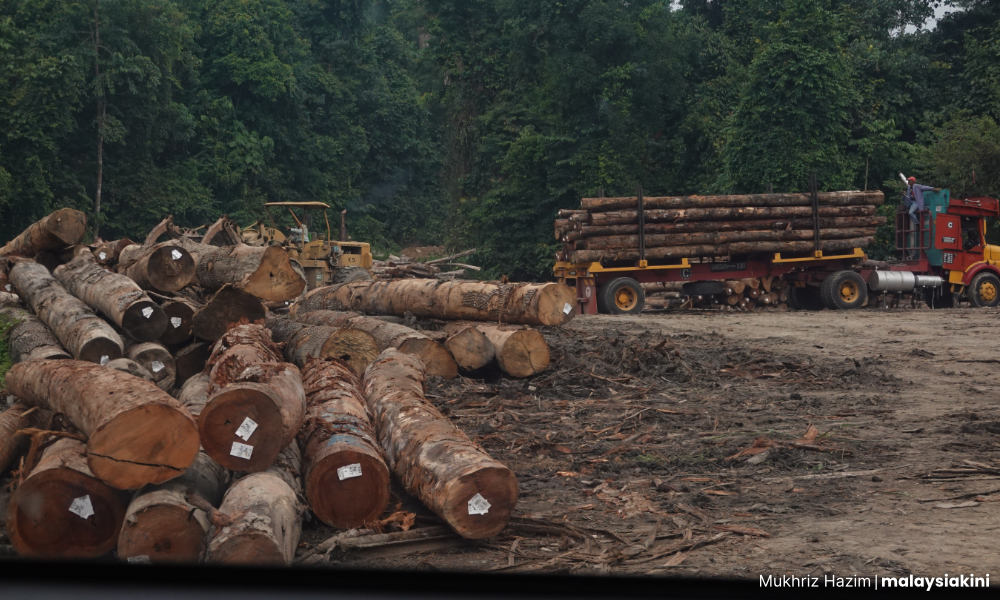
The article is about deforestation and logging in Pahang, linked to VIPs and GLCs.
The Global Investigative Journalism Network (GIJN) selected a Malaysiakini article on deforestation as one of its Best Investigative Stories from Southeast Asia for 2024.
It was one of the eight articles from the region selected for this year.
Titled “Timber grab: The truth behind Pahang oil palm plantations”, the article was written by Low Choon Chyuan and published by the Kini News Lab team on April 1.
It was authored in partnership with the Pulitzer Center’s Rainforest Investigations Network.
READ MORE | Timber grab: The truth behind Pahang oil palm plantations
“GIJN member and GIJC25 co-host Malaysiakini, in partnership with the Pulitzer Center’s Rainforest Investigations Network, investigated one of the largest palm oil plantations, located in virgin forests close to the country’s largest environmentally protected land area.
“The plantation’s logging activities threaten endangered species, such as tigers, and have disrupted and polluted the water supply for nearby villagers,” said GIJN in an article published yesterday.
Major issue in SEA
The article by Malaysiakini, among others, highlighted how Perbadanan Kemajuan Negeri Pahang (PKNP) logging activities had disrupted the water supply in villages near Hulu Tembeling, Pahang.
It also highlights how such projects are connected with VIPs and GLCs.
For the best story category, GIJN selected five from Indonesia - with Myanmar, Malaysia, and the Philippines having one each.
Overall, GIJN said environmental destruction remains a major issue in Southeast Asia.
“There will be plenty of challenges in the years to come. Indonesia, for example, has a new president who has immediately raised concerns among civil society networks about his seemingly antagonistic policies toward press freedom and freedom of expression.
“The list of investigations included in this year’s Southeast Asia round-up emphasises the region’s increasingly sophisticated cross-border crimes, but also how investigative journalists consistently play an important role in exposing them - through rigorous verification, innovative digital tools, and visually striking presentation.”
/file/publisher-c1a3f893382d2b2f8a9aa22a654d9c97/2024/12/aa51bdd14470e6b3b268504756304a27.jpg)
/file/publisher-c1a3f893382d2b2f8a9aa22a654d9c97/2022/01/3b1f6b3f7624f727a0656dc5474a3e2a.jpg)
/file/publisher-c1a3f893382d2b2f8a9aa22a654d9c97/2024/12/81d985bc1814cdd52abc8132b9a05774.jpg)
/file/publisher-c1a3f893382d2b2f8a9aa22a654d9c97/2024/03/189a907c7be45827d83e288dbe98dfae.jpg)
/file/publisher-c1a3f893382d2b2f8a9aa22a654d9c97/2024/03/ee0cf85c003b2d2dffc7659086df7e5c.jpg)


Are you sure you want to delete this comment?
This action cannot be undone.