


/file/publisher-c1a3f893382d2b2f8a9aa22a654d9c97/2025/01/f92884d379fd05e63414f0278807a084.jpg)

Real threat to morality not in books but systemic issues - Awam
With the Home Ministry recently issuing a ban on six books, the All Women’s Action Society (Awam) criticised the government for infantilising Malaysians.
Such an action sets a disturbing precedent for rights to freedom of expression in the country, as authoritative measures through censorship restrict people’s ability to form their own opinions based on diverse perspectives, said Awam senior advocacy officer Amanda Shweeta Louis.
“The real threat to morality lies not in literature but in systemic...
Summary
The real threat to morality is not in books but in systemic issues, says Awam senior advocacy officer Amanda Shweeta Louis.
Views that romance novels are detrimental to morality are influenced by societal norms that are usually patriarchal, she adds.
The Printing Presses and Publications Act (PPPA) 1984 has been used at least 11 times since 2020 to ban LGBT+ publications, says Justice For Sisters co-founder Thilaga Sulatireh.
With the Home Ministry recently issuing a ban on six books, the All Women’s Action Society (Awam) criticised the government for infantilising Malaysians.
Such an action sets a disturbing precedent for rights to freedom of expression in the country, as authoritative measures through censorship restrict people’s ability to form their own opinions based on diverse perspectives, said Awam senior advocacy officer Amanda Shweeta Louis.
“The real threat to morality lies not in literature but in systemic issues like inequality, gender-based violence, and the suppression of diverse voices,” Amanda told Malaysiakini.
On Tuesday (Jan 7), the Home Ministry announced that it had banned six books on Dec 19 after deeming them potentially detrimental to morality.
In a statement, it listed the books:
“A Million Kisses In Your Lifetime” by Monica Murphy
“Lose You To Find Me” by Erik J Brown
“Punai” by Asyraf Bakti
“Scattered Showers” by Rainbow Rowell
“When Everything Feels Like the Movies” by Raziel Reid
“What If It’s Us” by Becky Albertalli and Adam Silvera
“A Million Kisses In Your Lifetime” is a contemporary romance novel while “What If It’s Us” is a young adult romantic comedy. “Scattered Showers” is a collection of romantic short stories.
“Lose You To Find Me” is a queer coming-of-age and “When Everything Feels Like The Movie” is about a story revolving around a gay teenager.
The ban was made under the Printing Presses and Publications Act (PPPA) 1984.
Patriarchal outlook
Amanda said that the classification of romance novels as detrimental overlooks how such books can promote positive and empowering stories.

“Some romance novels tackle traditional stereotypes, presenting characters who challenge patriarchal expectations and explore themes of equality, consent, and self-autonomy,” she said.
Not only that, but the subjectivity of morality is also shaped by societal norms which tend to be patriarchal, she noted.
She referred to the case brought by the United Kingdom against Penguin Books Limited in 1960 over the publication of “Lady Chatterley’s Lover” by D H Lawrence.
“The court ruled in favour of Penguin Books, recognising the novel’s significant literary merit and emphasising the importance of evaluating a work as a whole, including its artistic and educational value, rather than focusing on isolated passages,” she explained.
She acknowledged the need for bans on media that promote harmful practices such as child marriage but added that the Home Ministry must accompany bans with transparency and accountability.
“Without transparency in how such decisions are made, it becomes difficult to discern whether these actions are genuinely in the public’s interest or serve to reinforce dominant ideologies in Malaysia,” she said.
Fomenting hatred
Justice For Sisters (JFS) co-founder Thilaga Sulatireh said checks showed at least four of the six banned books have LGBTQ+ characters and themes.
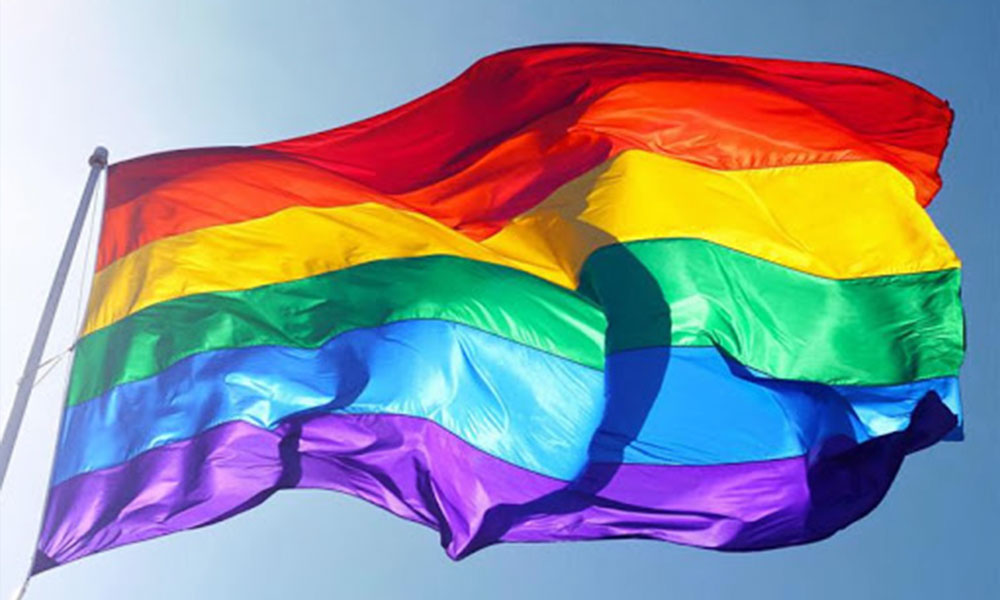
“The ban on the four books is part of rising trends of state-sponsored LGBTQ+ censorship and discrimination that JFS has been observing.
“Specific to the PPPA, the law has been used at least 11 times to ban LGBTQ+-related publications, namely books and pride-themed watches between 2020 and 2024,” she said in a statement on the JFS site.
Such actions only foment hatred towards LGBTQ+ people, preventing understanding, self-understanding, intellectual growth and inclusion, she added.
This diminishes Malaysia’s diversity, she opined.
Besides that, she called on the Home Ministry to halt its characterisation of LGBTQ+ people as a type of ideology.
"LGBT+ people or diversity in sexual orientation, gender identity, gender expression, and sex characteristics (SOGIESC) are part of human diversity, which has been historically, medically, scientifically, and anthropologically acknowledged and documented," she said.
She went on to urge the government to repeal the PPPA due to such a legal framework being incompatible with international human rights standards on freedom of expression.
/file/publisher-c1a3f893382d2b2f8a9aa22a654d9c97/2025/01/0080e73a2b066e3978e7813491e78de2.jpg)
/file/publisher-c1a3f893382d2b2f8a9aa22a654d9c97/2024/10/8a5fcd2bda3aa2ef623ee3d52d847da0.jpg)
/file/publisher-c1a3f893382d2b2f8a9aa22a654d9c97/2022/11/7d1310365e7a62b73ee0097ec995a531.png)
/file/publisher-c1a3f893382d2b2f8a9aa22a654d9c97/2023/10/c93976a851012018cf4025c540afc34b.jpg)
/file/publisher-c1a3f893382d2b2f8a9aa22a654d9c97/2021/03/ee645936bff672e99626f343f6b4bb8d.jpg)


Report this comment
Are you sure you want to delete this comment?
This action cannot be undone.