


/file/publisher-c1a3f893382d2b2f8a9aa22a654d9c97/2023/08/b014aa242adaa12021d04c7ae3d9a7b5.jpg)

Unfair to say AG hid addendum: PSSC chair
It’s unfair at this stage to say that the attorney-general had hidden the royal addendum which would allow Najib Abdul Razak to serve the rest of his prison sentence under house arrest, said Parliamentary Special Select Committee on Human Rights, General Elections and Institutional Reform chairperson William Leong.
Leong said this when asked if the PSSC would summon Attorney-General Mohd Dusuki Mokhtar to find out details about the existence of the addendum.
“We should wait for the complete facts to be produced.
“The process for release or waiver of privilege and/or...
Summary
Parliamentary Special Select Committee on Human Rights, General Elections and Institutional Reform chairperson William Leong says it is unfair to say the attorney-general may have hidden the royal addendum on Najib Abdul Razak’s house arrest.
He urges everyone to wait for the full facts to be produced before drawing any conclusions.
However, Leong also raises questions on the validity of the addendum.
It’s unfair at this stage to say that the attorney-general had hidden the royal addendum which would allow Najib Abdul Razak to serve the rest of his prison sentence under house arrest, said Parliamentary Special Select Committee on Human Rights, General Elections and Institutional Reform chairperson William Leong.
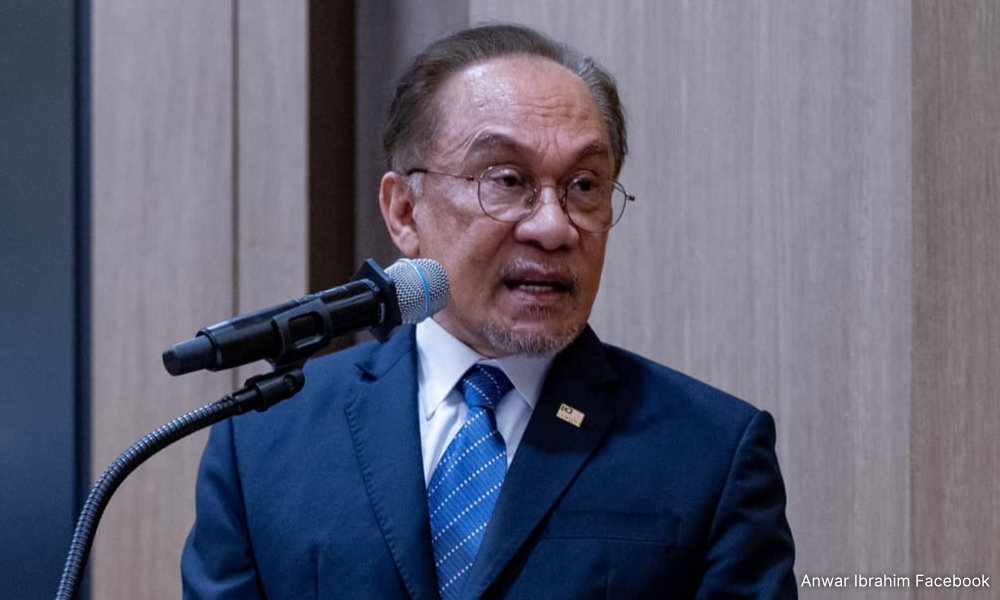
Leong (above) said this when asked if the PSSC would summon Attorney-General Mohd Dusuki Mokhtar to find out details about the existence of the addendum.
“We should wait for the complete facts to be produced.
“The process for release or waiver of privilege and/or declassification of secrecy/ confidentiality requirements should be allowed to proceed so that the full facts are known before any conclusions can be drawn,” he told Malaysiakini today.
Pressed on whether Dusuki will be summoned, Leong said: “As I said, I think we need to see what facts will be produced in due course before we consider whether to call a PSSC proceeding.”
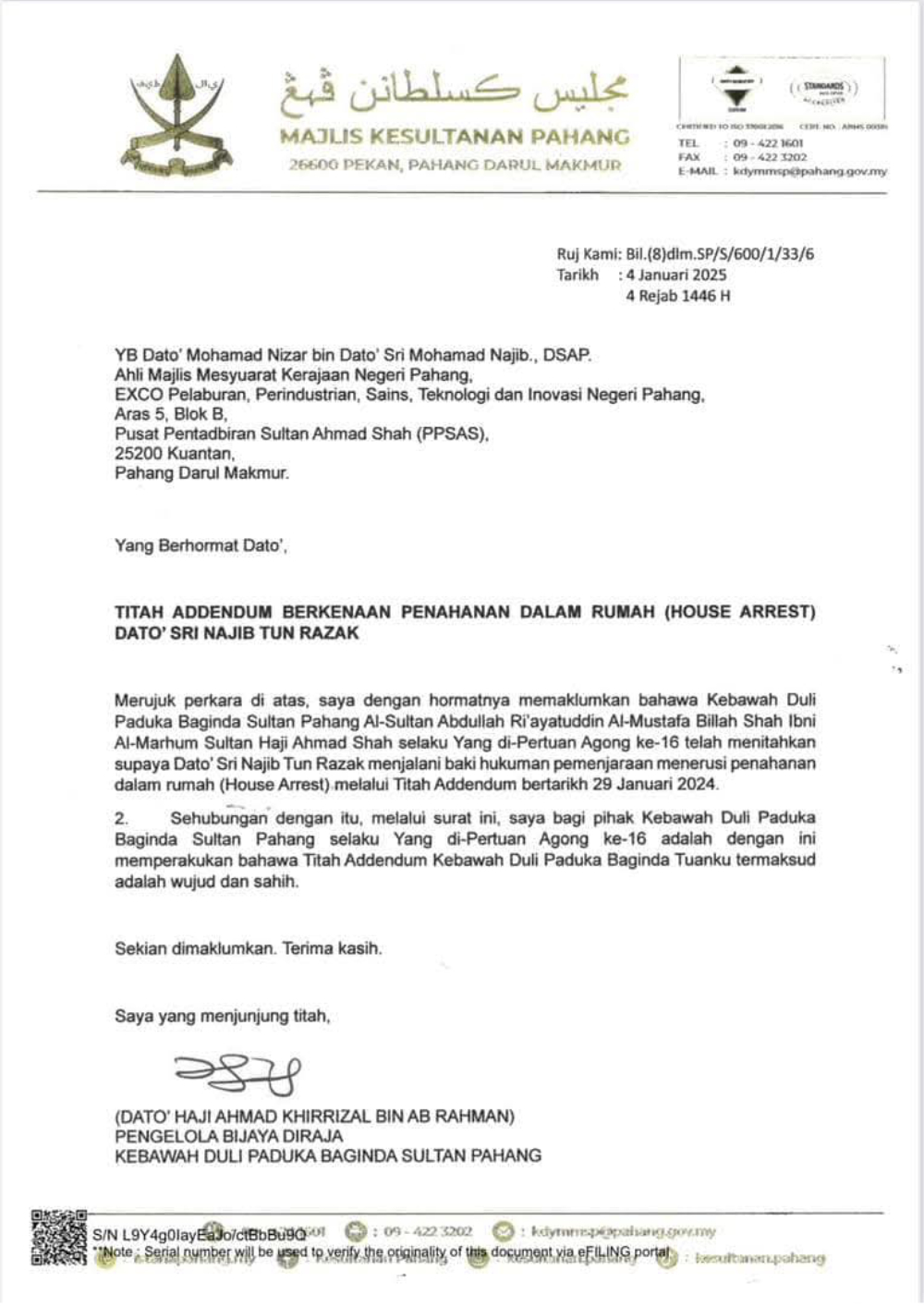
According to a letter from the Pahang palace dated Jan 4, 2025, sent to the former premier’s son Nizar, and submitted to the Court of Appeal on Jan 6, Sultan Abdullah Sultan Ahmad Shah had decreed that the former prime minister shall serve the remainder of his imprisonment through house arrest, as stated in the royal addendum dated Jan 29, 2024.
The appeals court then granted Najib’s appeal against the High Court’s decision to deny him judicial review leave to compel the government to enforce the addendum.
The former prime minister can now use the decree to argue his case before the High Court.
Document received
Earlier, Prime Minister Anwar Ibrahim acknowledged that the AG did receive a letter regarding the royal addendum.
However, Anwar said that after the letter was received, the Yang di-Pertuan Agong changed, and the AG submitted the letter to Istana Negara to allow the newly appointed Agong, Sultan Ibrahim Sultan Iskandar, to make a decision – leaving out the Pardons Board and himself.
On that note, Leong raised questions on the constitutional validity of the addendum, if it exists.
The Selayang MP pointed out that based on Article 40(1A) of the Federal Constitution, the Agong has to act based on advice, which in this case, the advice from the Pardons Board.
“Further, the matter is before the court and there are live issues to be determined by the courts.
“Due respect to the court proceedings ought to be given. All are very interesting and exciting issues but we need to exercise patience and be fair to everyone involved,” he stressed.
Constitutional issues
On Jan 6, Home Minister Saifuddin Nasution Ismail said the Prison Department never received the royal addendum.
He affirmed that the department only received instructions on the former premier’s sentence being commuted.
On Jan 8, former Bersatu supreme council member Muhammad Faiz Na’aman warned that enforcing the addendum could lead to a constitutional crisis as it may have been issued outside of the Pardons Board.
He added that it would set a precedent that an elite or favoured prisoner is given special treatment in reducing their sentences - by which the palace can issue a decree without involving the Pardons Board and constitutional provisions that govern it.
/file/publisher-c1a3f893382d2b2f8a9aa22a654d9c97/2024/11/2c969293bbaf182e42b62c968c3f9128.jpg)
/file/publisher-c1a3f893382d2b2f8a9aa22a654d9c97/2025/01/93b31d2d26d8f8a9bd6ceee385a8f4c0.jpg)
/file/publisher-c1a3f893382d2b2f8a9aa22a654d9c97/2024/10/0637bf89812c013157dcfdaec7e10c39.jpg)
/file/publisher-c1a3f893382d2b2f8a9aa22a654d9c97/2024/01/332b1c6564eb1d449d98ca1d9805e751.jpg)
/file/publisher-c1a3f893382d2b2f8a9aa22a654d9c97/2022/12/8fde8817a2e5e02d350fd76645a12789.jpg)
/file/publisher-c1a3f893382d2b2f8a9aa22a654d9c97/2024/02/4cc622daef045d4de5b8cc6830194d70.jpg)
/file/publisher-c1a3f893382d2b2f8a9aa22a654d9c97/2024/12/21b19b34863fbfe33994ba7c690155e4.jpg)


Report this comment
Are you sure you want to delete this comment?
This action cannot be undone.